Health
Can Ultra-Processed Foods Make You Age Faster?
Ultra-processed foods already carry a long list of associations most people have heard before: higher risk of obesity, type 2 diabetes, heart disease. But a newer, more specific question has been building momentum in research circles over the past couple of years — not just whether these foods make you sicker, but whether they make you biologically older, independent of the diseases they contribute to. In 2026, there’s now enough data to give a real answer, and it’s more concrete than a lot of nutrition headlines usually manage.
First, What Actually Counts as “Ultra-Processed”?
The term gets used loosely, so it’s worth being precise. Researchers typically rely on the NOVA classification system, which sorts food into four groups based on the degree and purpose of processing, not just whether something was touched by a machine. Ultra-processed foods are industrial formulations made mostly or entirely from substances extracted from foods (oils, starches, sugars, protein isolates) combined with additives like emulsifiers, artificial flavors, colors, and preservatives designed to make the product hyper-palatable and shelf-stable. Think packaged snack cakes, sugary breakfast cereals, reconstituted chicken nuggets, most sodas, and many “diet” or “protein” bars — not simply “food that came out of a package,” since canned beans or frozen vegetables are processed but not ultra-processed in this framework.
This distinction matters because current U.S. data suggests ultra-processed foods now account for roughly 57% of daily energy intake among American adults, and climbs to nearly 67% among adolescents — meaning for a large share of the population, this isn’t an occasional indulgence, it’s the foundation of the diet.
What “Biological Aging” Actually Means
Your chronological age — the number of years since you were born — is fixed. Your biological age is different: it’s an estimate of how old your cells, tissues, and organs appear to be functioning, based on measurable biomarkers rather than the calendar. Researchers use several tools to estimate this, including blood-based algorithms like PhenoAge, which combines markers such as inflammation, liver and kidney function, and blood sugar regulation into a single age-equivalent score, and telomere length testing, which measures the protective caps on the ends of chromosomes that naturally shorten as cells divide over a lifetime.
No single tool is perfect, and different biological age calculators can give somewhat different results for the same person — but when multiple independent methods, across multiple countries, start pointing in the same direction, that consistency itself becomes meaningful evidence.
What the 2026 Research Actually Found
The most striking data point comes from an analysis of over 16,000 adults using the PhenoAge algorithm: individuals in the highest quintile of ultra-processed food consumption were found to be biologically more than one year older than those in the lowest quintile, and every additional 10% of daily calories coming from ultra-processed sources was associated with roughly a 0.21-year increase in biological age, according to a 2026 review published in Frontiers in Nutrition on ultra-processed foods and accelerated aging.
Separately, a large prospective cohort study using data from the UK Biobank, involving more than 172,000 participants, found that higher ultra-processed food consumption was associated with faster biological aging at a systemic level, with researchers pointing to oxidative stress and chronic low-grade inflammation as plausible mechanisms, according to this prospective cohort study on UPFs and biological aging published via PMC.
Telomere-specific research tells a similar story. A Spanish study following almost 900 older adults found that those eating more than three servings of ultra-processed food daily were 82% more likely to have shortened telomeres compared to those eating less, a finding presented at the European and International Conference on Obesity and subsequently referenced across multiple aging studies. More recent analysis from the long-running SUN cohort study found that adults in the highest quartile of ultra-processed food intake showed telomere shortening equivalent to roughly four additional years of biological aging compared to the lowest quartile — and notably, this association held even after accounting for BMI and total calorie intake, suggesting the effect isn’t purely explained by ultra-processed eaters simply consuming more calories or carrying more weight.
It’s Not Just About Weight Gain
This is arguably the most important nuance in the recent research: earlier assumptions were that ultra-processed foods aged people faster mainly because they drive weight gain, and weight gain independently accelerates aging-related disease. Newer studies complicate that story. Research examining the mediating role of adiposity (body fat) found that while excess weight does explain part of the relationship between ultra-processed food intake and biological aging, a portion of the effect remains even after statistically controlling for body weight — pointing toward the food itself, not just its caloric consequences, according to a longitudinal study on ultra-processed foods and biological aging that specifically examined this mediation pathway. Monash University’s Victorian Heart Institute summarized similar findings, noting that food processing itself appeared to contribute to accelerated aging independent of overall diet quality.
The Proposed Mechanisms
Researchers point to several overlapping pathways that may explain why ultra-processed foods age cells faster than their nutrient content alone would predict:
Oxidative stress and inflammation. Many additives, along with the high sugar and refined starch content typical of ultra-processed products, appear to promote oxidative stress — an imbalance between damaging free radicals and the antioxidants that neutralize them — which in turn accelerates telomere shortening and cellular damage over time.
Gut microbiome disruption. Ultra-processed foods are generally low in fiber and high in emulsifiers, some of which have been shown in research to disrupt the gut lining and shift microbial balance in less favorable directions. Since gut bacteria play a documented role in regulating systemic inflammation, this disruption may be one of the more significant, if underappreciated, pathways connecting diet to aging. This dovetails directly with broader research on why gut health matters for weight loss, which covers this mechanism in more depth.
Glycation. High sugar and refined carbohydrate intake, both hallmarks of ultra-processed diets, contribute to a process called advanced glycation end-product (AGE) formation, where sugar molecules bind to proteins and fats in ways that damage tissue and are strongly linked to visible and cellular signs of aging.
Chronic cortisol elevation. Diets high in ultra-processed foods and added sugar have been associated with disrupted cortisol regulation in some research, and chronically elevated cortisol independently contributes to inflammation, fat storage, and accelerated cellular aging. If this connection is new to you, our detailed explainer on what cortisol is and how it affects your body covers the mechanism in more depth.
Frailty and functional decline. Beyond cellular markers, a 2026 systematic review and meta-analysis covering more than 105,000 older adults found a consistent association between higher ultra-processed food intake and increased risk of frailty — a clinical syndrome marked by declining strength, endurance, and physiological reserve that overlaps heavily with how we experience aging day to day, not just how it shows up on a lab test.
An Important Caveat
None of this research proves direct causation in the strictest scientific sense — these are observational studies, and people who eat more ultra-processed food often differ from those who don’t in other ways too: exercise habits, sleep, income, stress levels, and access to fresh food, all of which independently affect aging. Researchers control for many of these factors statistically, but no observational study can fully eliminate the possibility that some unmeasured factor explains part of the association. That said, the sheer consistency of these findings — across different countries, different measurement tools, and different research teams — makes it increasingly difficult to dismiss the connection as coincidental.
Cognitive Aging: Beyond Cells and Telomeres
The aging conversation around ultra-processed foods isn’t limited to cellular biomarkers — it extends into brain health too. Several of the studies referenced above noted associations between higher ultra-processed food intake and increased risk of cognitive decline and dementia, on top of the frailty and telomere findings. The proposed mechanisms overlap significantly with the ones already discussed: chronic inflammation and oxidative stress don’t stay contained to one organ system, and a brain operating under sustained low-grade inflammation appears to be more vulnerable to the kind of gradual cognitive decline researchers associate with aging. This is still an active and evolving area of study, and the size of the effect on cognition specifically is smaller and less consistently measured than the metabolic and cellular aging findings, but the directional pattern across multiple studies points the same way.
How This Compares to Other Known Aging Accelerants
It helps to put the ultra-processed food findings in context alongside other well-established aging accelerants, since diet doesn’t operate in isolation. Smoking, for comparison, is associated with several years of additional biological aging in most large cohort studies — a substantially larger effect than what’s currently being measured for ultra-processed food intake alone. Chronic sleep deprivation and unmanaged chronic stress also carry independently documented aging effects, working through some of the same inflammatory and oxidative pathways described above. None of this diminishes the ultra-processed food findings, but it’s a useful reminder that diet is one lever among several, and that someone who eats reasonably well but sleeps five hours a night and smokes isn’t going to outrun those other factors through diet alone.
The Additive Question
A specific and still-debated piece of this research concerns whether it’s the additives themselves — emulsifiers, artificial sweeteners, preservatives, synthetic colors — or simply the broader nutritional profile of ultra-processed foods (low fiber, high refined sugar, high refined starch, excess sodium) that’s driving the aging association. Some laboratory and animal studies have shown that specific emulsifiers, such as carboxymethylcellulose and polysorbate 80, can independently disrupt gut barrier function and provoke inflammation even when tested in isolation from the rest of a food’s nutritional content. This suggests the additives may carry an independent risk beyond what you’d predict just from a food’s calorie or macronutrient profile, though isolating each additive’s individual contribution in real-world human diets — where people are exposed to dozens of different additives across a typical day — remains a genuinely difficult research problem, and one the field hasn’t fully solved yet.
Reading Between the Headlines
It’s worth being appropriately skeptical of the most dramatic framing you’ll see online — claims like “this snack ages you four years” tend to overstate what a single study, or even a body of studies, can actually establish about any one individual. The aging effects described in this research are population-level averages derived from large cohorts, not individual predictions. Two people who eat identically won’t age identically, because genetics, other lifestyle factors, and simple biological variation all play a role. What these studies do establish reasonably well is a consistent directional pattern at the population level — more ultra-processed food, on average, correlates with faster biological aging markers — which is useful for making general dietary decisions, even if it can’t tell any one person exactly how many years a given snack “costs” them.
What You Can Actually Do With This Information
The goal isn’t to eliminate every packaged food from your kitchen — that’s neither realistic nor necessary. A few practical, evidence-aligned adjustments tend to matter more than perfection:
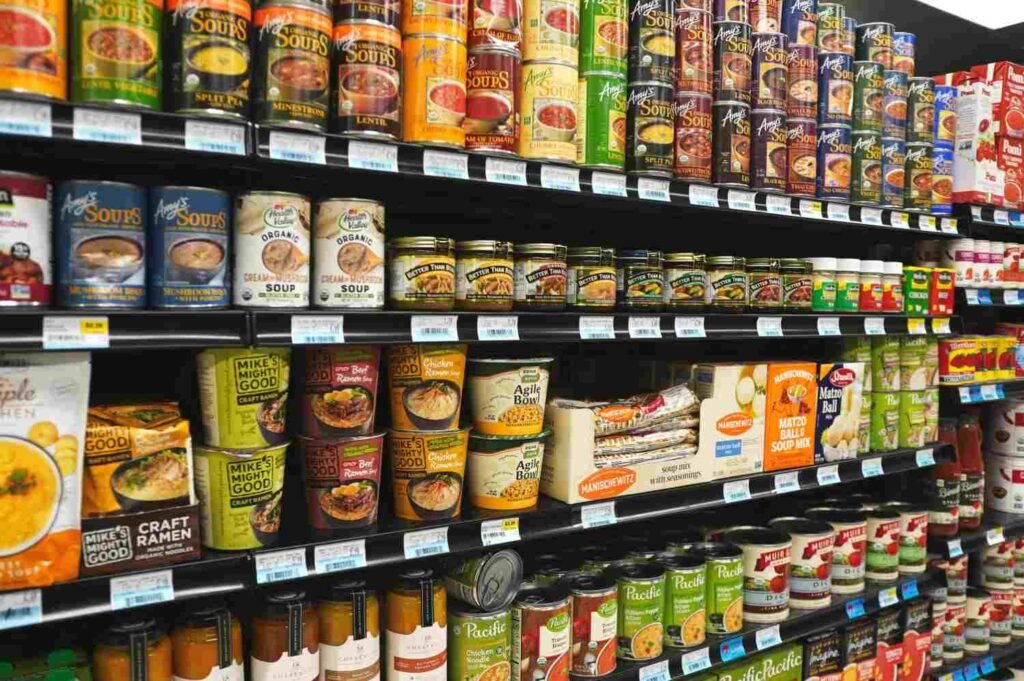
Focus on swaps, not elimination. Replacing a sugary breakfast cereal with plain oats and fruit, or a packaged snack cake with fruit and nuts, moves the needle more than agonizing over occasional convenience foods like canned soup or frozen vegetables, which aren’t in the same category.
Prioritize fiber and whole-food protein. Both appear repeatedly in the research above as protective factors — fiber for its role in gut and metabolic health, protein for supporting the muscle mass that tends to decline with both age and chronic ultra-processed eating. Our guide to the best high-protein foods for weight loss and muscle health is a useful starting point.
Read ingredient lists, not just nutrition labels. A short ingredient list made up of recognizable foods is generally a better marker of a minimally processed product than calorie or macro counts alone.
Cook more meals from base ingredients when you reasonably can. This doesn’t mean everything from scratch every day — it means shifting the ratio over time so that more of your calories come from foods you assembled yourself rather than industrially formulated products.
Don’t ignore the other pillars of aging well. Diet is one lever among several — sleep, stress management, and physical activity all interact with and sometimes outweigh dietary factors in aging research, so a good diet paired with poor sleep or chronic stress won’t fully offset the risks either factor carries alone.

The Bottom Line
The research base connecting ultra-processed foods to faster biological aging has moved from a handful of small studies to a genuinely large, consistent body of evidence spanning multiple countries and measurement methods. The effect appears real, appears at least partly independent of body weight, and appears to work through several overlapping biological pathways — inflammation, oxidative stress, gut disruption, and glycation among them. You don’t need to fear every packaged product in your pantry, but treating ultra-processed foods as the foundation of your diet, rather than an occasional convenience, carries a cost that current science is only now starting to quantify in years, not just pounds.