Health
Strength Training for Longevity: Why Muscle Matters More as You Age (Beginner Guide)
Longevity, here’s a number worth sitting with: after about age 30, most adults lose roughly 3–8% of their muscle mass per decade, and the rate accelerates after 60. This gradual loss is called sarcopenia, and it’s one of the most underappreciated threats to a long, independent life. It’s not just about looking strong or lifting heavy things. It’s about whether you can carry your own groceries at 75, catch yourself when you trip, and get off the floor on your own.
The antidote isn’t a mystery supplement or a special diet. It’s strength training — and it works at almost any age. This guide explains why muscle matters for longevity, what happens as you age, how strength training changes the equation, and exactly how a beginner can start with a simple home or gym routine.
If you’ve read our guides on walking and longevity, think of this as the missing piece: walking is wonderful, but it doesn’t fully protect muscle. Strength training does.

Why Muscle Matters More Than We Realize
Muscle is not just a cosmetic feature or a tool for athletes. It’s metabolically active tissue that does real work for your health.
- It powers movement and independence. Every daily task — standing up, climbing stairs, carrying things — depends on muscle.
- It supports your metabolism. Muscle burns energy even at rest, helping regulate weight and blood sugar.
- It protects your bones. Muscle pulls on bone, stimulating it to stay dense. Strong muscles mean stronger bones.
- It improves balance and reduces falls. Falls are a leading cause of injury and loss of independence in older adults.
- It improves glucose control. Muscle is a major site of glucose uptake, which is why it’s so important for blood sugar balance.
- It supports longevity. Studies link muscle strength and mass to lower mortality risk and better function in later life.
In short, muscle is a marker of how well your body will age.
What Is Sarcopenia?
Sarcopenia is the age-related loss of muscle mass, strength, and function. It develops quietly over decades and becomes obvious only when daily tasks get hard.
Why It Happens
Several factors combine:
- Hormonal changes — declining testosterone, estrogen, and growth hormone
- Reduced physical activity — the biggest and most modifiable factor
- Poor protein intake — many older adults don’t eat enough protein
- Chronic inflammation — a low-grade, age-related process
- Nerve and mitochondrial changes — affecting how muscles are recruited and fuelled
- Insufficient anabolic resistance — older muscle responds less efficiently to protein and exercise, meaning it needs more stimulus, not less
Why It’s Dangerous
Sarcopenia increases the risk of:
- Falls and fractures
- Loss of independence
- Frailty
- Slower recovery from illness
- Metabolic dysfunction
- Earlier death
The message isn’t meant to scare you. It’s meant to show that strength training is not vanity — it’s preventive medicine.
What Strength Training Does for Longevity
Research consistently shows that people with more muscle and strength tend to live longer and function better. Here’s why.
It Rebuilds What Aging Takes
Strength training directly counteracts sarcopenia. Even in your 70s, 80s, and 90s, muscle responds to resistance — it just needs a clear signal and enough protein. Studies of very old adults show meaningful gains in strength and function from modest programs.
It Strengthens Bones
Weight-bearing and resistance exercise stimulates bone formation. This is crucial for preventing osteoporosis and fractures, especially for women after menopause. Vitamin D and calcium support this too; see our vitamin D guide.
It Improves Metabolism and Blood Sugar
Building muscle increases the tissue available to absorb glucose, improving insulin sensitivity. This is one of the best long-term investments in metabolic health, complementing the habits in our blood sugar balance guide.
It Supports Brain and Mood
Exercise, including resistance training, is linked to better mood and cognitive function. The World Health Organization recommends both aerobic and muscle-strengthening activity for adults, including older adults.
It Preserves Independence
The ability to rise from a chair, climb stairs, and carry loads is directly tied to lower-body and grip strength. Strength training keeps those abilities alive.
The Good News: It Doesn’t Take Much
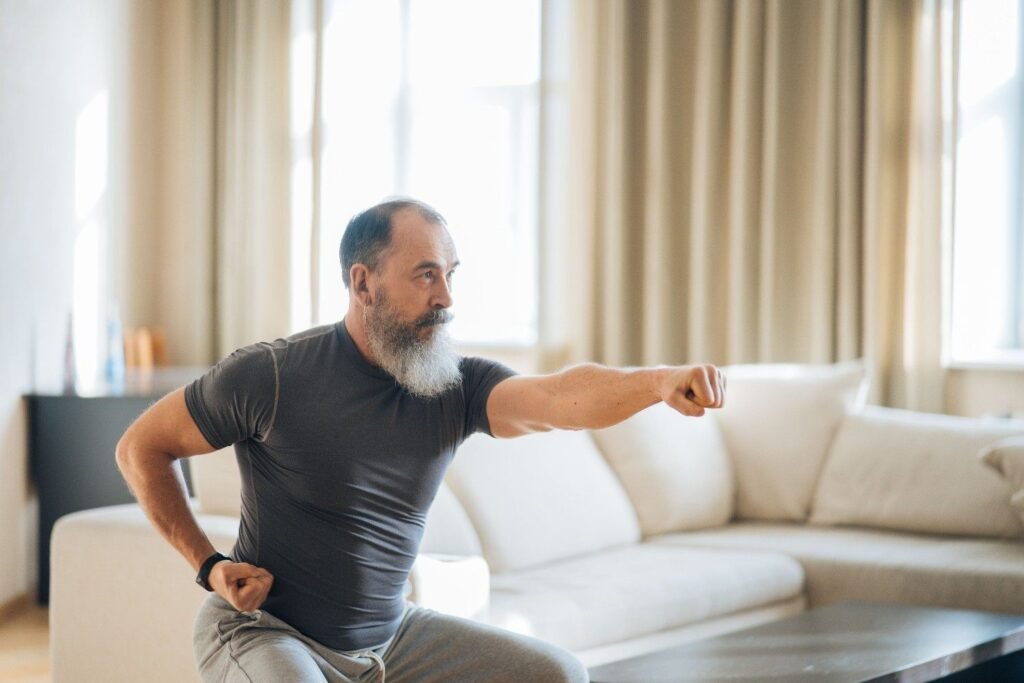
One of the biggest misconceptions is that strength training requires hours in a gym. It doesn’t. Research suggests that even two sessions per week can produce significant improvements in strength and function, especially for beginners. Consistency beats intensity.
You also don’t need fancy equipment. Bodyweight, a couple of dumbbells or resistance bands, and a bit of floor space can take you a long way.
A Beginner Full-Body Routine
Here’s a simple, effective starting point. Do it two to three times per week on non-consecutive days, with a rest day in between.
The Six Core Movements
- Squat — sit-to-stand pattern, works legs and glutes
- Hinge — hip movement, works glutes, hamstrings, and back
- Push — chest, shoulders, triceps
- Pull — back and biceps
- Carry — grip and core, very functional
- Core — bracing and stability
Sample Session
Warm up for 5 minutes with light movement.
- Squat: 2–3 sets of 8–12 reps (bodyweight, goblet squat with a dumbbell, or chair-assisted)
- Hinge: 2–3 sets of 8–12 (glute bridges, or Romanian deadlifts with light weights)
- Push: 2–3 sets of 8–12 (wall or incline push-ups, or overhead press)
- Pull: 2–3 sets of 8–12 (resistance band rows, or dumbbell rows)
- Carry: 2 sets of a 30-second walk holding weights (farmer’s carry)
- Core: 2 sets of a plank or dead bug
Cool down and stretch. That’s a complete workout in 30–40 minutes.
Bodyweight-Only Version
If you have no equipment:
- Chair squats or bodyweight squats
- Glute bridges
- Wall push-ups (progress to incline and floor)
- Doorway or band rows (or towel rows)
- Farmer’s carry with filled water bottles or grocery bags
- Planks
You can build significant strength with just your bodyweight.
Progressive Overload: The Key to Getting Stronger
Muscle adapts to demand. To keep improving, you need to gradually ask more of it — this is called progressive overload. You can do it by:
- Adding a little weight
- Adding a few reps
- Adding a set
- Slowing the movement down
- Reducing rest time
- Improving your range of motion
The principle is simple: gradually do a bit more over time. Don’t rush it. Small, steady increases are safer and more sustainable.
How Hard Should It Feel?
For most sets, aim to finish with a few reps still “in the tank” — a rating of around 6–8 out of 10 in effort. You should feel challenged but not in pain or completely exhausted. Form always comes before load.
Recovery and Protein: The Other Half of the Equation
Muscle grows during recovery, not during the workout. Two things matter most.
Protein
Aim for adequate protein — generally around 1.2–1.6 g per kilogram of body weight per day for active adults, and possibly more for older adults to overcome anabolic resistance. Spread it across meals rather than eating it all at once. Our plant-based protein guide covers sources for every diet, and our collagen guide explains the connective-tissue side.
Sleep
Sleep is when growth and repair happen. Poor sleep undermines your results and your recovery. Our sustainable sleep routine guide is directly relevant here.
Rest Days
Take at least one full rest day between sessions, and listen to your body. Soreness is normal; sharp pain is not.
Common Mistakes for Beginners
- Doing too much too soon. Ego lifts lead to injury. Start light.
- Skipping the warm-up. Five minutes of movement prevents problems.
- Ignoring form. Quality reps beat heavy reps. Consider a session with a trainer or watch reputable tutorials.
- Training every day. Muscles need recovery. Two to three sessions a week is plenty at first.
- Neglecting protein. You can’t build muscle without the raw material.
- Only doing cardio. Cardio is great, but it doesn’t preserve muscle on its own.
- Giving up because of soreness. Soreness fades after the first couple of weeks. Push through the adjustment.
- Comparing yourself to others. Your only benchmark is your last session.
Staying Consistent
The best routine is the one you’ll actually do. A few tips:
- Schedule it like an appointment — same days, same time.
- Start absurdly small if needed — even 15 minutes counts.
- Track your sessions in a notebook or app so you can see progress.
- Pair it with something enjoyable — a podcast, a friend, good music.
- Focus on how it makes you feel — stronger, steadier, more capable.
- Miss a session? Just resume. Consistency over months matters far more than any single workout.
A Sample Week for a Beginner
- Monday: Full-body strength (30–40 min)
- Tuesday: Walk or light activity
- Wednesday: Full-body strength
- Thursday: Walk or rest
- Friday: Full-body strength (or a second session if you’re just starting)
- Saturday: Walk, hike, or recreational activity
- Sunday: Rest
Two strength sessions are enough to begin. Add a third when it feels comfortable.
Strength Training for Women and Older Adults
Two groups benefit enormously from strength training, and both are often given the least encouragement to do it.
Women
For women, resistance training is one of the most powerful tools against age-related bone loss. After menopause, declining estrogen accelerates bone density loss, raising the risk of osteoporosis and fractures. Lifting weights stimulates bone remodeling and helps preserve density. It also supports metabolism, body composition, and confidence. The old fear that lifting weights makes women “bulky” is a myth — building large amounts of muscle requires far more than a couple of weekly sessions, and the health benefits are overwhelming.
Older Adults
For older adults, strength training is quite literally a tool for independence. It improves balance, gait, and the ability to rise from a chair or climb stairs — the very abilities that keep people self-sufficient. It also reduces fall risk, which is a leading cause of injury in later life. Even adults in their 80s and 90s show measurable gains, provided the training is scaled appropriately and progressed gradually.
Safety First
Before you start, keep a few principles in mind:
- Check with your doctor if you have heart conditions, joint problems, or other health concerns.
- Learn the movements with light weight or no weight, and consider a session or two with a qualified trainer to build good habits.
- Progress slowly. Add weight or reps only when the current level feels controlled.
- Never train through sharp pain. Soreness is fine; pain is a signal to stop.
- Warm up and cool down every session.
- Stay hydrated and eat adequately.
Strength training is remarkably safe when approached sensibly, and the risks of not doing it grow every decade.
Frequently Asked Questions
Do older adults really benefit from lifting weights?
Yes — the research is clear. Even people in their 80s and 90s gain strength and function from resistance training.
Do I need a gym?
No. Bodyweight and a couple of dumbbells or bands can build meaningful strength at home.
How fast will I see results?
Beginners often notice strength gains within a few weeks and visible changes within 8–12 weeks with consistency.
Is strength training safe with joint pain?
Often yes, with appropriate modifications. Check with a physiotherapist or doctor, especially with existing conditions.
How much protein do I need?
Around 1.2–1.6 g/kg for active adults, more if you’re older or training hard.
The Bottom Line
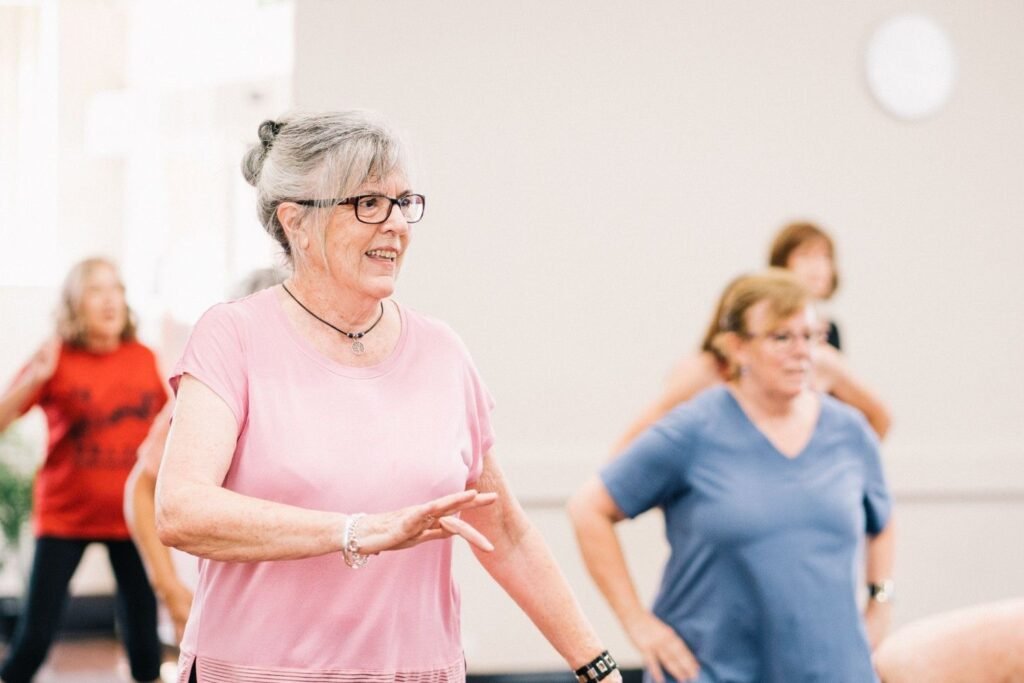
Muscle is one of your best long-term investments. It keeps you strong, mobile, metabolically healthy, and independent as you age — and strength training is what builds and preserves it. The great news is how little it takes to start: two short sessions a week, a few basic movements, progressive overload, adequate protein, and sleep.
You don’t need to be an athlete. You don’t need to look a certain way. You just need to move against resistance, consistently, and let your body do what it’s designed to do: adapt and grow stronger.
Pair this with our guides on sleep, blood sugar balance, and protein, and you’ve got a complete longevity toolkit. For more realistic, evidence-based lifestyle guides, visit guideblogs.com.
This article is for general information only and is not medical advice. Consult a qualified healthcare professional before starting a new exercise program, especially if you have existing health conditions.