Lifestyle
Collagen: Does It Actually Work? Food Sources vs Supplements & What the Evidence Shows
Walk into any pharmacy or scroll through any beauty aisle online and you’ll see collagen everywhere. Powders, capsules, gummies, drinks, creams — all promising firmer skin, happier joints, and healthier hair. It’s become one of the best-selling supplements in the world, but the question that matters gets asked far less often than it should: does collagen actually work?
The honest answer is more interesting than a simple yes or no. Collagen is real, it’s essential, and it does decline with age. But whether swallowing it or rubbing it on actually changes anything depends on a lot of factors — the type, the dose, the form, and what you’re trying to achieve. This guide separates the marketing from the evidence, explains the different types, looks at the best food sources, and helps you set realistic expectations.
If you’ve already read our bone broth recipe and benefits guide, you’ll recognise some of this ground. Think of this as the deeper, science-focused companion piece.

What Is Collagen, Exactly?
Collagen is the most abundant protein in your body. It’s the structural scaffolding that holds your skin, bones, tendons, ligaments, cartilage, and blood vessels together. Picture the framework of a building — collagen is that framework in biological form. It gives skin its bounce, keeps joints cushioned, and helps tissues resist stretching and tearing.
The word comes from the Greek kólla, meaning glue, which tells you a lot about its original function. Around 30% of all the protein in your body is collagen, and it’s found almost everywhere.
Collagen is made of amino acids — primarily glycine, proline, and hydroxyproline. Your body assembles it from these building blocks, and vitamin C is a required helper in that process. (Keep that in mind; it becomes important later.)
Here’s the catch: from around your mid-20s onward, your natural collagen production starts to decline. By the time you reach your 40s and beyond, you may be producing noticeably less. Sun exposure, smoking, poor diet, and high sugar intake speed up the breakdown. This is why skin sags, wrinkles deepen, and joints get stiffer with age. It’s also why the collagen supplement market exists.
The Different Types of Collagen
Collagen isn’t one thing. There are at least 28 known types, but a few dominate the conversation:
- Type I — the most abundant. Found in skin, tendons, bones, and ligaments. It’s the main type for skin elasticity and strength, and the one most skin-focused supplements target.
- Type II — the primary collagen in cartilage. This is the joint-focused type, and it’s often sold as “undenatured” or “native” type II.
- Type III — found in skin, blood vessels, and internal organs. Often paired with type I in supplements.
- Type IV — forms part of the basement membrane, a thin layer supporting tissues.
- Type V — involved in the structure of cell surfaces and hair.
Most collagen powders on the market are type I and III, because those are the types most associated with skin, hair, and nails. Joint-focused products usually feature type II. Knowing which type you’re buying matters, because different types target different goals.
Food Sources of Collagen
Since collagen is an animal protein, it only exists in animal foods. There’s no collagen in plants — which is why “vegan collagen” products are actually something else entirely (more on that below).
Bone Broth
Bone broth is essentially collagen that’s been simmered out of bones, connective tissue, and joints. A long, slow simmer breaks collagen down into gelatin and smaller peptides, which is why good broth gels when it cools. It’s one of the most traditional ways to get collagen, and our full bone broth guide covers how to make it and why it’s been a kitchen staple across cultures for centuries.
Fish and Seafood
Fish, especially with the skin on, provides collagen. Fish collagen is particularly popular in supplements because its peptides are smaller and may be absorbed more easily. Sardines and salmon with skin are good whole-food options.
Chicken and Poultry
Chicken skin, bones, and cartilage are rich in collagen. Chicken collagen is common in type II joint products.
Eggs
Eggs contain collagen in the shell membrane and yolk. Eggshell membrane supplements have gained popularity for joint support.
Meat and Organ Meats
Beef, pork, and especially cuts with connective tissue provide collagen. Organ meats like liver are nutrient-dense too.
Foods That Help Your Body Build Collagen
Here’s a crucial point that often gets lost: eating collagen isn’t the only way to support your collagen. You can also give your body the raw materials and cofactors it needs to make its own:
- Vitamin C — essential for collagen synthesis. Citrus, bell peppers, tomatoes, and leafy greens are great sources. Our selenium guide touches on how minerals and vitamins support each other; vitamin C and collagen are a textbook example.
- Protein — provides the amino acids proline and glycine. Our plant-based protein guide explains how to get complete protein even without meat.
- Zinc and copper — minerals involved in collagen formation.
- Antioxidant-rich foods — help protect existing collagen from oxidative damage.
Collagen Supplements: Peptides, Hydrolyzed, and Undenatured
The supplement world is where things get confusing, so let’s decode the labels.
Hydrolyzed Collagen (Collagen Peptides)
“Hydrolyzed” means the collagen has been broken down into smaller fragments called peptides. This matters because intact collagen is a huge molecule that your gut can’t absorb well. Hydrolyzing it makes it small enough to be absorbed into the bloodstream. Most powders you mix into coffee or smoothies are hydrolyzed collagen peptides. This is the most common and most studied form.
Undenatured Type II Collagen (UC-II)
This is a different approach. Instead of breaking collagen down, “undenatured” keeps its natural structure. It’s usually sold in small doses (often around 40 mg) and is thought to work via the immune system rather than by providing building blocks — a mechanism sometimes called oral tolerance. It’s mostly aimed at joint health.
Gelatin
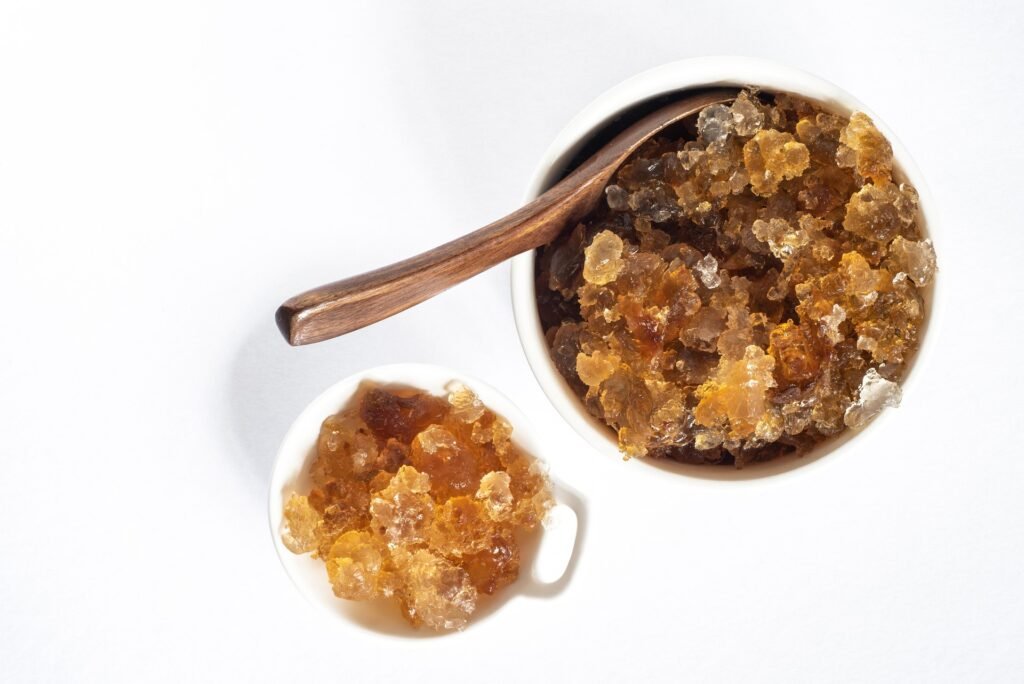
Gelatin is essentially collagen that’s been partially hydrolyzed. It gels in liquid, which makes it useful for cooking, gummies, and desserts. Nutritionally it’s similar to collagen peptides but slightly larger in molecular size.
Marine vs Bovine vs Chicken Collagen
The source determines the type and peptide profile. Marine (fish) collagen is often type I and prized for skin. Bovine (cow) collagen is typically type I and III. Chicken collagen is mostly type II and used for joints. None is inherently “better” — it depends on your goal.
Vegan Collagen
Here’s the catch: there is no such thing as vegan collagen. It doesn’t exist in plants. What’s sold as “vegan collagen” is usually a blend of amino acids, vitamin C, and plant extracts designed to support your own collagen production. That can still be useful, but it’s not collagen, and marketing it as such is misleading.
What Does the Evidence Actually Show?
This is the heart of the article, so let’s be clear-eyed about it.
Skin
The strongest and most consistent evidence for collagen supplements is in skin. Multiple randomized controlled trials — many using hydrolyzed collagen peptides at doses around 2.5 to 10 grams per day — have reported improvements in skin elasticity, hydration, and wrinkle depth after several weeks to months. A frequently cited review and meta-analysis found that oral collagen supplementation was associated with improved skin hydration and elasticity.
The effects are typically modest, not dramatic. You shouldn’t expect to look a decade younger. But small, measurable improvements in hydration and elasticity are plausible, and the studies generally show good safety.
Joints
For joints, the picture is more mixed but still interesting. Some trials of hydrolyzed collagen and undenatured type II collagen report reduced joint pain and improved function, particularly in athletes and people with activity-related knee discomfort. Other studies show little or no difference from placebo. The Cleveland Clinic and other major health bodies tend to describe the evidence as promising but not definitive.
Gut Health
Collagen and gelatin contain glycine and glutamine, amino acids that are involved in maintaining the gut lining. There’s a plausible mechanism for supporting digestive comfort, and bone broth is a traditional remedy for exactly this. However, direct clinical evidence that collagen supplements specifically repair the gut is thinner than the marketing suggests. If gut health is your concern, it’s worth reading our guide on how stress affects digestion, because the gut-brain connection often matters more than any single supplement.
Hair and Nails
Some small studies suggest collagen may improve nail growth and reduce brittleness, and there’s limited evidence for hair. The data here is weaker than for skin, so treat strong claims with skepticism.
The Absorption Question
A fair objection: when you eat collagen, your digestive system breaks it down into amino acids, so why would it end up in your skin or joints specifically? The current theory is that collagen peptides act as signaling molecules, not just raw materials — they may trigger fibroblasts (collagen-producing cells) to produce more collagen. This is supported by some lab research, though the full mechanism is still being studied. It’s a reasonable hypothesis, not settled science.
Important context: many collagen studies are small, and some are funded by supplement companies. That doesn’t make them invalid, but it means we should hold conclusions loosely until larger, independent research catches up.
How to Increase Collagen Naturally
If you’d rather not buy supplements, or want to support collagen from the inside out, these habits help:
- Eat enough protein. Your body needs amino acids to build collagen. Our plant-based protein guide covers protein from every angle.
- Get plenty of vitamin C. It’s non-negotiable for collagen synthesis. Bell peppers, citrus, kiwi, and broccoli are excellent sources.
- Include bone broth, fish, eggs, and connective-tissue meats in your meals.
- Protect your skin from excess sun. UV rays break down collagen faster than almost anything else.
- Limit sugar and refined carbs. High blood sugar triggers a process called glycation that damages collagen. Our blood sugar balance guide explains the mechanism in detail.
- Don’t smoke. Smoking constricts blood vessels and accelerates collagen breakdown.
- Sleep well. Collagen repair happens during rest; our sustainable sleep routine guide explains the repair processes that happen overnight.
- Stay active. Exercise supports circulation and tissue maintenance, and strength training for longevity supports the connective tissue around joints and bones.
Realistic Expectations
Let’s set the record straight.
- Collagen supplements are not a fountain of youth. The skin benefits are real but modest.
- Results take time. Most studies run 8 to 24 weeks. Don’t judge after a week.
- Consistency matters more than dose beyond a point. Around 2.5–10 g of hydrolyzed peptides daily is the typical studied range.
- Food first is rarely wrong. A diet rich in protein, vitamin C, and collagen-containing foods supports your body’s own production.
- Supplements are generally safe for most people, but check with a doctor if you’re pregnant, breastfeeding, or managing a medical condition.
- Beware of hype. “Vegan collagen,” instant results, and miracle claims are red flags.
Collagen and the Bigger Picture
Collagen is a good reminder that the human body responds to overall patterns, not single molecules. Your skin, joints, and gut are influenced by protein intake, vitamin status, blood sugar, sleep, exercise, sun exposure, and stress. Collagen might be a small helpful nudge — but it can’t outrun a poor lifestyle.
If you’re interested in the broader system, our guides on stress and digestion and strength training for longevity show how much of “aging well” comes down to daily habits rather than any one product.
Frequently Asked Questions
Does collagen really work for skin?
There’s decent evidence for modest improvements in hydration and elasticity with hydrolyzed collagen peptides. It’s not dramatic, but it’s not nothing.
What’s the best form of collagen?
Hydrolyzed collagen peptides are the best-studied and most absorbable form. Undenatured type II is specific to joint research.
Can I get collagen from plants?
No. Collagen only exists in animal foods. “Vegan collagen” products support your body’s own production but don’t contain collagen.
How long until I see results?
Most studies show changes after 8 to 12 weeks with consistent use.
Is bone broth as good as supplements?
Bone broth provides collagen, gelatin, and minerals in a whole-food form. It’s a great addition, though the exact collagen dose is harder to measure than a supplement.
Are there side effects?
Collagen is generally well tolerated. Some people experience mild digestive upset. Always check with a professional if you have concerns.

The Bottom Line
Collagen is real, essential, and declines with age — that part isn’t marketing. Hydrolyzed collagen supplements show modest but genuine benefits for skin, with promising but less certain effects on joints and gut health. Food sources like bone broth, fish, eggs, and meat provide collagen, while vitamin C and adequate protein help your body make its own.
If you want to try a supplement, choose a hydrolyzed peptide product, take it consistently for a few months, and keep expectations realistic. But the highest-value moves are the unglamorous ones: eat protein, get vitamin C, protect your skin from the sun, manage blood sugar, sleep well, and stay strong. Collagen can be part of the picture — just not the whole picture.
For more grounded, evidence-based wellness writing, explore the rest of our guides at guideblogs.com, including our full bone broth recipe to get collagen the traditional way.
This article is for general information only and is not medical advice. Consult a qualified professional before starting supplements.