Nutrition
Magnesium Glycinate: 7 Benefits, Dosage, Best Time to Take & Side Effects
Published on GuideBlogs | Health & Wellness | Last Updated: 2026
Let me be honest with you — I spent years brushing off magnesium supplements. “Just eat your greens,” I’d tell myself. Then I hit a wall. Poor sleep, random muscle cramps, constant low-grade anxiety. My doctor ran a panel, and sure enough — low magnesium. Not dangerously low, just chronically depleted. The kind of deficiency that quietly chips away at your quality of life before you even notice it’s happening.
That’s when I started looking seriously at magnesium glycinate — and what I found changed how I think about supplementation altogether.
This isn’t your average drugstore magnesium. It’s a specific form that your body actually absorbs and uses, without wrecking your gut in the process. If you’ve ever taken magnesium oxide and spent the next hour in the bathroom, you already know what I mean.
In this guide, I’m going to break down everything you need to know: what magnesium glycinate actually is, the 7 benefits that are genuinely backed by evidence, how much to take, the best time to take it, and the side effects you should watch for.
What Is Magnesium Glycinate?
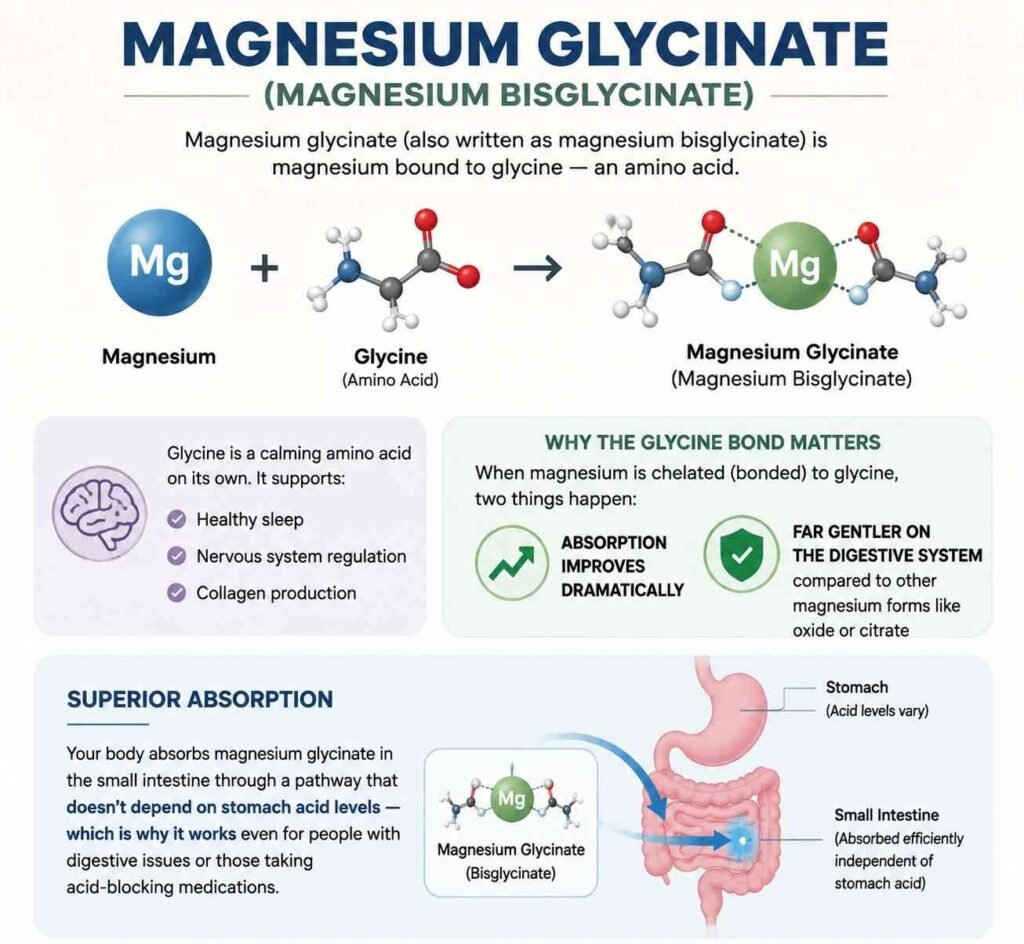
Magnesium glycinate (also written as magnesium bisglycinate) is magnesium bound to glycine — an amino acid. This pairing matters more than most people realize.
Glycine is a calming amino acid on its own. It supports healthy sleep, nervous system regulation, and even collagen production. When magnesium is chelated (bonded) to glycine, two things happen: absorption improves dramatically, and the compound becomes far gentler on the digestive system compared to other magnesium forms like oxide or citrate.
Your body absorbs magnesium glycinate in the small intestine through a pathway that doesn’t depend on stomach acid levels — which is why it works even for people with digestive issues or those taking acid-blocking medications.
Here’s how it compares to other common forms:
| Form | Absorption | Digestive Tolerance | Best For |
|---|---|---|---|
| Magnesium Oxide | Low (~4%) | Often causes loose stools | Constipation relief |
| Magnesium Citrate | Moderate | Can cause loose stools | General use, constipation |
| Magnesium Glycinate | High | Gentle, well-tolerated | Sleep, anxiety, daily use |
| Magnesium Malate | Moderate–High | Good | Energy, muscle fatigue |
| Magnesium L-Threonate | High (brain) | Good | Cognitive function |
If you’re supplementing for overall health, sleep, or stress — glycinate is the one most practitioners recommend.
Why Are So Many People Magnesium Deficient?
Before we get into the benefits, it’s worth asking: why does this matter in the first place?
The answer is that magnesium deficiency is far more common than most people think. Studies suggest that roughly half of Americans don’t meet the recommended daily intake through diet alone. This isn’t just a developed-world problem — it’s a consequence of modern soil depletion, highly processed diets, chronic stress (which burns through magnesium faster), and the widespread use of medications like PPIs and diuretics that deplete magnesium stores.
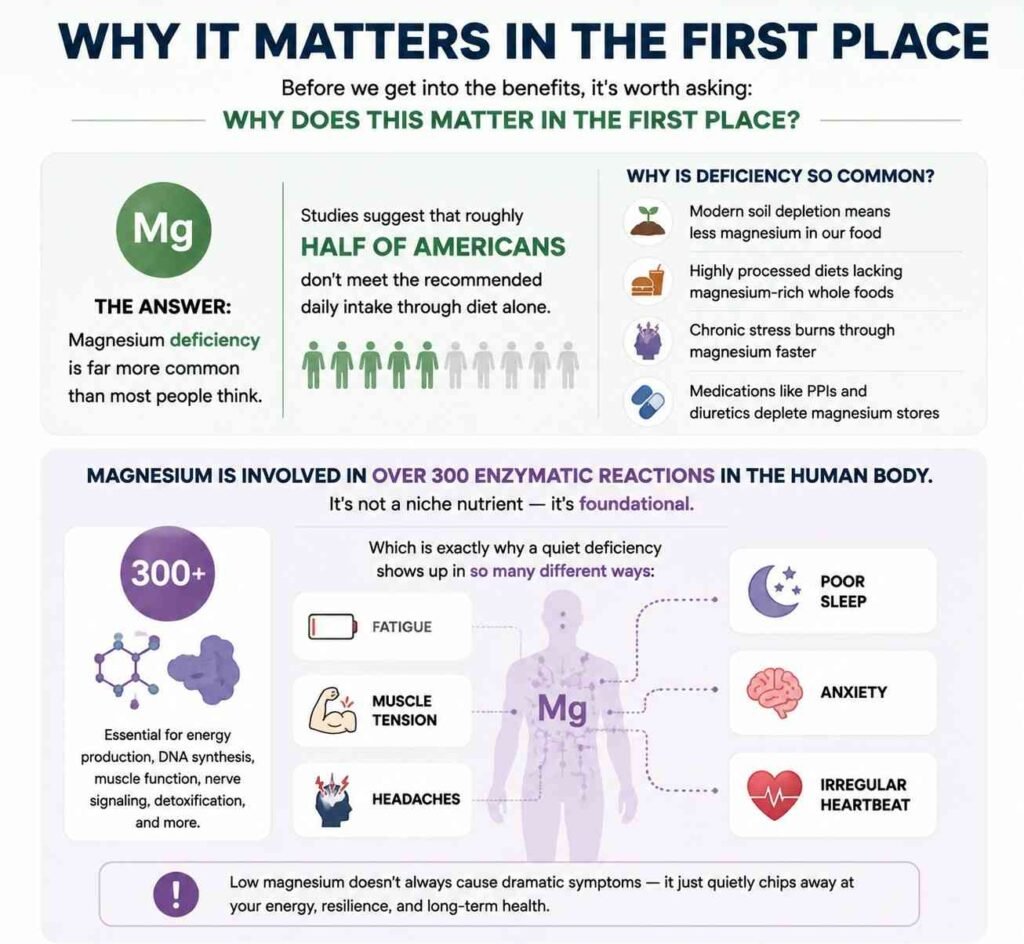
Magnesium is involved in over 300 enzymatic reactions in the human body. It’s not a niche nutrient — it’s foundational. Which is exactly why a quiet deficiency shows up in so many different ways: fatigue, muscle tension, poor sleep, headaches, anxiety, and irregular heartbeat.
7 Evidence-Backed Benefits of Magnesium Glycinate
1. Dramatically Improves Sleep Quality
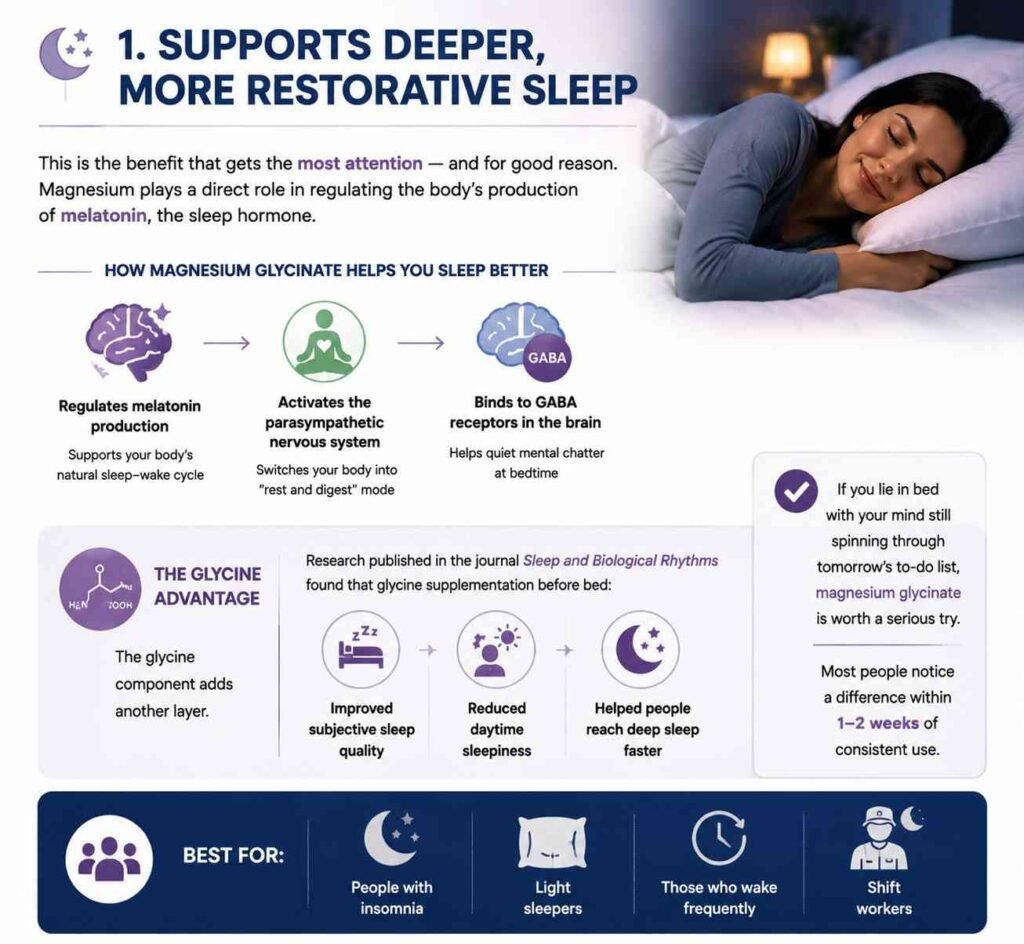
This is the benefit that gets the most attention — and for good reason. Magnesium plays a direct role in regulating the body’s production of melatonin, the sleep hormone. It also activates the parasympathetic nervous system (your “rest and digest” mode) and binds to GABA receptors in the brain, which helps quiet mental chatter at bedtime.
The glycine component adds another layer. Research published in the journal Sleep and Biological Rhythms found that glycine supplementation before bed improved subjective sleep quality, reduced daytime sleepiness, and helped people reach deep sleep faster.
If you lie in bed with your mind still spinning through tomorrow’s to-do list, magnesium glycinate is worth a serious try. Most people notice a difference within 1–2 weeks of consistent use.
Best for: People with insomnia, light sleepers, those who wake frequently, shift workers.
2. Reduces Anxiety and Supports Mood
Magnesium has a well-established relationship with the stress response system. When you’re under chronic stress, your body excretes more magnesium through urine — which then makes you less equipped to handle the next stressor. It’s a vicious cycle.
Magnesium glycinate helps interrupt that cycle by:
- Regulating cortisol (your primary stress hormone)
- Supporting GABA activity in the brain, promoting calm without sedation
- Reducing the physical symptoms of anxiety like muscle tension and a racing heart
A 2017 review in Nutrients analyzed 18 studies and found meaningful evidence that magnesium supplementation reduces anxiety symptoms, particularly in people who are already deficient.
This isn’t the same as taking a sedative. It’s more like turning down the background noise of stress so you can think more clearly and respond instead of react.
Best for: People with generalized anxiety, those going through high-stress periods, anyone experiencing physical tension from stress.

3. Eases Muscle Cramps and Supports Recovery
Magnesium and calcium work together to control muscle contractions. Calcium triggers the contraction; magnesium signals the release. Without enough magnesium, muscles can contract but struggle to relax properly — leading to cramps, spasms, and that tight, sore feeling after exercise.
Athletes and active people have long used magnesium for this reason, but even sedentary individuals can experience nighttime leg cramps from low magnesium levels.
Magnesium glycinate is particularly useful here because you can take higher doses without the laxative effect of other forms, making it easier to achieve the therapeutic levels that actually make a difference for muscles.
Best for: Athletes, people with restless legs, those prone to nighttime cramps, anyone with chronic muscle tension.
4. Supports Healthy Blood Sugar and Insulin Sensitivity
This one is underappreciated. Magnesium plays a key role in glucose metabolism and insulin signaling. When magnesium levels are low, cells become less responsive to insulin — a precursor to type 2 diabetes and metabolic syndrome.
Several large-scale studies have found that higher dietary magnesium intake is associated with a significantly lower risk of developing type 2 diabetes. A meta-analysis in Diabetes Care found that each 100mg increase in magnesium intake was associated with a 15% reduction in diabetes risk.
For people who already have insulin resistance or elevated blood sugar, magnesium glycinate supplementation (alongside diet and lifestyle changes) may meaningfully improve markers.
Best for: People with pre-diabetes, insulin resistance, PCOS, or a family history of type 2 diabetes.
5. Lowers Blood Pressure and Supports Heart Health
Your heart is a muscle, and like all muscles, it needs magnesium to function correctly. Magnesium helps regulate blood pressure by relaxing the smooth muscle cells in blood vessel walls, allowing them to dilate and reduce resistance.
Research consistently shows that magnesium supplementation produces modest but meaningful reductions in both systolic and diastolic blood pressure — particularly in people who are deficient or already hypertensive. It also helps maintain normal heart rhythm, which is why magnesium is commonly administered intravenously in hospital settings for certain cardiac arrhythmias.
This doesn’t replace blood pressure medication if your doctor has prescribed it, but for people in the early stages of elevated pressure or looking to support cardiovascular health, magnesium glycinate is a worthwhile addition.
Best for: People with mild hypertension, those with a family history of heart disease, anyone focused on long-term cardiovascular health.
6. Reduces Frequency and Intensity of Migraines
If you get migraines, this benefit alone might make magnesium glycinate worth taking. Research is surprisingly strong here.
Low magnesium levels are found in a disproportionately high number of migraine sufferers. Magnesium plays a role in neurotransmitter release, serotonin receptor function, and blood flow in the brain — all of which are involved in migraine pathophysiology.
The American Headache Society and the Canadian Headache Society both recognize magnesium as a preventive option for migraines. Studies using 400–600mg of magnesium daily have shown reductions in migraine frequency of up to 41%.
Magnesium glycinate is the preferred form for this purpose because the doses required are higher, and other forms at those doses tend to cause digestive issues.
Best for: Migraine sufferers, people with tension headaches, those who get menstrual migraines.
7. Supports Bone Density and Long-Term Skeletal Health
Most people think of calcium when they think about bones — but magnesium is equally important and far less discussed. About 60% of the body’s total magnesium is stored in bones, where it directly influences bone crystal formation and the activity of osteoblasts (cells that build new bone).
Magnesium also regulates parathyroid hormone and vitamin D metabolism, both of which are critical for calcium absorption. In other words, if you’re taking calcium and vitamin D for bone health but ignoring magnesium, you may be leaving significant benefits on the table.
Studies have linked adequate magnesium intake to higher bone mineral density and a reduced risk of osteoporosis, particularly in older women.
Best for: Postmenopausal women, people at risk for osteoporosis, those with low vitamin D absorption, anyone focused on long-term bone health.
Magnesium Glycinate Dosage: How Much Should You Take?
There’s no one-size-fits-all answer here, but here are the general guidelines:
Recommended Dietary Allowance (RDA) for Magnesium:
- Adult men (19–30): 400mg/day
- Adult men (31+): 420mg/day
- Adult women (19–30): 310mg/day
- Adult women (31+): 320mg/day
- Pregnant women: 350–360mg/day
Typical supplemental doses of magnesium glycinate:
- Maintenance / general health: 100–200mg elemental magnesium per day
- Sleep and anxiety: 200–400mg elemental magnesium before bed
- Migraine prevention: 400–600mg elemental magnesium per day (split doses)
- Athletic recovery: 300–500mg elemental magnesium per day
Important: Supplement labels show the weight of the whole compound (magnesium glycinate), not just the elemental magnesium. A 500mg magnesium glycinate capsule typically contains around 50–70mg of elemental magnesium. Always check the label for “elemental magnesium” content.
The tolerable upper intake level (UL) for supplemental magnesium is 350mg elemental magnesium per day for adults. Going above this significantly increases the risk of digestive side effects and, in rare cases, toxicity — especially for people with kidney disease.
If you’re new to magnesium, start low (100–150mg) and increase gradually over 2–3 weeks to allow your body to adjust.
Best Time to Take Magnesium Glycinate
Timing depends on what you’re taking it for:
For sleep: Take 30–60 minutes before bed. The combination of magnesium and glycine is most effective when taken in the evening — both compounds help relax the nervous system and prepare your body for deep, restorative sleep.
For anxiety and stress: Split the dose — half in the morning with food, half in the evening. This helps maintain steady magnesium levels throughout the day.
For muscle cramps or athletic recovery: Take post-workout or in the evening. Post-exercise is a great time because muscles are in recovery mode and can put the magnesium to immediate use.
For migraines: Split into two doses, morning and evening, to maintain consistent blood levels.
For blood sugar or heart health: Morning with breakfast works well. Consistent daily timing matters more than the specific hour.
With or without food? Magnesium glycinate can be taken with or without food. Unlike magnesium oxide, it doesn’t require stomach acid to be absorbed. If you have a sensitive stomach, taking it with a small snack is a safe bet.
Side Effects of Magnesium Glycinate
Magnesium glycinate is one of the most well-tolerated magnesium supplements available. That said, it’s not completely side-effect-free.
Common (usually at higher doses):
- Loose stools or diarrhea — far less common than with other forms, but possible if you take too much too fast
- Nausea — typically occurs when taken on an empty stomach
- Drowsiness — especially when taken in the morning, since it promotes calm
Less common:
- Low blood pressure (particularly if you’re already taking blood pressure medication)
- Muscle weakness in cases of very high intake
Serious but rare (toxicity — typically only from extremely high doses or kidney disease):
- Irregular heartbeat
- Difficulty breathing
- Extreme fatigue or confusion
Who should be cautious:
People with kidney disease should not take magnesium supplements without medical supervision — the kidneys are responsible for excreting excess magnesium, and impaired kidney function can lead to dangerous accumulation.
People taking certain medications (antibiotics, diuretics, blood pressure medications) should check with their doctor before adding magnesium supplementation, as interactions are possible.
Is Magnesium Glycinate Worth Taking Every Day?
Short answer: for most people, yes.
Unlike many supplements that fall apart under scientific scrutiny, magnesium is genuinely foundational to human health — and most people simply don’t get enough from food alone. Magnesium glycinate offers the highest bioavailability with the lowest risk of side effects, making it a practical choice for daily supplementation.
That said, it’s not magic, and it’s not a substitute for addressing the root causes of whatever you’re dealing with. Sleep hygiene, diet, exercise, and stress management still matter enormously. Magnesium glycinate works best as a tool in a larger system, not a standalone fix.
If you’re skeptical (and you should be skeptical of any supplement), here’s a reasonable approach: take 200mg of elemental magnesium glycinate before bed for 30 days and track your sleep, energy levels, and any physical symptoms. Most people who are genuinely deficient notice a clear difference within two to three weeks.
How to Choose a Quality Magnesium Glycinate Supplement
Not all supplements are created equal. Here’s what to look for:
- Third-party tested: Look for NSF Certified, USP Verified, or Informed Sport certification on the label. This means an independent lab has verified the contents.
- Elemental magnesium content clearly listed: A trustworthy brand will tell you exactly how much elemental magnesium is in each serving.
- Minimal fillers: Avoid products with long lists of artificial colors, sweeteners, or unnecessary additives.
- Bisglycinate vs. glycinate: Both terms refer to the same compound. “Bisglycinate” just specifies that magnesium is bound to two glycine molecules.
- Form factor: Capsules, tablets, and powder all work. Powder can be useful if you want to dial in your dose precisely, or if you prefer mixing it into a drink before bed.
Final Thoughts
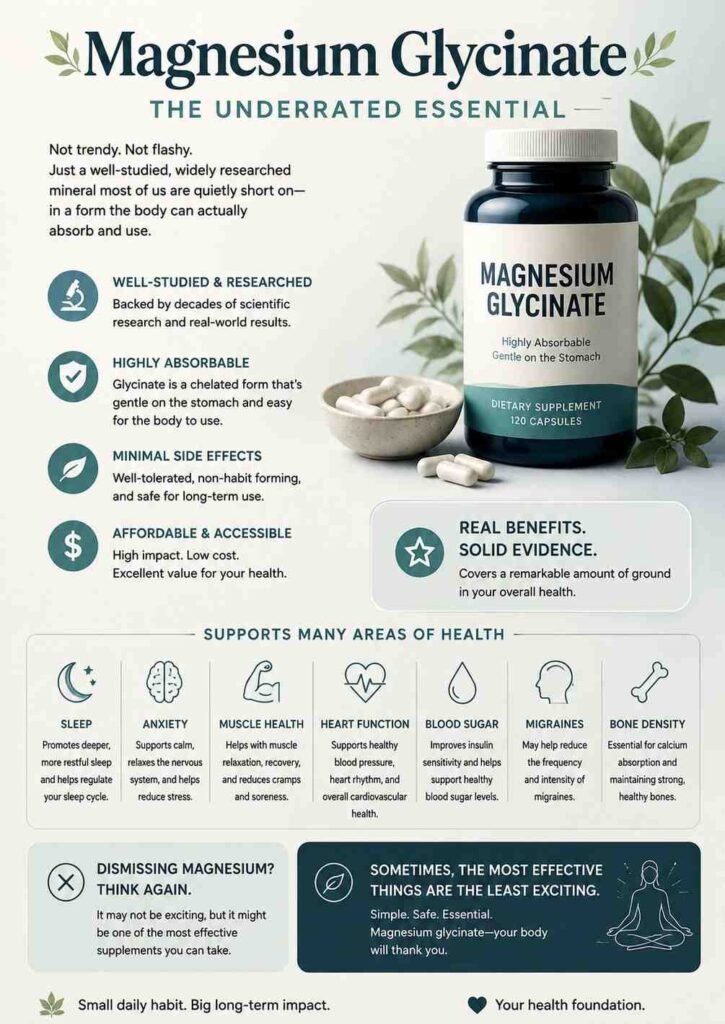
Magnesium glycinate isn’t trendy in the way that lion’s mane or ashwagandha are. It doesn’t have flashy marketing or celebrity endorsements. It’s just a well-studied, widely researched mineral that most of us are quietly short on — and a form of it that the body can actually absorb and use.
The benefits are real, the evidence is solid, the side effects are minimal, and the cost is low. For sleep, anxiety, muscle health, heart function, blood sugar, migraines, and bone density — it covers a remarkable amount of ground.
If you’ve been dismissing magnesium as a basic, unsexy supplement not worth your attention, I’d gently suggest reconsidering. Sometimes the most effective things are the least exciting ones.
Disclaimer: This article is for informational purposes only and does not constitute medical advice. Always consult a qualified healthcare provider before beginning any new supplement, especially if you have a pre-existing condition or are taking medications.
Related Articles:
- Magnesium vs. Melatonin for Sleep: Which Works Better?
- The Best Supplements for Anxiety That Actually Have Evidence Behind Them
- Vitamin D and Magnesium: Why You May Need Both
- 5 Essential Anti-Inflammatory Foods