Lifestyle
Omega-3 Fatty Acids: Best Food Sources, EPA/DHA Benefits & How Much You Really Need
Few nutrients have been studied as thoroughly — or recommended as widely — as omega-3 fatty acids. They show up in advice about heart health, brain function, inflammation, eye health, and even mood. It’s one of the rare nutrients that both mainstream medicine and the wellness world agree on, which is saying something.
But omega-3s are also one of the most misunderstood. People take a fish oil capsule and assume they’re covered, without knowing how much they’re actually getting, whether their body can use it, or whether the food on their plate is doing the job already. This guide clears up the confusion: what omega-3s are, the crucial difference between ALA, EPA, and DHA, what the evidence says, where to find them, and how much you genuinely need.
If you’ve read our selenium guide, you already know that fatty fish does double duty — it’s one of the best sources of both selenium and omega-3s. This article zooms in on the fats themselves.

What Are Omega-3 Fatty Acids?
Omega-3 fatty acids are a family of polyunsaturated fats. The “omega-3” name refers to the position of a double bond in the fat molecule — three carbons from the tail end. That might sound like chemistry trivia, but it matters, because your body treats this family of fats differently from omega-6 and other fats.
Omega-3s are essential fatty acids, which means your body cannot make them from scratch. You have to get them from food. This is exactly why they’re so important to understand — if they’re missing from your diet, nothing else can substitute for them.
There are three main types, and the differences between them are the single most important thing in this entire article.
ALA, EPA, and DHA: The Three Types
ALA (Alpha-Linolenic Acid)
ALA is the plant-based omega-3. It’s found in flaxseeds, chia seeds, walnuts, hemp seeds, and certain oils. It’s the “parent” omega-3 — your body can theoretically convert ALA into the other two.
The catch? That conversion is very inefficient. Most estimates suggest only about 5–10% of ALA converts to EPA, and only around 0.5–5% converts to DHA. Some studies put DHA conversion even lower, especially in men. So while ALA is valuable in its own right, you can’t rely on flaxseed alone to meet your EPA and DHA needs.
EPA (Eicosapentaenoic Acid)
EPA is found mainly in fatty fish and algae. It’s best known for its role in managing inflammation and supporting heart health. EPA is the type most associated with reduced inflammation and cardiovascular benefits.
DHA (Docosahexaenoic Acid)
DHA is structurally important for the brain, eyes, and nervous system. It’s a major building block of the grey matter in your brain and the retina in your eyes. DHA is particularly critical during pregnancy and early childhood, when the brain and eyes are developing rapidly.
So when someone says “omega-3s,” they might mean ALA, EPA, DHA, or all three. And the health effects differ depending on which one you’re talking about. That distinction drives almost everything that follows.
Why Omega-3s Matter: The Evidence
Let’s go through the main areas of research, with an honest look at how strong the evidence really is.
Heart Health
This is where omega-3s have the deepest research history. EPA and DHA are associated with:
- Lower triglycerides
- Modestly reduced blood pressure
- Support for heart rhythm
- Reduced risk of cardiovascular events in some populations
The American Heart Association recommends eating fish at least twice a week for heart health. Large trials have shown that higher EPA doses can reduce cardiovascular events in people with existing heart disease or high triglycerides. However — and this is important — omega-3 supplements have not consistently been shown to prevent heart disease in otherwise healthy people. The benefits are clearest for people with high triglycerides or established heart conditions. Our blood sugar balance guide covers related metabolic health habits that work alongside omega-3s.
Brain and Cognition
DHA is essential for brain structure. Observational studies link higher omega-3 intake to better cognitive function and possibly slower cognitive decline, but clinical trials of supplements in healthy older adults have produced mixed results. The evidence is strongest for early development — omega-3s are important during pregnancy and infancy — and less clear for preventing dementia in later life.
Inflammation and Joints
Omega-3s (especially EPA) help regulate the body’s inflammatory response. Some studies show reduced joint pain and stiffness in people with inflammatory conditions. It’s a plausible and promising area, and it connects to our guide on how stress affects digestion, since inflammation and gut health overlap.
Eye Health
DHA is concentrated in the retina. Higher omega-3 intake is linked to lower risk of dry eye and possibly age-related macular degeneration, though again, the supplement evidence isn’t fully settled.
Mental Health
Some research suggests omega-3s, particularly EPA-dominant formulations, may have modest benefits for depression when used alongside standard treatment. It’s an active area of study rather than a proven standalone therapy.
The pattern across all these areas: omega-3s clearly matter, food sources are well supported, and supplements are most useful in specific situations rather than as a universal fix.
The Best Food Sources of Omega-3s
Let’s get practical. Here are the top sources, ranked roughly by how much EPA and DHA (the most bioactive forms) they deliver.
Fatty Fish (Best EPA/DHA Source)
- Salmon (wild or farmed) — one of the richest sources
- Mackerel — extremely high in EPA and DHA
- Sardines — affordable, sustainable, and packed with omega-3s
- Anchovies — small fish, big omega-3 content
- Herring — traditional in many northern cuisines
- Tuna — good source (choose lower-mercury varieties)
- Trout — a solid, versatile option
Aim for two servings of fatty fish per week. That single habit is the most reliable way to hit your EPA and DHA targets through food.
Algae and Algae Oil (Best Vegan EPA/DHA Source)
Algae is actually where fish get their omega-3s in the first place. Algae oil supplements are the go-to option for vegans and vegetarians, providing DHA and often EPA directly. If you avoid fish entirely, this is the most direct plant-based route to EPA and DHA.
ALA-Rich Plant Foods
- Flaxseeds and flaxseed oil — high in ALA (grind them for better absorption)
- Chia seeds — easy to add to yogurt, smoothies, or puddings
- Walnuts — a convenient snack with ALA
- Hemp seeds — nutty and nutritious
- Soybeans and edamame — contain ALA
- Canola and soybean oils — contribute ALA
Remember: ALA is valuable, but it doesn’t fully replace EPA and DHA. Our plant-based protein guide covers these foods from a protein angle too.
Fortified Foods
Some eggs, milk, yogurt, and juices are fortified with omega-3s. They can help, but check the labels — the amounts vary widely.
How Much Omega-3 Do You Really Need?
There’s no single official RDA for omega-3s in most countries, but there are widely accepted recommendations.
- ALA: The NIH Office of Dietary Supplements gives adequate intake levels of roughly 1.6 g/day for adult men and 1.1 g/day for adult women.
- EPA + DHA: Most health organizations recommend around 250–500 mg of combined EPA and DHA per day for general health — the equivalent of about two servings of fatty fish per week.
- Higher doses: People with high triglycerides may be advised 2–4 g/day under medical supervision.
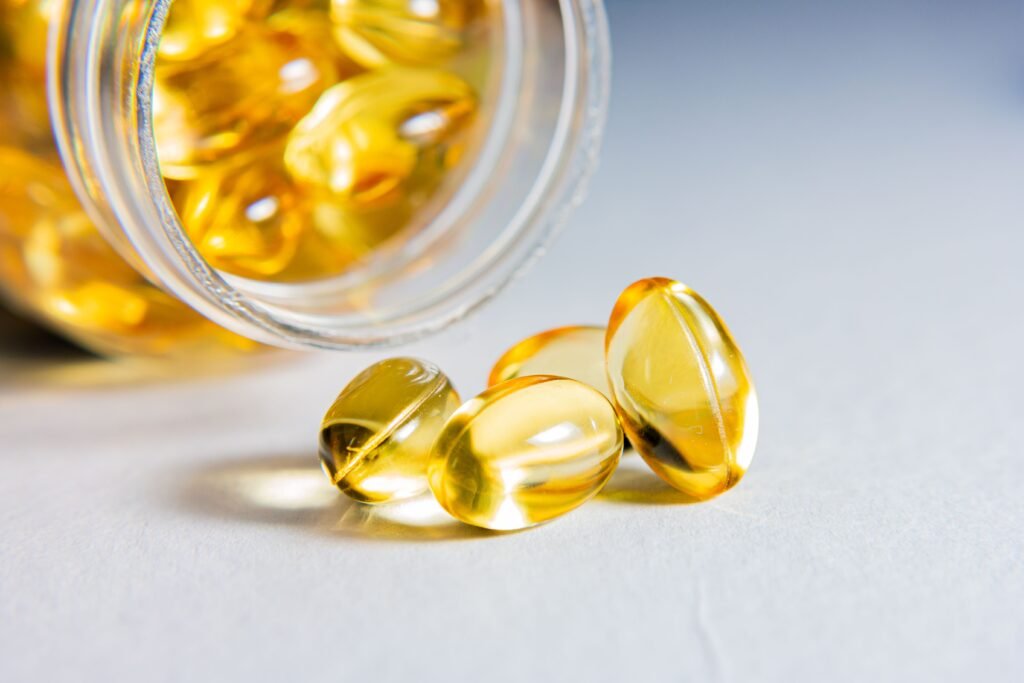
Here’s the number that trips people up: a standard fish oil capsule often contains around 180 mg EPA and 120 mg DHA — only about 300 mg combined. That means a single capsule barely covers your baseline. You often need two or more, or a concentrated formula, to reach the recommended intake. Always read the label on the back, where it lists EPA and DHA specifically, not just “fish oil.”
Supplements: Fish Oil, Krill Oil, and Algae Oil
If you don’t eat fish, or want to top up, supplements are a reasonable option. Here’s how the main types compare.
- Fish oil: The classic. Cheap and well-studied. Look for products that state their EPA and DHA content clearly and are certified for purity (third-party testing reduces concern about mercury and oxidation).
- Krill oil: Contains EPA and DHA in a form that may be slightly better absorbed, plus astaxanthin, an antioxidant. It’s more expensive and lower-dose per capsule.
- Algae oil: The best vegan option, delivering DHA and often EPA. Sustainable and directly sourced.
- Cod liver oil: Rich in EPA, DHA, and vitamins A and D — but watch vitamin A levels if you take it daily.
A few practical tips: store supplements away from heat and light (omega-3s oxidize easily), check the expiry date, and take them with a meal containing fat for better absorption. If you want a deeper look at how fat-soluble nutrients work, our vitamin D guide covers a similar principle.
Signs You Might Not Be Getting Enough
Omega-3 deficiency doesn’t produce dramatic symptoms, but over time, low intake can contribute to:
- Dry, flaky skin
- Dry eyes
- Brittle hair and nails
- Joint stiffness
- Poor concentration or low mood
- Fatigue
Because omega-3s are involved in so many systems, deficiency tends to show up as a collection of vague complaints rather than one clear symptom. If your diet contains little fish and few ALA-rich seeds, it’s worth reviewing. This connects with the collagen guide, where diet quality drives skin and joint health.
Who Should Pay Special Attention?
- People who don’t eat fish — consider algae oil for EPA/DHA.
- Pregnant and breastfeeding women — DHA is important for the baby’s brain and eyes. The general guidance is to eat fish while avoiding high-mercury species, or to use a supplement.
- Older adults — may benefit for heart and cognitive support.
- People with high triglycerides — often advised higher doses by a doctor.
- Vegans and vegetarians — need a deliberate strategy, usually algae oil plus ALA foods.
Balancing Omega-3 and Omega-6
One more concept worth knowing: omega-6 fatty acids (found in many seed oils and processed foods) are also essential, but modern diets tend to be very high in omega-6 relative to omega-3. Both compete for the same enzymes, so an imbalance may tilt the body toward inflammation. You don’t need to avoid omega-6 — it’s essential — but shifting the ratio by eating more omega-3-rich foods is a sensible, low-effort improvement.
Practical Ways to Get More Omega-3
Here are simple habits you can start this week:
- Add tinned sardines or salmon to salads, toast, or pasta — cheap and convenient.
- Keep walnuts and ground flaxseed on hand for snacks and breakfast.
- Use chia seeds in yogurt, overnight oats, or smoothies.
- Cook with salmon, mackerel, or trout once or twice a week.
- Choose omega-3-fortified eggs if you eat eggs.
- If you’re plant-based, take algae oil to cover EPA and DHA.
- Read supplement labels for actual EPA and DHA milligrams.
Frequently Asked Questions
What’s the best source of omega-3?
Fatty fish like salmon, mackerel, and sardines provide the most usable EPA and DHA. For vegans, algae oil is the best direct source.
Can flaxseed replace fish oil?
Not fully. Flaxseed provides ALA, but conversion to EPA and DHA is limited. It’s helpful but not a complete substitute.
How much fish oil should I take?
Aim for around 250–500 mg combined EPA and DHA daily for general health. Check the label for the actual EPA/DHA content, not just the total oil.
Are omega-3 supplements safe?
For most people, yes, at standard doses. High doses can thin the blood, so talk to a doctor if you take blood thinners or have surgery planned.
Do omega-3s help with weight loss?
Not directly. They support overall metabolic and heart health, but they’re not a fat-burning shortcut.
The Bottom Line
Omega-3s are among the most important fats you can eat. ALA comes from plants, while EPA and DHA — the forms your body uses most readily — come primarily from fatty fish and algae. They support your heart, brain, eyes, and inflammatory balance, and the evidence for food sources is solid across decades of research.
The simplest strategy is also the best: eat fatty fish twice a week, include ALA-rich seeds and nuts, and use algae oil if you’re plant-based. If you supplement, focus on the EPA and DHA numbers, not the size of the bottle.
To keep building your nutrition knowledge, pair this with our selenium guide — since fatty fish delivers both — and our Mediterranean diet guide, which naturally features omega-3-rich seafood. Like all our writing, it’s here to help you eat well without the hype, at guideblogs.com.
This article is for general information only and is not medical advice. Speak with a qualified healthcare professional before making significant changes to your diet or supplements.