Lifestyle
Sleepmaxxing: Sleep Optimization
Why the World Is Suddenly Obsessed With “Optimizing” Sleep — and What Actually Works
Published on GuideBlogs | Health & Wellness
A colleague of mine used to wear his exhaustion like a badge of honor. Five hours a night, three cups of coffee before noon, and a running joke that he’d “sleep when he’s dead.” Then, about a year ago, he started tracking his sleep with a wearable ring. The number staring back at him — a sleep score that rarely crossed 60 — finally spooked him into changing something. He didn’t overhaul his entire life. He moved his last coffee to 1 p.m., started dimming his lights an hour before bed, and got up at the same time every single day, weekends included. Six weeks later, his resting heart rate had dropped, his afternoon energy crashes were gone, and — his words, not mine — “I finally feel like a person again.”
That’s the promise behind “sleepmaxxing,” the internet’s latest name for an idea that sleep scientists have been quietly researching for decades: that sleep isn’t just something that happens to you, it’s something you can actively shape. The term itself is new and a little dramatic, borrowed from the same online culture that gave us “looksmaxxing” and “productivity maxxing.” But strip away the trend language, and what’s left is genuinely useful — a set of evidence-backed habits that can meaningfully improve how well, and how deeply, you sleep, no matter where in the world you live or what your schedule looks like.
This article walks through what sleepmaxxing actually means, what the science says works, what’s mostly hype, and how to build a realistic routine around it.
What Is Sleepmaxxing, Really?
At its core, sleepmaxxing is the practice of deliberately optimizing every controllable factor that affects sleep quality — timing, environment, pre-sleep habits, nutrition, and even how you track and measure your rest. It sits at the intersection of two things that have exploded in popularity over the last few years: wearable health technology and a broader cultural shift toward taking sleep seriously as a pillar of health, alongside diet and exercise.
For a long time, sleep was treated as the passive third wheel of wellness — something you’d sacrifice first when work, socializing, or scrolling got in the way. Sleepmaxxing flips that hierarchy. It treats sleep as a skill that can be trained and an output that can be measured, much like fitness or nutrition.
The rise of consumer sleep trackers — rings, smartwatches, and under-mattress sensors — has played a huge role here. People can now see, in hard numbers, how a late dinner, a stressful conversation, or a nightcap before bed actually affects their deep sleep and heart rate variability. That visibility is part of what’s turned sleep from an afterthought into something people actively want to “max out.”
Why Sleep Quality Matters More Than You Think
Sleep isn’t just about feeling rested. During deep sleep, your brain clears out metabolic waste products, including proteins linked to neurodegenerative disease. During REM sleep, your brain consolidates memories and processes emotional experiences. Growth hormone release, immune system repair, and blood sugar regulation are all tightly tied to your sleep cycles.
Poor sleep, on the other hand, is linked to a long list of downstream problems: impaired concentration and decision-making, weakened immune response, increased risk of weight gain and insulin resistance, higher blood pressure, and a greater likelihood of anxiety and depressive symptoms. Chronic short sleep — consistently under six hours a night — has also been associated with increased long-term cardiovascular risk.
None of this means you need to become obsessive about hitting a perfect number every night. But understanding why sleep matters this much is what makes the effort behind sleepmaxxing worth it.
The Pillars of Sleepmaxxing
1. Protect Your Circadian Rhythm
Your circadian rhythm is your body’s internal 24-hour clock, and it’s the single biggest lever you have over sleep quality. It’s primarily regulated by light exposure.
- Get bright light early. Morning sunlight, ideally within the first hour of waking, helps anchor your circadian rhythm and improves alertness during the day and sleep quality at night.
- Dim the lights in the evening. Bright artificial light, especially blue-toned light from screens, in the two to three hours before bed can suppress melatonin production and delay your body’s natural wind-down process.
- Keep a consistent sleep-wake schedule. Going to bed and waking up at roughly the same time every day, including weekends, is one of the most reliable predictors of good sleep quality across studies. Irregular sleep timing, even with the same total hours, has been linked to worse metabolic and cardiovascular outcomes.
2. Build a Wind-Down Routine
Sleep doesn’t switch on the moment your head hits the pillow. Your nervous system needs time to shift from an alert state to a restful one.
- Set a consistent “screens down” time, even if it’s just 30 minutes before bed.
- Try a low-stimulation activity: reading, gentle stretching, journaling, or a warm shower.
- A warm shower or bath about 90 minutes before bed can help, since the subsequent drop in body temperature as you cool down mimics the natural temperature dip that signals sleep onset.
- Avoid intense exercise, heavy meals, or emotionally charged conversations right before bed — all of them keep your nervous system activated when it should be settling down.
3. Optimize Your Sleep Environment
Environment is one of the easiest variables to control, and one of the most underrated.
- Temperature: A cool room, generally between 16–19°C (60–67°F), supports the natural drop in core body temperature needed for sleep onset.
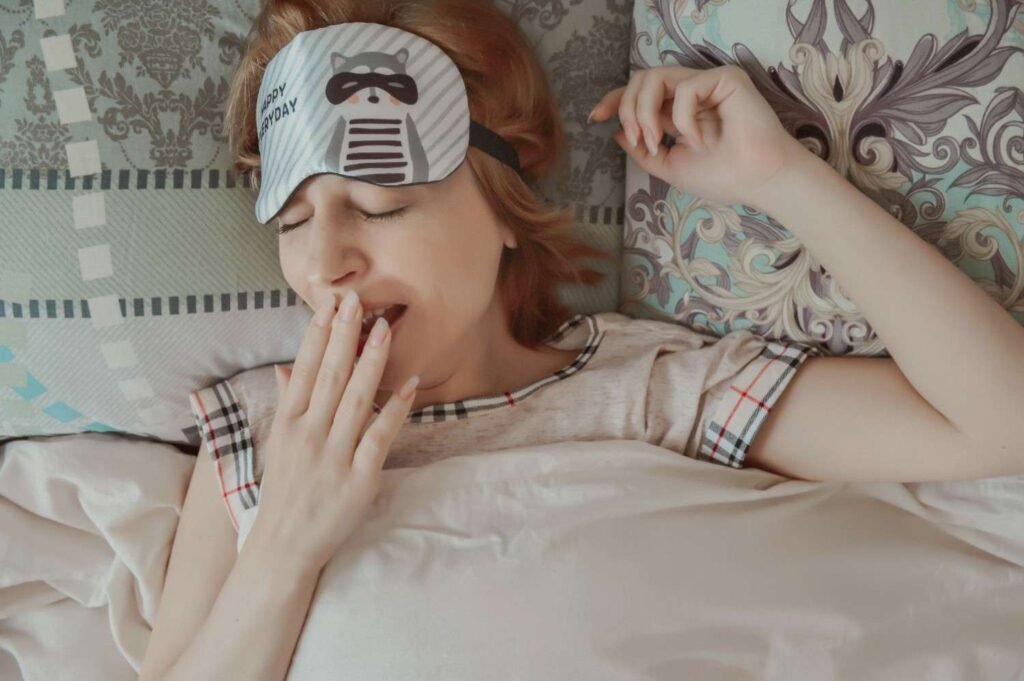
- Darkness: Blackout curtains or an eye mask help block light pollution, which can suppress melatonin even through closed eyelids.
- Noise: Consistent background sound — a fan, white noise, or earplugs — can mask disruptive noise spikes that fragment sleep without you fully waking up.
- Mattress and pillow: These are deeply personal, but a mattress that’s noticeably too soft, too firm, or simply old (most need replacing every 7–10 years) can quietly undermine sleep quality for years without you realizing it’s the cause.
4. Mind What You Eat and Drink
- Caffeine has a long half-life — roughly 5–6 hours — meaning a 3 p.m. coffee can still have a meaningful amount in your system at bedtime. Most sleep researchers recommend cutting off caffeine 8–10 hours before bed.
- Alcohol fragments sleep. It may help you fall asleep faster, but it suppresses REM sleep and causes more awakenings in the second half of the night, leaving you feeling less rested even after a full night in bed.
- Heavy or spicy meals late at night can trigger reflux and discomfort that disrupts sleep, so aim to finish eating at least 2–3 hours before bed.
- A light, balanced evening snack — something with a bit of protein and complex carbohydrate, like a banana with a spoon of nut butter or a small bowl of yogurt — can help some people avoid waking up hungry, without the digestive burden of a heavy meal.
5. Move Your Body — But Time It Right
Regular physical activity is consistently linked to better sleep quality, deeper sleep stages, and falling asleep faster. Moderate aerobic exercise, done most days of the week, tends to produce the biggest benefit. The main caveat is timing: vigorous exercise too close to bedtime can raise core body temperature and adrenaline levels enough to delay sleep onset in some people, so finishing intense workouts at least a few hours before bed is generally a safer bet.
A Sample Sleepmaxxing Routine
Here’s what a realistic evening and morning routine might look like, built around these principles:
| Time | Action |
|---|---|
| 7:00 – 8:00 AM | Get outside for 10–15 minutes of natural light |
| Before 2:00 PM | Last cup of caffeine |
| 7:00 – 8:00 PM | Finish dinner; light, balanced meal |
| 8:30 PM | Dim household lights; screens on night mode or set aside |
| 9:00 PM | Warm shower, light stretching, or reading |
| 9:30 PM | Bedroom cooled down, dark, and quiet |
| 10:00 – 10:30 PM | Lights out, consistent time |
This isn’t a rigid checklist to follow perfectly every night — it’s a template. The goal is consistency across most nights, not flawless execution every single time.

The Role of Sleep Trackers: Helpful Tool or Source of Anxiety?
Wearable sleep trackers are a big part of why sleepmaxxing has become a global phenomenon, and they can genuinely help — they make invisible patterns visible, and many people find that seeing the impact of a late-night drink or a skipped workout is what finally motivates lasting change.
But there’s a documented downside worth knowing about: some people become so fixated on hitting a perfect sleep score that the anxiety itself starts interfering with their sleep — a pattern sleep researchers have started calling “orthosomnia.” If checking your sleep data every morning is making you more stressed rather than more informed, it may be worth stepping back and using the device more loosely, or taking occasional breaks from it altogether.
The healthiest approach tends to be using trackers as a general guide to notice patterns over weeks, not a daily scoreboard to obsess over.
What About Sleep Supplements?
A few supplements have reasonable evidence behind them for supporting sleep, though none of them are magic and all are worth discussing with a doctor before starting, especially if you take other medications.
Melatonin — most useful for realigning your circadian rhythm, such as with jet lag or shift work, rather than as a nightly sedative. Lower doses (0.5–3 mg) taken a few hours before your target bedtime tend to work better than the very high doses commonly sold in stores.
Magnesium — some evidence suggests it may support relaxation and sleep quality, particularly in people with a mild deficiency, though the research is still developing.
L-theanine — an amino acid found in tea, sometimes used to promote a calmer, less racing mind at bedtime without sedation.
Valerian root and chamomile — long used in traditional practice, with modest supporting evidence for easing the transition into sleep, though effects tend to be mild compared to behavioral changes.
None of these substitute for the fundamentals — consistent timing, a good environment, and a proper wind-down routine will always matter more than any supplement.
Common Sleepmaxxing Mistakes to Avoid
- Chasing a perfect number instead of a consistent pattern. One rough night of tracked data doesn’t undo weeks of good habits.
- Over-optimizing to the point of stress. Sleepmaxxing should reduce stress around sleep, not add a new source of it.
- Ignoring the basics while chasing gadgets and supplements. A pricey tracker won’t fix a bedroom that’s too warm, too bright, or a bedtime that shifts by hours between weekdays and weekends.
- Using “catching up” on weekends as a substitute for consistency. Sleeping in dramatically on weekends can worsen your circadian rhythm over time — a pattern sometimes called “social jet lag.”
Frequently Asked Questions
How many hours of sleep do I actually need? Most adults need between 7 and 9 hours per night, though this varies somewhat by individual. The clearer marker of whether you’re getting enough is how you function during the day — consistent daytime fatigue, even with what seems like adequate hours, is worth paying attention to.
Is it normal to wake up briefly during the night? Yes. Brief awakenings between sleep cycles are completely normal and usually forgotten by morning. It only becomes a concern if you’re having difficulty falling back asleep or waking up frequently and remembering it.
Do naps help or hurt sleepmaxxing efforts? Short naps (20–30 minutes), taken earlier in the day, can be a helpful boost without disrupting nighttime sleep for most people. Long or late-afternoon naps are more likely to interfere with your ability to fall asleep at your usual bedtime.
Can I sleepmax without spending money on trackers or gadgets? Absolutely. The habits with the strongest evidence behind them — consistent sleep timing, morning light exposure, a dark and cool bedroom, and cutting off caffeine and alcohol earlier — cost nothing.
Is it bad to check my phone if I wake up at night? It’s best avoided. Bright screen light can suppress melatonin, and checking messages or news can activate your mind right when it needs to stay calm.
How long before I notice a difference? Falling asleep faster can show up within days of adjusting light exposure and timing. Deeper changes in sleep quality often take two to four weeks of consistent habits to become noticeable.
A Gentle Final Word
Sleepmaxxing, for all its trendy branding, is really just a rebrand of something sleep researchers have said for years: sleep responds to the choices you make in the hours around it, and small, consistent changes compound into meaningful results. You don’t need a perfect score, an expensive ring, or a flawless nightly routine to benefit. What actually moves the needle is the boring, repeatable stuff — steady wake times, morning light, a cooler and darker bedroom, and giving your mind a real chance to wind down before you expect it to shut off.
Wherever you are in the world, whatever your schedule looks like, the principles hold. Start with one or two changes, give them a few weeks, and let the improvement in how you feel — not just what a device tells you — be the real measure of progress.
Disclaimer: This article is for informational purposes only and does not constitute medical advice. If you experience persistent insomnia, excessive daytime sleepiness, loud snoring, or other symptoms of a possible sleep disorder, please consult a doctor or sleep specialist.