Nutrition
The Best High-Protein Foods for Weight Loss & Muscle Health
If you’ve spent any time scrolling through fitness content lately, you’ve probably noticed that protein is having a moment. Cottage cheese is suddenly cool again, protein powder shows up in coffee, and every second recipe online seems to boast about its “protein per serving.” It’s not just a trend for trend’s sake — there’s real science behind why protein deserves a central spot on your plate, especially if your goals include losing weight while holding on to (or building) lean muscle.
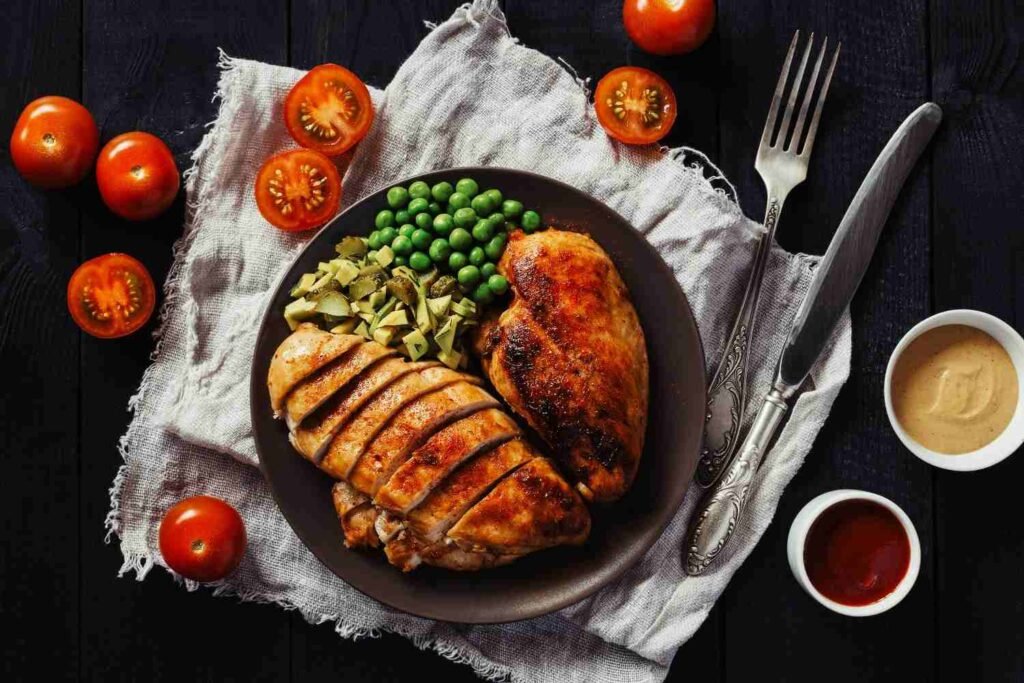
But here’s the thing: not all high-protein foods are created equal, and simply “eating more protein” without a plan can leave you overwhelmed at the grocery store. This guide breaks down exactly which foods pull the most weight (pun intended), why protein works the way it does in your body, and how to build meals that actually keep you full instead of leaving you raiding the pantry an hour later.
Why Protein Matters More Than You Think
Protein isn’t just for bodybuilders. It plays three distinct roles that make it uniquely useful for anyone trying to manage their weight:
It keeps you full longer. Of the three macronutrients — protein, carbs, and fat — protein has the strongest effect on satiety hormones. It helps regulate ghrelin (the hormone that makes you feel hungry) and boosts peptides that signal fullness to your brain. That’s why a protein-heavy breakfast tends to carry you through the morning better than a bowl of cereal.
It costs your body more energy to digest. This is called the thermic effect of food. Your body burns more calories digesting and metabolizing protein than it does with carbs or fat, giving you a small but real metabolic edge.
It protects your muscle during a calorie deficit. This is the piece people forget. When you eat fewer calories than you burn, your body doesn’t only pull energy from fat stores — it can pull from muscle too, especially if protein intake is low. Adequate protein signals your body to preserve lean mass while it burns fat instead. Research on dieters has repeatedly shown that higher protein intake helps preserve fat-free mass during weight loss, which matters because muscle is metabolically active tissue — the more you keep, the better your metabolism runs even after the diet ends, as outlined in this breakdown from WeightWatchers on high-protein foods for weight loss.
Interestingly, this whole process is tangled up with your stress hormones too. Chronically elevated cortisol can drive cravings and encourage the body to store fat around the midsection, which is one more reason a steady, protein-forward eating pattern (rather than extreme restriction, which itself raises cortisol) tends to work better long term. If you want to understand that hormone in more depth, our guide on what cortisol actually does in your body is worth a read.
How Much Protein Do You Actually Need?
The official Recommended Dietary Allowance (RDA) is about 0.8 grams of protein per kilogram of body weight — but that number was designed to prevent deficiency, not to optimize body composition. Most nutrition researchers now agree that people actively trying to lose fat or build muscle benefit from noticeably more, often somewhere between 1.2 and 1.6 grams per kilogram of body weight, or roughly 0.6–0.8 grams per pound. The National Academy of Medicine allows protein to make up as much as 35% of total daily calories for healthy adults, which gives you a lot of room to work with depending on your goals and activity level.
If you’re active, doing resistance training, or over the age of 50 (when the body becomes less efficient at using protein to build muscle, a phenomenon researchers call “anabolic resistance”), you likely sit at the higher end of that range.
The Best High-Protein Foods for Weight Loss and Muscle Health
1. Eggs
Eggs are close to a perfect food for body composition goals. One large egg has about 6 grams of complete protein along with choline, vitamin D, and healthy fats that help you feel satisfied. They’re versatile, cheap, and quick to prepare, which matters more than people realize — the food that fits your actual life beats the “perfect” food you never make time for.
2. Greek Yogurt and Cottage Cheese
Both are dairy standouts loaded with casein, a slow-digesting protein that trickles amino acids into your bloodstream for hours, which is part of why cottage cheese has seen such a dramatic resurgence in the last couple of years. A half-cup of low-fat cottage cheese delivers roughly 12–14 grams of protein for under 100 calories. Choose plain, unsweetened versions and flavor them yourself with fruit or a drizzle of honey to avoid the added sugar in flavored tubs.
3. Chicken Breast and Turkey
The classic lean-protein staples exist for a reason: skinless chicken breast packs around 26 grams of protein per 3.5 ounces with very little fat. Turkey breast is nearly identical nutritionally and adds variety so you’re not eating the same thing every night.
4. Fish, Especially Fatty Varieties
Salmon, mackerel, and sardines give you protein plus omega-3 fatty acids, which help control inflammation — another factor tied to stubborn weight retention. White fish like cod or tilapia offers a leaner, lower-calorie option if you’re watching fat intake closely.
5. Lean Beef and 90%+ Lean Ground Beef
Red meat gets an unfairly bad reputation in weight-loss circles, but lean cuts and 90% (or leaner) ground beef provide about 24 grams of protein per 3-ounce serving along with iron and B12, both of which support energy levels during a calorie deficit, according to this overview of high-protein foods for weight loss from GoodRx.
6. Legumes — Lentils, Chickpeas, and Beans
For plant-based eaters (or anyone wanting to eat less meat), lentils are a genuine powerhouse: about 18 grams of protein and 15 grams of fiber per cooked cup. That fiber-protein combination is a satiety one-two punch, and it also happens to feed the beneficial bacteria in your gut — something we go into detail on in our piece about why gut health matters for weight loss.
7. Tofu and Tempeh
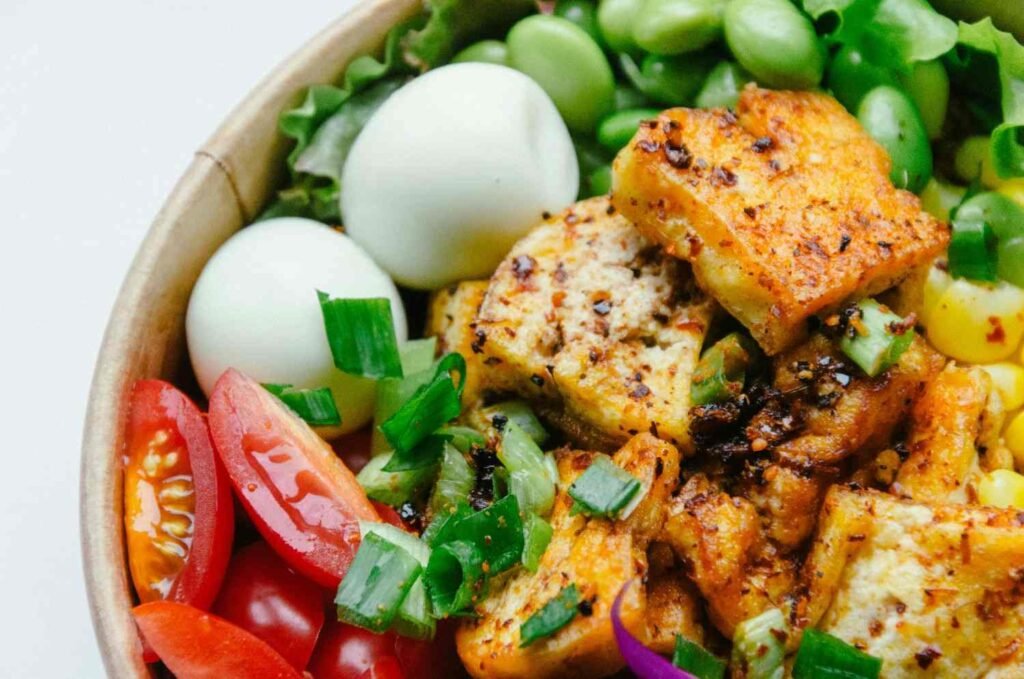
Both are complete plant proteins, meaning they contain all nine essential amino acids your body can’t make on its own. Tofu is endlessly adaptable — it takes on the flavor of whatever you cook it with — while tempeh’s fermented, nuttier texture holds up well in stir-fries.
8. Quinoa
Technically a seed, not a grain, quinoa delivers about 8 grams of protein per cooked cup along with fiber and micronutrients, making it a smart carbohydrate swap for people trying to increase protein density across the whole meal rather than just the protein source itself.
9. Shrimp
Shrimp is one of the leanest proteins available — about 20 grams of protein in a 3-ounce serving for barely 80 calories. It cooks in minutes, making it ideal for people who don’t want to spend an hour in the kitchen.
10. Protein Powder (Whey or Plant-Based)
Not a whole food, but a genuinely useful tool when whole-food options aren’t practical — after a workout, in a smoothie, or as an afternoon snack that stops you from reaching for something less helpful.
Building Meals That Actually Work
Knowing the foods is only half the equation. A few practical strategies make a bigger difference than people expect:
- Spread protein evenly across meals rather than saving it all for dinner. Research suggests your body uses protein for muscle maintenance more efficiently when it’s spread out — aim for roughly 25–40 grams per meal rather than 10 grams at breakfast and 60 at dinner.
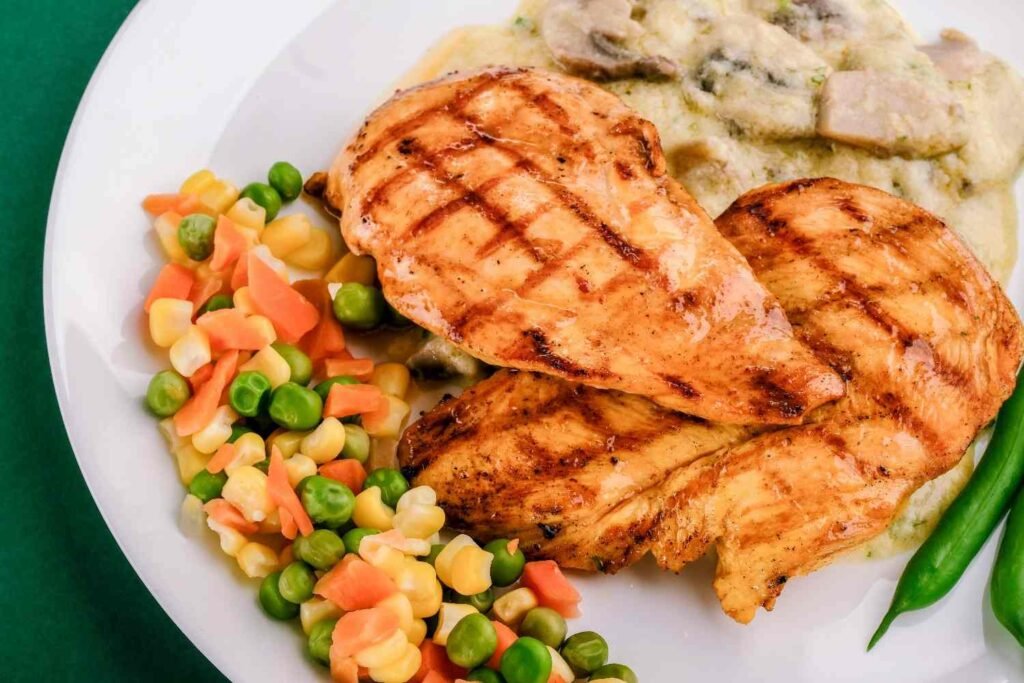
- Pair protein with fiber. A chicken breast alone is filling; a chicken breast with roasted vegetables and a starchy carb is filling and satisfying, which matters for long-term adherence.
- Prep in batches. Grilling a few chicken breasts, roasting a tray of vegetables, and cooking a batch of grains on a Sunday removes the daily decision fatigue that derails most diets by Wednesday.
- Don’t fear moderate fat. Foods like eggs, salmon, and full-fat Greek yogurt bring fat along with their protein, and that’s fine — fat supports hormone production, including the hormones that regulate hunger and stress.
Common Mistakes People Make With High-Protein Diets
Even well-intentioned attempts at eating more protein tend to run into the same handful of problems.
Relying too heavily on processed protein products. Protein bars, protein cookies, and flavored protein shakes can be useful in a pinch, but many are engineered to taste like dessert, which can quietly sabotage a calorie deficit if you’re eating them as “extra” rather than as a meal replacement. Whole foods should still make up the bulk of your intake.
Underestimating portion sizes. A “chicken breast” at a restaurant is often twice the size of a standard serving, which throws off calorie math even when the food itself is healthy. Weighing food for a week or two, even loosely, tends to be an eye-opening exercise for most people.
Ignoring the rest of the plate. Protein is important, but a diet built entirely around chicken and eggs with almost no fiber or micronutrients from vegetables and fruit will eventually cause problems — sluggish digestion, nutrient gaps, and a gut microbiome that isn’t getting the fuel it needs to function well.
Assuming more protein always equals better results. Past a certain point — generally above 2 grams per kilogram of body weight for most people — additional protein doesn’t translate into additional muscle or fat loss. It just becomes an expensive, less enjoyable way to eat.
Vegetarian and Vegan Approaches
Plant-based eaters can absolutely hit high-protein targets, it just takes a bit more intentional planning since most plant proteins are “incomplete,” meaning they’re missing one or more essential amino acids on their own. The fix is combining complementary sources across the day rather than at every single meal — rice and beans, hummus and whole-grain pita, or peanut butter and whole-grain bread all combine to form complete amino acid profiles. Tofu, tempeh, edamame, and quinoa are exceptions that already qualify as complete proteins on their own, which makes them particularly valuable staples for anyone eating a fully plant-based diet.
Seitan, made from wheat gluten, is another underrated option, delivering around 21 grams of protein per 3.5 ounces, though it’s not suitable for anyone avoiding gluten. Nutritional yeast, while used in smaller quantities, adds a meaningful protein boost along with a cheesy flavor that works well sprinkled over popcorn, pasta, or roasted vegetables.
How Protein Timing Around Exercise Fits In
If muscle building or preservation is a priority alongside weight loss, when you eat protein relative to your workouts matters somewhat, though less dramatically than fitness marketing often suggests. Consuming a protein-containing meal or snack within a couple of hours after resistance training appears to support muscle repair slightly more effectively than waiting many hours, largely because it takes advantage of a window when muscle tissue is primed to use amino acids for repair. That said, total daily protein intake matters far more than precise timing — someone who hits their daily target but eats their post-workout meal three hours later will still see results, just possibly marginally less optimized ones than someone eating within the first hour or two.
A Word on Sustainability
The best high-protein diet is the one you can actually maintain past the first two weeks. Rotating through a handful of favorites — say, eggs and Greek yogurt for breakfast, chicken or tofu for lunch, and fish or lean beef for dinner, filled out with legumes and vegetables — beats any rigid meal plan that leaves you bored and resentful by day ten.
It’s also worth remembering that protein doesn’t work in isolation. Poor sleep, chronic stress, and an unhealthy gut microbiome can all undercut even a great diet by messing with your hunger signals and metabolism. If you’ve been eating well but still feel like your body is working against you, it might be worth exploring how sleep affects your appetite and weight or reading up on cortisol’s role in stubborn fat storage.
The Bottom Line
High-protein eating isn’t a fad — it’s one of the most consistently supported strategies in nutrition science for both losing fat and protecting the muscle you already have. Focus on a rotation of whole foods like eggs, poultry, fish, legumes, dairy, and tofu, spread your intake across the day, and pair it with fiber-rich carbohydrates. Do that consistently, and the results tend to follow — no extreme rules required.