Lifestyle
Why Wearables Are Moving From Fitness Tracking to Health Prediction
From Step Counters to Early-Warning Systems on Your Wrist
Category: Health | Read time: ~10 min
Remember when a fitness tracker’s biggest party trick was buzzing at you for not hitting 10,000 steps? Those days feel almost quaint now. The device on your wrist — or clipped to your finger, or wrapped around your ring — has quietly turned into something closer to a personal health analyst, one that’s less interested in your step count and more interested in whether something in your body is about to go wrong.
The Quiet Shift Nobody Announced
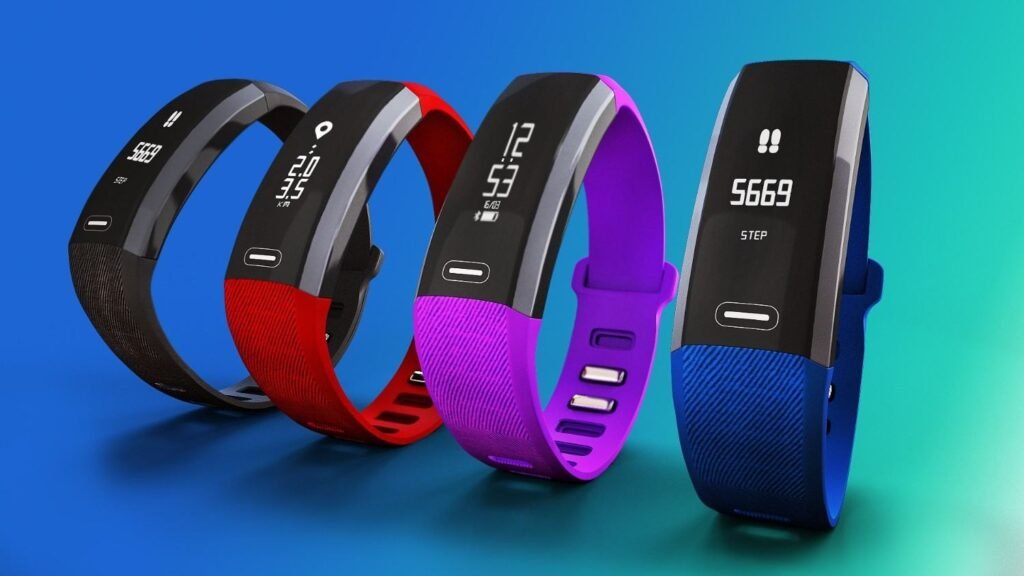
No single press release marked the moment wearables stopped being fitness toys and started becoming health tools. It happened gradually, one firmware update at a time. First it was resting heart rate. Then heart rate variability. Then blood oxygen, skin temperature, irregular rhythm notifications, sleep staging, and now, in some devices, early indicators tied to respiratory illness, menstrual cycle shifts, and even blood pressure trends.
What used to be a single number — steps taken — has become a dense, continuous stream of physiological data. And once you have that much data flowing 24 hours a day, the question stops being “how active was I today?” and starts becoming “what does this pattern actually mean for my health?”
That’s the shift in a sentence: wearables are moving from tracking behavior to predicting risk. And the technology, the science, and the companies behind it are all racing to catch up with that new ambition.
Why Prediction Is Even Possible Now
Three things had to come together before a wristband could plausibly claim to spot a health problem before you feel it.
1. Better, Cheaper Sensors
Early trackers relied on a single accelerometer to guess how much you moved. Today’s devices pack in optical heart rate sensors, electrical heart sensors (ECG), temperature sensors, blood oxygen sensors, and in newer models, sensors that estimate blood pressure trends without a cuff. More sensors mean more raw signal to work with — and more signal means more room for patterns to emerge that a human glancing at a single reading would never notice.
2. Enough Data to Build a Personal Baseline
A single elevated heart rate means almost nothing on its own. A heart rate that’s 15% higher than your personal three-month average, on a night you didn’t drink alcohol or exercise late, means something. The real innovation behind predictive wearables isn’t the sensor — it’s the years of continuous personal data that let an algorithm know what “normal” looks like specifically for you, so it can flag what’s abnormal for you, not for the population average.
3. Machine Learning That Looks for Patterns, Not Just Thresholds
Older devices worked on simple rules: if heart rate exceeds X, send an alert. Predictive wearables increasingly use machine learning models trained on large datasets to spot subtler, multi-signal patterns — the combination of slightly disrupted sleep, a small uptick in resting heart rate, and reduced heart rate variability that, together, often precedes illness by a day or two. No single metric would trigger a warning. The combination does.
Researchers reviewing cardiovascular wearable data have found that devices combining photoplethysmography, ECG, and machine-learning algorithms meaningfully improved the ability to catch arrhythmias, early hypertension signs, and heart failure indicators earlier than routine checkups would, while also flagging real limitations around data accuracy and regulatory consistency that the field still has to work through.
What Wearables Are Already Predicting
This isn’t theoretical. Several categories of early detection are already live, in some form, in consumer or near-consumer devices.
Atrial fibrillation and irregular heart rhythms. This was arguably the first real proof of concept — wearable ECG features that flag irregular rhythms consistent with AFib, prompting users to seek follow-up care they might not have sought otherwise.
Respiratory illness, before symptoms peak. By tracking subtle shifts in resting heart rate, breathing rate, and skin temperature, some platforms have shown the ability to flag the likely onset of a respiratory infection a day or more before someone feels sick enough to notice.
Sleep disorders. Continuous sleep staging data — light, deep, and REM sleep, plus disruptions and blood oxygen dips — is increasingly used to flag patterns consistent with sleep apnea, prompting people toward a proper clinical sleep study rather than years of undiagnosed poor sleep.
Mental health signals. A systematic review of AI-driven wearables in psychiatry found that combining heart rate variability, sleep patterns, and movement data allowed algorithms to identify signs consistent with depressive or manic episodes with notably high accuracy, offering a path toward earlier, more personalized intervention for mood disorders.
Cognitive decline and gait changes. Early-stage research is examining whether subtle changes in walking pattern — picked up by the same sensors that count your steps — could serve as a digital biomarker for the earliest, hardest-to-catch stages of cognitive decline, long before a formal diagnosis would otherwise occur.
Chronic disease flare-ups. In conditions like COPD, researchers have built prediction systems that combine wearable data with symptom and environmental inputs to forecast an acute flare-up roughly a week in advance, giving patients and clinicians a genuine window to intervene rather than react.
A Realistic Look at the Limits
It would be easy to walk away from all this thinking your smartwatch is basically a doctor now. It isn’t, and the researchers building this technology are often the first to say so.
Predictive wearables work on probabilities, not certainties. They flag deviations from a baseline, not diagnoses. A clinical intelligence analyst quoted in recent industry coverage put it well: these devices don’t diagnose disease, they surface uncertainty worth paying attention to — and the next generation of design is less about predicting more events and more about making the confidence level of each alert honest and visible, rather than manufacturing false urgency to keep people engaged with the app.
That distinction matters because the risks of getting it wrong run in both directions. A false alarm can send a healthy person into a spiral of anxiety and unnecessary testing. A false reassurance can leave someone ignoring a real symptom because “the watch didn’t flag anything.” Sensor accuracy also varies by skin tone, device fit, movement artifacts, and even ambient temperature, and most of these devices have not gone through the kind of rigorous, long-term clinical validation that a diagnostic medical device would require. Widespread adoption is also still uneven — many people who could benefit most from continuous monitoring, including older adults and those with lower digital literacy, are the least likely to be using these devices in the first place.
None of this makes the technology gimmicky. It makes it what it actually is: an early-stage, rapidly maturing category of preventive health tool that works best alongside a clinician, not instead of one.
How This Fits Into the Bigger Wellness Shift
The move from step-counting to health-predicting wearables doesn’t exist in isolation. It’s part of a broader cultural shift away from single, blunt health metrics — steps, calories, the number on the scale — toward more personalized, systems-level thinking about the body. It’s the same shift showing up in gut microbiome testing, in continuous glucose monitors worn by people without diabetes, and in the rise of at-home lab panels that let people track dozens of biomarkers instead of waiting for an annual physical.
The common thread is a growing appetite for earlier information and more personal information, rather than generic advice applied uniformly to everyone. Wearables happen to be the most visible, most literally wearable version of that trend.
What to Actually Do With a Predictive Wearable
If you’re using one of these devices, or thinking about getting one, a few practical habits make the data far more useful:
- Wear it consistently. Predictive algorithms need weeks of your own baseline data to be meaningfully accurate. Sporadic use gives the model very little to work with.
- Treat alerts as a prompt to investigate, not a diagnosis. An irregular rhythm notification or an elevated resting heart rate flag is a reason to check in with a healthcare provider, not a reason to panic or to self-diagnose.
- Share the data with your clinician, don’t just screenshot it for yourself. Trend data over weeks or months is often more clinically useful to a doctor than a single alert.
- Don’t chase every metric. A device that surfaces ten different scores every morning can create noise and anxiety rather than insight. Pick the two or three metrics most relevant to your actual health history and pay closer attention to those.
The Privacy Question Nobody Can Ignore
There’s an uncomfortable trade-off buried inside all of this progress: the more predictive a wearable becomes, the more intimate the data it needs to collect, store, and analyze. A device that can flag an oncoming respiratory illness or a depressive episode isn’t just tracking your steps anymore — it’s building a continuous, longitudinal record of your heart rhythm, your sleep architecture, your stress response, and potentially your mental health status, all stored somewhere on a corporate server.
Surveys on wearable adoption consistently find that a meaningful share of users are uneasy about who has access to this data and what it’s used for, particularly when it comes to insurers, employers, or third-party data brokers. Unlike a conversation with your doctor, which carries legal confidentiality protections, data collected by a consumer wearable often falls into a regulatory gray zone — protected in some circumstances, freely shareable with partners and advertisers in others, depending on the platform’s terms of service and the jurisdiction you live in.
This isn’t a reason to avoid wearables altogether, but it is a reason to actually read the privacy policy before sharing years of continuous physiological data with a company, and to think carefully about which health platforms you connect a wearable to, especially as this data becomes more medically meaningful rather than just a step count nobody outside your household cares about.
A Fast-Growing, Still-Fragmented Market
Part of what’s driving this shift is simple market pressure. Fitness-only wearables have become commoditized — nearly every major brand offers a device that counts steps and tracks a workout reasonably well, which makes it hard to differentiate on hardware alone. Predictive health features, by contrast, are where the real competitive edge now lives, and companies are investing heavily in the software and machine learning layered on top of increasingly similar sensor hardware.
That competition is good for consumers in some ways — it’s accelerating genuinely useful features faster than a purely medical-device development pipeline typically would. But it also means the field is fragmented and inconsistent. One brand’s “irregular rhythm notification” may be built on a different evidence base and validated to a different standard than a competitor’s near-identical-sounding feature. Regulatory oversight varies significantly by feature and by country, and most predictive wearable features occupy a middle ground between “wellness gadget” and “regulated medical device” that regulators are still actively working out how to classify and oversee consistently.
The Bigger Picture
Fitness trackers were never really about fitness for very long. They were a foothold — a way to get people comfortable wearing a sensor on their body every day. Now that the foothold is established, the technology is being pointed at a much bigger question than step counts ever addressed: can we catch health problems earlier, using nothing more than a device most people already own?
The honest answer, right now, is: sometimes, imperfectly, and increasingly well. That’s not a small thing. It’s the difference between healthcare that reacts to symptoms and healthcare that starts, cautiously, to see them coming.
Related Articles
- Optimizing Health Instead of Just Losing Weight — the broader wellness shift behind the rise of predictive health tools
- Is Personalized Dieting Better Than One-Size-Fits-All Diet Plans? — the same personalization logic, applied to what you eat
- Akkermansia: Why Everyone Is Talking About It — another example of health data moving from generic to deeply personal
- What Is Cortisol — one of the biomarkers increasingly tracked by next-generation wearables
External References
Disclaimer: This article is for informational and educational purposes only and is not a substitute for professional medical advice. Wearable device alerts should always be discussed with a qualified healthcare provider before making any medical decisions.