Nutrition
Plant-Based Protein Guide: Complete List of High-Protein Plant Foods & How to Combine Them
There’s a stubborn myth that keeps hanging around: that you can’t get enough protein without eating animals. It gets repeated so often that plenty of people who want to eat more plant-based food worry they’ll end up weak, tired, or always hungry. The reality is very different. Plant foods are absolutely capable of meeting your protein needs — you just need to know which foods to reach for and how to put them together well.
This guide covers the best plant-based protein sources, how their amino acid profiles work, how to combine foods for “complete” protein, how much you really need, and practical meal ideas you’ll actually want to eat. If you’ve read our Mediterranean diet guide, you already know legumes and whole grains are central to that pattern — here we focus specifically on the protein side.
Why Protein Matters
Protein is the raw material for almost everything your body builds and repairs. It’s made of amino acids, which your body uses to construct muscle, skin, enzymes, hormones, and immune cells. Protein also keeps you full and helps stabilize blood sugar, which is why it’s so central to healthy eating.
The building blocks come in two categories:
- Essential amino acids — nine of them, which your body can’t make and must get from food.
- Non-essential amino acids — the rest, which your body can produce on its own.
Animal proteins (meat, eggs, dairy) contain all nine essential amino acids in roughly the proportions humans need, which is why they’re called “complete.” Most individual plant proteins are a bit lower in one or two essential amino acids — but that is not the problem it’s often made out to be, as you’ll see.
The Complete List of High-Protein Plant Foods
Here are the best sources, ranked roughly by protein density. Amounts are approximate and vary by brand and preparation.
Soy Products
- Tofu — around 8–17 g protein per 100 g, depending on firmness. Firm tofu has more.
- Tempeh — about 19–20 g per 100 g. Fermented, so it’s also a gut-friendly food.
- Edamame — around 11 g per 100 g. A great snack.
- Soy milk — about 3–7 g per cup, often fortified.
- Textured vegetable protein (TVP) — very high, around 50 g per 100 g dry.
Soy is one of the few plant foods that is a complete protein on its own.
Legumes
- Lentils — about 9 g per 100 g cooked.
- Chickpeas — around 9 g per 100 g cooked.
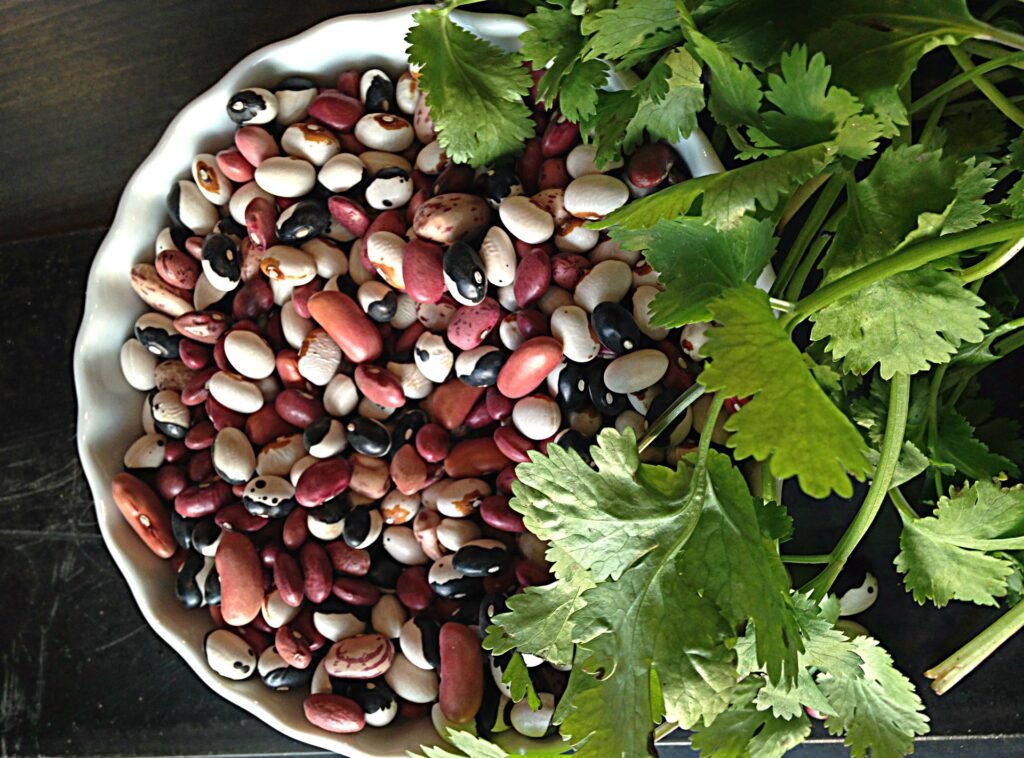
- Black beans — about 8–9 g per 100 g cooked.
- Kidney beans — around 8–9 g per 100 g cooked.
- Peas — about 5 g per 100 g; pea protein isolate is much higher.
- Peanuts — about 25 g per 100 g (technically a legume).
Legumes are the workhorses of plant-based eating — cheap, versatile, and protein-dense.
Grains and Pseudo-Grains
- Quinoa — about 4.4 g per 100 g cooked. One of the few complete plant proteins.
- Oats — about 2.5 g per 100 g cooked.
- Whole-wheat pasta — around 5–7 g per 100 g cooked.
- Brown rice — about 2.6 g per 100 g cooked.
- Buckwheat — around 3.4 g per 100 g cooked.
- Amaranth — about 3.8 g per 100 g cooked.
- Seitan (wheat gluten) — very high, around 25 g per 100 g. Not suitable for gluten-free diets.
Nuts and Seeds
- Hemp seeds — about 31 g per 100 g. A complete protein.
- Pumpkin seeds — around 19 g per 100 g.
- Almonds — about 21 g per 100 g.
- Chia seeds — around 17 g per 100 g.
- Flaxseeds — about 18 g per 100 g.
- Sunflower seeds — around 21 g per 100 g.
- Cashews — about 18 g per 100 g.
Seeds are calorie-dense, so they’re better as protein boosters than as your main source.
Other Sources
- Nutritional yeast — about 5 g per 10 g serving, often fortified with B vitamins. A great addition, and relevant if you’re watching vitamin B12.
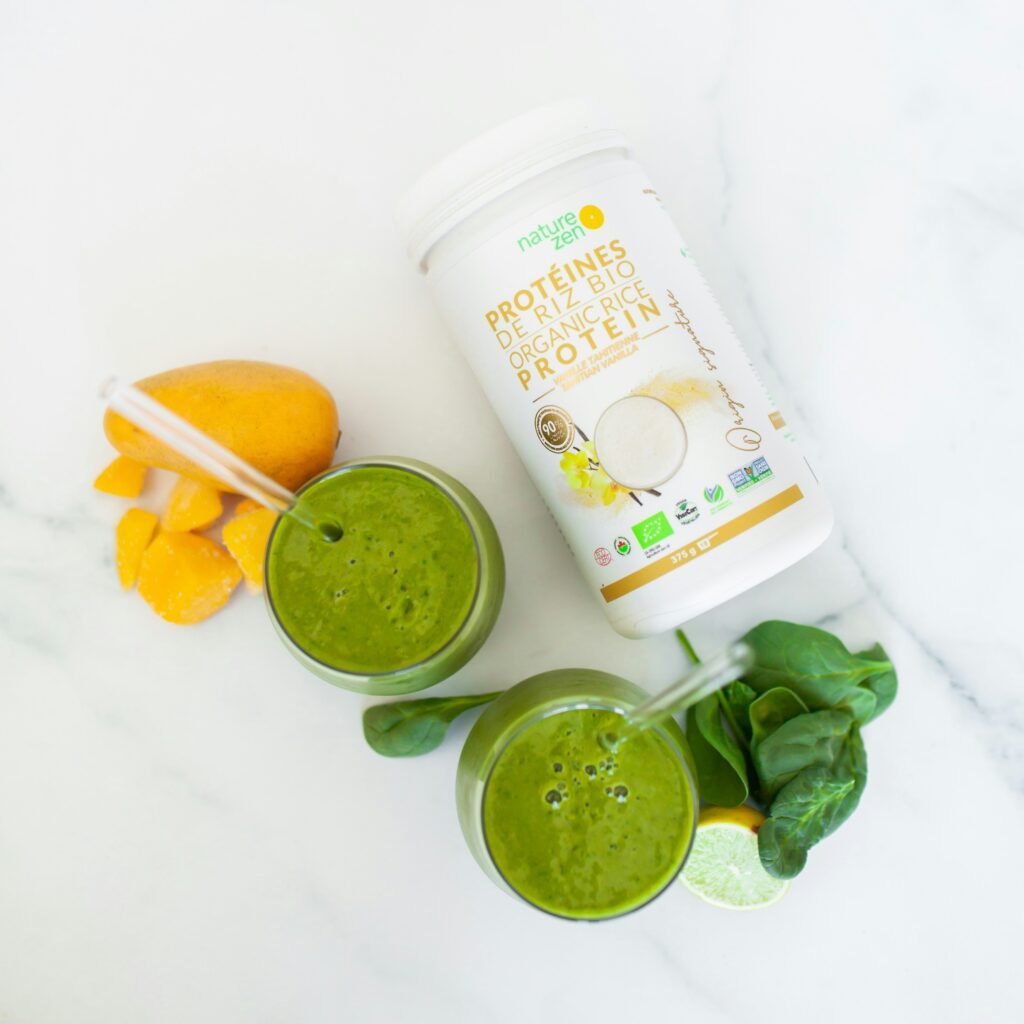
- Plant-based protein powders — pea, soy, hemp, and rice blends, often 15–25 g per scoop.
- Seitan — mentioned above, exceptionally high.
- Green peas and broccoli — modest protein that adds up over a day.
Understanding Amino Acids and “Complete Proteins”
Here’s the concept that causes the most worry — and the most unnecessary worry.
Each plant protein has an amino acid profile. Some are low in lysine (grains), some are low in methionine (legumes). If you ate only one of those foods forever, you’d eventually fall short on one amino acid. But real diets aren’t single foods. Your body maintains a pool of amino acids and can combine proteins from different foods eaten throughout the day.
This is the origin of the old “protein combining” idea — the belief that you must pair rice and beans at the same meal. Modern nutrition science has moved on. You don’t need to combine foods perfectly at every meal. You just need to eat a variety of plant proteins across the day, and your body sorts it out.
That said, pairing complementary foods is still a delicious and easy way to improve your overall amino acid intake:
- Rice + beans — classic for a reason
- Hummus + whole-wheat pita — legumes plus grain
- Peanut butter + whole-grain bread — complementary
- Lentil soup + whole-grain bread
- Tofu + rice
- Peas + rice — a surprisingly complete combination
The takeaway: combine when it’s convenient, but don’t stress about hitting a perfect ratio at every meal.
Complete Plant Proteins
Some plant foods actually contain all nine essential amino acids on their own:
- Soy (tofu, tempeh, edamame)
- Quinoa
- Buckwheat
- Hemp seeds
- Chia seeds
- Amaranth
- Nutritional yeast
If your diet leans heavily on these, you’re in great shape. If it doesn’t, variety handles the rest.
How Much Protein Do You Need?
The standard recommended dietary allowance is about 0.8 grams of protein per kilogram of body weight per day for sedentary adults. For a 70 kg (154 lb) person, that’s roughly 56 grams a day.
But that’s a minimum for basic function, not an optimum. Needs go up if you:
- Exercise, especially strength train — a common recommendation is 1.2–1.6 g/kg, sometimes higher for athletes.
- Are older — protein helps preserve muscle as you age. Our strength training for longevity guide explains why this matters.
- Are pregnant or breastfeeding
- Are recovering from illness or surgery
- Are growing (children and teens)
For a plant-based eater, a good target is often slightly higher — around 1.0–1.6 g/kg — because plant proteins are usually a bit less digestible and lower in some amino acids than animal proteins. That’s not a flaw; it just means aiming a little higher for the same result.
A Sample Day of Plant-Based Protein
Let’s see how the numbers add up. For a 70 kg adult targeting around 100 g:
- Breakfast: Oatmeal with soy milk, hemp seeds, and peanut butter — ~20 g
- Snack: Edamame — ~11 g
- Lunch: Lentil soup with whole-grain bread — ~20 g
- Snack: Hummus with veggie sticks — ~6 g
- Dinner: Tofu and quinoa stir-fry with broccoli — ~30 g
- Optional: Plant protein shake — ~20 g
That’s well over 100 g without much effort. The point is that it’s not a struggle — it’s about knowing your sources and eating enough of them.
Meal Ideas That Nourish
- Breakfasts: Tofu scramble, protein oatmeal, chia pudding, smoothies with pea protein
- Lunches: Bean burritos, chickpea salads, lentil bowls, tempeh wraps
- Dinners: Tofu curry, seitan stir-fry, black bean chili, lentil Bolognese, quinoa stuffed peppers
- Snacks: Roasted chickpeas, edamame, nuts, seed bars, hummus
- Boosters: Sprinkle hemp or pumpkin seeds on anything; add nutritional yeast to pasta and soups
The Nutrients to Watch on a Plant-Based Diet
Protein is often the worry, but a few other nutrients deserve attention when you cut back on animal foods:
- Vitamin B12 — not found in plants. Supplementation is essential; see our B12 guide.
- Iron — plant iron is less absorbed, so pair iron-rich foods with vitamin C.
- Omega-3s — use algae oil for EPA and DHA, as covered in our omega-3 guide.
- Vitamin D — often low regardless of diet; see our vitamin D guide.
- Zinc — legumes and seeds provide it, but absorption can be lower. Our zinc guide covers the details.
- Calcium and iodine — check fortified foods and consider iodized salt.
Plant-based eating can be perfectly healthy — and often is — but it rewards attention to these nutrients rather than assuming everything is covered.
Common Myths, Cleared Up
- “You can’t build muscle without meat.” Plant-based athletes competitive at the highest level prove otherwise. Variety and adequate calories do the job.
- “You must combine proteins at every meal.” No — your body pools amino acids across the day.
- “Plant protein is useless.” Soy is complete, quinoa is complete, and mixtures cover the rest.
- “Plant-based means low protein.” With legumes, soy, seeds, and grains, it’s easy to hit high targets.
- “You need to eat constantly to get enough.” You need enough overall, not constant grazing.
Practical Tips to Get More Plant Protein
- Build meals around legumes or soy. Make beans, lentils, tofu, or tempeh the star.
- Cook in batches. A pot of lentils or beans lasts all week.
- Use protein boosters. Hemp, pumpkin seeds, and nutritional yeast sprinkle over anything.
- Choose whole grains over refined. More protein, more fiber.
- Keep a protein powder on hand for busy days and post-workout.
- Snack smart. Edamame and roasted chickpeas beat chips.
- Combine when convenient. Rice and beans, hummus and pita.
- Eat enough calories. This is the hidden reason some people feel tired when going plant-based — they simply don’t eat enough food.
Plant-Based Protein Through Life Stages
Protein needs don’t stay the same forever, so it helps to know how they shift.
- Children and teens: Growing bodies need steady protein. Legumes, soy, grains, seeds, and nut butters all contribute. Offer variety and enough calories.
- Pregnancy and breastfeeding: Needs rise significantly, so plant-based mothers should aim higher and be deliberate about B12, iron, omega-3s, and vitamin D.
- Active adults and athletes: Plant-based athletes commonly target 1.6–2.2 g/kg, using protein powders and soy foods to hit the number.
- Older adults: Protein helps preserve muscle as you age, and older bodies respond less efficiently to it — so more, spread across meals, is better. Pair this with our strength training for longevity guide.
- Anyone recovering from illness or injury: Protein needs climb, and whole foods plus a shake can help meet them.
The underlying principle is the same at every stage: eat enough total protein, choose a variety of sources, and pay attention to the nutrients that plant foods don’t cover well on their own.
Frequently Asked Questions
Is peanut butter a good protein source?
It has protein but is also high in fat and calories. It’s a solid contributor, not a primary source.
Do plant proteins have all amino acids?
Some (soy, quinoa, hemp, buckwheat) do. Others are low in one or two. Eating a variety solves this.
How much tofu equals a chicken breast?
Roughly 200–250 g of firm tofu provides protein similar to a 100 g chicken breast, depending on the tofu.
Can I get enough protein as a vegan athlete?
Yes. Vegan athletes commonly eat 1.6–2.2 g/kg from legumes, soy, grains, seeds, and powders.
Is seitan healthy?
It’s very high in protein but not suitable for anyone with celiac disease or gluten sensitivity.
The Bottom Line
Plant-based protein is neither scarce nor complicated. Legumes, soy, whole grains, nuts, and seeds deliver ample protein, and variety handles the amino acid question without any fuss. Aim a little higher on total protein than you would on a mixed diet, focus on whole foods, and top up with B12, omega-3s, and vitamin D where needed.
Whether you’re vegan, vegetarian, or simply want to eat more plants, the strategy is the same: build meals around lentils, beans, tofu, and tempeh, sprinkle on seeds, and enjoy the variety. It’s better for your body, often cheaper, and entirely doable.
For more practical nutrition guides, including our Mediterranean diet guide and omega-3 guide, visit guideblogs.com.
This article is for general information only and is not medical advice. Speak with a qualified professional or registered dietitian about your individual protein needs.