Lifestyle
Vitamin D: Why So Many People Are Deficient.
Best Food Sources of, Sunlight & Safe Supplementation
Vitamin D is unusual. It’s technically a vitamin, but your body can make it — if you give it enough sunlight. It acts more like a hormone than a nutrient, influencing everything from your bones to your immune system. And despite being something your skin can produce for free, a staggering number of people around the world don’t have enough of it.
If you live somewhere with long, dark winters, spend most of your day indoors, or have darker skin, there’s a decent chance you’re running low. This guide explains why vitamin D deficiency is so common, how to spot it, where to get it from food (spoiler: it’s hard), how to use sunlight safely, and how to supplement wisely without overdoing it.
We’ve touched on this topic in our guide to Benefits of Exercise , but vitamin D deserves its own deep dive.
What Is Vitamin D and What Does It Do?
Vitamin D is a fat-soluble nutrient that your body uses like a hormone. Its most famous job is helping you absorb calcium and phosphorus, which is why it’s essential for strong bones. But that’s only part of the story. Vitamin D receptors exist in cells throughout your body, including in your immune system, muscles, heart, and brain.
Key functions include:
- Bone health — it’s necessary for calcium absorption. Without it, bones weaken.
- Immune support — it helps immune cells function properly.
- Muscle function — vitamin D contributes to muscle strength and reduces fall risk in older adults.
- Reducing inflammation — it plays a role in modulating the inflammatory response.
- Cell growth and repair — it’s involved in regulating how cells divide and mature.
There are two main forms:
- Vitamin D2 (ergocalciferol) — from plants and fortified foods.
- Vitamin D3 (cholecalciferol) — from animal foods and, crucially, from your skin when exposed to sunlight. D3 is generally considered more effective at raising blood levels.

Why Vitamin D Deficiency Is So Common
This is where vitamin D gets interesting — and frustrating. Several factors conspire to make deficiency widespread.
You Make It From Sunlight, But Modern Life Blocks the Sun
Vitamin D is made in your skin when UVB rays from the sun hit cholesterol in the skin. But:
- You need bare skin. Clothing blocks production.
- The sun angle matters. In much of the world, UVB rays are too weak in winter to make any vitamin D at all.
- Latitude changes everything. People living above roughly 35° north — think much of Europe, Canada, northern US, and the UK — produce little or no vitamin D for months each year.
- Sunscreen blocks UVB, which prevents burning but also reduces vitamin D production.
- Indoor lifestyles mean many people see little direct sun.
- Time of day matters — midday sun is strongest for vitamin D.
Skin Tone Affects Production
Melanin, the pigment that gives skin its colour, reduces vitamin D production. People with darker skin need more sun exposure to make the same amount of vitamin D. This is one of the biggest reasons darker-skinned people are at higher risk — even in sunny countries — and why deficiency is common among people with African, South Asian, and Middle Eastern heritage in northern latitudes.
Other Risk Factors
- Older age — skin becomes less efficient at producing vitamin D, and the kidneys convert it less well.
- Obesity — vitamin D is sequestered in fat tissue, lowering blood levels.
- Malabsorption conditions — celiac disease, Crohn’s disease, and others reduce absorption.
- Some medications — certain drugs speed up vitamin D breakdown.
- Breastfed infants — breast milk is low in vitamin D unless the mother supplements.
- Exclusive vegetarian and vegan diets — natural food sources are mostly animal-based, so fortified foods matter.
- Kidney and liver disease — these organs activate vitamin D.
Symptoms of Vitamin D Deficiency
Mild deficiency often has no obvious symptoms, which is why it’s called a “silent” problem. When symptoms do appear, they can include:
- Bone pain and muscle aches
- Fatigue and low energy
- Frequent infections or lingering illness
- Poor wound healing
- Hair loss
- Low mood, especially in winter
- Back pain
- In children, bowed legs and delayed growth (rickets)
Symptoms overlap with many other conditions, so you can’t diagnose it by feel. Testing is the only reliable way. A blood test for 25-hydroxyvitamin D [25(OH)D] is the standard measure.
What Counts as Deficient?
The Endocrine Society and other bodies generally define:
- Deficient: below 20 ng/mL (50 nmol/L)
- Insufficient: 20–30 ng/mL
- Sufficient: 30–50 ng/mL (for most people)
- Upper safe range: typically up to 60–100 ng/mL, but higher is not better
There’s genuine debate among experts about optimal levels, and guidelines differ. Your doctor’s interpretation of your test, alongside your health history, is what matters.
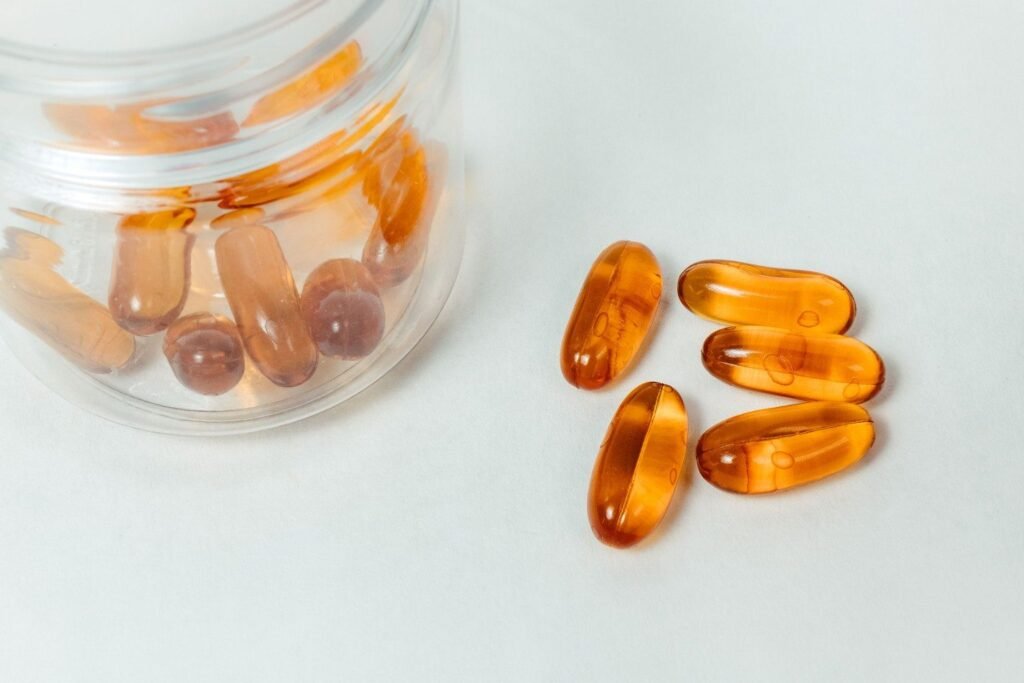
Food Sources of Vitamin D
Here’s the uncomfortable truth: food is a poor source of vitamin D. It’s hard to get enough from diet alone, which is exactly why sunlight and supplements dominate. Still, some foods help.
Animal Sources
- Fatty fish — salmon, mackerel, sardines, tuna — one of the best natural sources
- Cod liver oil — very high, but also high in vitamin A
- Egg yolks — modest amounts
- Liver and organ meats — contain vitamin D
- Cheese and butter — small amounts
Fortified Foods
Because natural sources are limited, many countries fortify:
- Milk and plant milks
- Breakfast cereals
- Orange juice
- Yogurt
- Margarine
Fortification levels vary by country, so check labels.
Mushrooms
Some mushrooms, especially those exposed to UV light, contain vitamin D2. This is one of the only vegan sources.
The bottom line: unless you eat fatty fish daily or rely on fortified products, food won’t reliably cover your needs. This is why, unlike selenium vitamin D often requires a deliberate strategy.
Sunlight: The Free Source (Used Safely)
Sunlight is the most natural and efficient way to make vitamin D. Here’s how to use it sensibly.
How Much Sun Do You Need?
There’s no universal number — it depends on skin type, latitude, season, and time of day. General guidance:
- Light skin: often around 10–20 minutes of midday sun on the arms and legs a few times a week.
- Darker skin: may need significantly longer — sometimes 30 minutes to over an hour, depending on conditions.
- Stop before you burn. Burning increases skin cancer risk. The goal is short, non-burning exposure.
The key principle: you need enough sun to make vitamin D without redness or burning. Once your skin turns pink, you’ve exceeded the safe window and gained nothing extra — vitamin D production is self-limiting.
Practical Sun Exposure Tips
- Expose arms, legs, and back (not just your face) when possible.
- Aim for midday sun (roughly 10 am to 3 pm) when UVB is strongest.
- During winter in high-latitude regions, sun exposure may be useless for vitamin D — supplement instead.
- Use sunscreen for prolonged exposure, but short bursts without it can help production.
- Never use tanning beds as a vitamin D strategy — the cancer risk is too high.
The Latitude Problem
If you live above about 35° latitude, your skin simply can’t make vitamin D during winter. That covers a huge share of the world’s population. In these regions, winter supplementation is often the only reliable option.
Supplementation: Getting the Dose Right
Supplements are the most reliable way to correct a deficiency — but dose matters.
Common Forms
- Vitamin D3 (cholecalciferol) — the preferred form; better at raising blood levels than D2.
- Vitamin D2 (ergocalciferol) — plant-based and vegan-friendly; slightly less effective.
- Fortified oils and sprays — convenient alternatives.
If you’re vegan, look for D3 derived from lichen or use D2. Check our plant-based protein guide for notes on nutrient gaps in plant-based diets.
How Much to Take
Dosing should ideally follow a blood test. As a general guide:
- Maintenance for adults: often 600–2,000 IU per day, depending on risk factors and levels.
- For confirmed deficiency: doctors often prescribe higher doses — sometimes 1,000–2,000 IU daily, or a larger weekly dose — then retest.
- Infants: usually 400 IU daily, per pediatric guidance.
The NIH Office of Dietary Supplements lists an RDA of 600 IU for adults 19–70 and 800 IU for adults over 70, with a tolerable upper intake level of 4,000 IU per day for adults. Higher doses should be supervised.
Take It With Fat
Retest After 8–12 Weeks
Don’t guess indefinitely. After starting a supplement, retest to confirm you’ve reached a healthy level, then adjust to a maintenance dose.
Vitamin D Toxicity: More Isn’t Better
You can have too much of a good thing. Because vitamin D is fat-soluble, it accumulates in the body.
Symptoms of Toxicity
- Nausea and vomiting
- Kidney problems, including kidney stones
- High blood calcium (hypercalcemia)
- Weakness, confusion, and frequent urination
- Bone pain
Toxicity usually comes from taking very high doses — often 10,000 IU or more daily for extended periods — or from accidental overdosing. Sunlight can’t cause vitamin D toxicity, because production self-regulates. Supplements can.
Vitamin D and Common Health Questions
- Immunity: Vitamin D supports immune function, and deficiency is linked to more frequent infections. It’s not a cure-all, but adequate levels matter.
- Chronic disease: Observational studies link low vitamin D to various conditions, but supplementation trials haven’t consistently shown that correcting deficiency prevents disease. It’s important for health, but not a magic bullet.
Who Should Get Tested?
Consider asking your doctor about testing if you:
- Live at high latitude or spend little time outdoors
- Have darker skin
- Are older
- Have a condition that affects absorption
- Are pregnant or breastfeeding
- Have symptoms like bone pain, fatigue, or frequent infections
- Follow a strict vegan diet
Frequently Asked Questions
Can I get enough vitamin D from food?
Rarely. Fatty fish and fortified foods help, but sunlight and supplements are usually needed.
How much sun is enough?
It varies, but short, non-burning midday exposure of arms and legs a few times a week is a reasonable starting point. Stop before you burn.
Is vitamin D2 or D3 better?
D3 generally raises blood levels more effectively. D2 is suitable for vegans.
Can I take too much vitamin D?
Yes. Very high doses over time can cause toxicity. Stay within recommended limits unless supervised.
Do I need vitamin D in summer?
If you get regular midday sun with exposed skin, you may not. In winter or if you’re indoors, you likely do.
The Bottom Line
Vitamin D deficiency is one of the most common nutritional shortfalls in the world, thanks to indoor living, high latitudes, sunscreen, skin tone, and a food supply that simply doesn’t contain much of it. Symptoms are vague, so testing is the only real way to know.
The strategy is straightforward: get sensible, non-burning sun exposure when you can; eat fatty fish and fortified foods; and supplement — ideally guided by a blood test — especially in winter or if you’re in a risk group. Take it with a meal containing fat, retest after a few months, and avoid the temptation to megadose.
This article is for general information only and is not medical advice. Vitamin D status should be assessed and treated in consultation with a qualified healthcare professional.