Recipes
Mediterranean Salad Recipe
Fresh, Healthy & Ready in 15 Minutes
Mediterranean
Published on GuideBlogs | Recipes
Prep Time: 15 minutes | Cook Time: 0 minutes | Serves: 4 | Difficulty: Easy | Meal Prep Friendly: Yes
Macros Per Serving
| Protein | Calories | Total Fat | Carbs |
|---|---|---|---|
| 9g | 280 kcal | 21g | 16g |
Why This Recipe?
Ask any dietitian what the single most research-backed eating pattern in the world is, and the Mediterranean diet almost always tops the list — and this salad is its purest, most everyday expression. But most home versions miss the point entirely. People either drown it in a heavy, store-bought dressing that erases the fresh flavors, or they skip the one ingredient ratio that actually makes it taste authentic: the balance between good olive oil and acid.
This recipe fixes both problems. We’re using the traditional 3:1 olive oil to lemon ratio, real Kalamata olives instead of the bland canned black variety, and a resting step most recipes skip entirely — letting the salad sit for just ten minutes before serving so the vegetables release their juices and mingle with the dressing instead of sitting in it.
Flavour note: The difference between a good Mediterranean salad and a forgettable one almost always comes down to salt timing. Salting the cucumbers and tomatoes lightly before they meet the dressing draws out excess water, which means a crisper salad and a dressing that doesn’t turn watery by the time you serve it.
Below you’ll find the full ingredient breakdown, the correct dressing ratio, a step-by-step method, three easy variations, and a meal-prep guide for keeping it fresh across the week.
Ingredients (Serves 4)
For the Salad
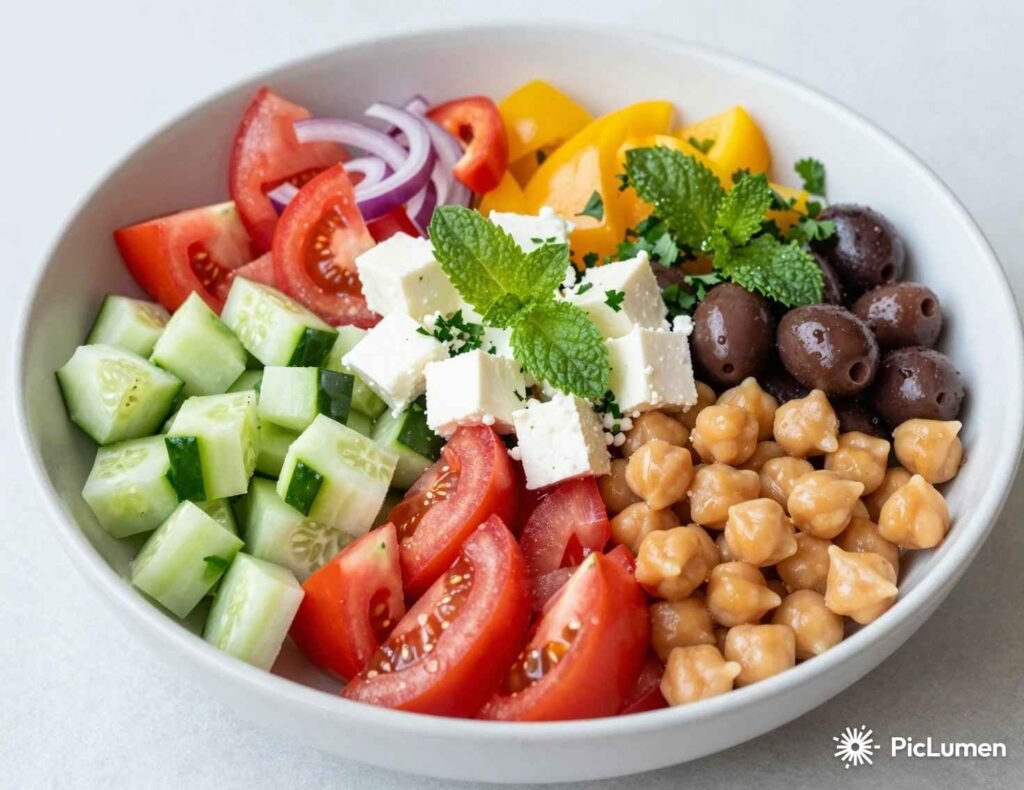
- 2 cups Cucumber, deseeded and diced (English or Persian cucumbers work best — less watery)
- 2 cups Tomatoes, diced (vine-ripened or cherry tomatoes halved)
- ½ cup Red onion, thinly sliced
- 1 cup Bell peppers (red or yellow), diced
- ½ cup Kalamata olives, pitted
- ¾ cup Feta cheese, cubed or crumbled
- 1 cup Chickpeas, cooked and drained (optional, but adds protein and staying power)
- 2 tbsp Fresh parsley, chopped
- 1 tbsp Fresh mint, chopped
- ½ tsp Salt, for drawing out vegetable moisture
For the Dressing
- ¼ cup Extra virgin olive oil (good quality genuinely makes a difference here)
- 2–3 tbsp Fresh lemon juice (or red wine vinegar as an alternative)
- 1 Garlic clove, finely minced or grated
- 1 tsp Dried oregano
- ¼ tsp Black pepper
- ¼ tsp Salt, to taste
Step-by-Step Instructions
Step 1 — Prep and Salt the Vegetables
Dice the cucumber and tomatoes, then sprinkle them lightly with salt in a colander or on a paper towel-lined plate. Let them sit for 10 minutes — this draws out excess water so your finished salad isn’t watery.
Pro tip: This step is the one most home cooks skip, and it’s exactly why store-bought or rushed versions of this salad often taste diluted by the next day.
Step 2 — Make the Dressing
In a small bowl or jar, whisk together the olive oil, lemon juice, minced garlic, oregano, salt, and pepper. Aim for roughly a 3:1 ratio of oil to acid — this is the classic Mediterranean balance that keeps the dressing smooth and not overly sharp. Taste and adjust; a touch more lemon juice if you like it tangier, a touch more oil if you prefer it milder.
Step 3 — Combine the Vegetables
Pat the salted cucumbers and tomatoes dry with a paper towel to remove the drawn-out moisture. In a large bowl, combine them with the red onion, bell peppers, and chickpeas if using.
Step 4 — Add the Olives, Herbs, and Feta
Add the Kalamata olives, fresh parsley, and mint. Toss gently. Add the feta cubes last and toss very lightly — feta breaks down easily, so a gentle hand here keeps the cheese in nice chunks rather than turning it into crumbles throughout the salad.
Step 5 — Dress and Rest
Pour the dressing over the salad just before serving, or up to 10 minutes ahead. Toss gently to coat everything evenly. Let it rest for those final 10 minutes at room temperature — this short rest lets the flavors meld properly, which is the difference between a salad that tastes “fine” and one that tastes genuinely balanced.
Pro tip: If you’re meal-prepping, keep the dressing separate and only add it to individual portions right before eating — this keeps the vegetables crisp for days instead of going soft by day two.
Step 6 — Serve
Serve chilled or at room temperature, as a side dish alongside grilled chicken, fish, or kebabs, or as a light standalone lunch with a side of warm pita or hummus.
3 Easy Variations
🌾 Variation 1 — Protein-Boosted Version
Add grilled chicken breast, sliced, or a scoop of grilled shrimp for a complete high-protein meal rather than a side dish. Approx. protein per serving: ~28g
🫘 Variation 2 — Vegan Version
Skip the feta entirely, or replace it with a plant-based feta alternative. The olives and chickpeas already carry plenty of flavor and texture, so this version doesn’t lose much depth. Approx. protein per serving: ~7g
🌿 Variation 3 — Greek-Style with Sumac
Add a generous pinch of sumac to the dressing for a tangier, more citrus-forward flavor profile common in Levantine and Turkish versions of this salad. Swap in some marinated artichoke hearts for extra depth.
Meal-Prep & Storage Guide
This salad is genuinely one of the better options for meal prep, provided you handle the dressing correctly.
- Store the vegetables (undressed) in an airtight container in the fridge for up to 3–4 days
- Keep the dressing in a separate small jar or container — combine only right before eating
- If already dressed, the salad is best eaten within 24 hours, as the vegetables will start releasing more water over time
- Avoid freezing — the fresh vegetables and feta don’t hold their texture after thawing
Nutrition Deep Dive — Why This Salad Is a Genuine Health Powerhouse
This isn’t just a “diet food” — it’s built almost entirely around ingredients with real, well-documented health backing. The extra virgin olive oil provides monounsaturated fats linked to better heart health, while the tomatoes and bell peppers deliver a solid dose of vitamin C and antioxidants that help protect your cells from everyday oxidative stress.
The combination of fiber from the vegetables and chickpeas, healthy fat from the olive oil and olives, and protein from the feta and optional chickpeas makes this a genuinely balanced dish rather than an empty-calorie side salad — which is exactly why the Mediterranean eating pattern this salad represents remains one of the most consistently recommended approaches for long-term health.
Balance tip: Pairing this salad with a source of whole grains — a side of pita, bulgur, or quinoa — turns it from a side dish into a complete, satisfying meal without needing anything else on the plate.
Frequently Asked Questions
Can I make this salad ahead of time for a party? Yes, but keep the dressing separate until closer to serving time. You can prep all the vegetables a day ahead and store them undressed in the fridge, then toss everything together with the dressing about 15–20 minutes before your guests arrive.
What can I use instead of feta if I don’t like it or can’t find good quality feta? Goat cheese is a reasonable substitute with a similar tang, though slightly creamier. Freshly grated Parmesan works in a pinch for a different but still delicious flavor profile, though it moves the salad away from its traditional character.
Is this salad keto-friendly? Mostly, if you skip the chickpeas — without them, the carb count drops significantly while the healthy fats from olive oil, olives, and feta remain, making it a reasonably keto-compatible option.
Why does my homemade version taste flatter than what I get at a restaurant? This usually comes down to two things: not salting and draining the cucumbers and tomatoes first, and using a low-quality or old olive oil. Fresh, good extra virgin olive oil makes a genuinely noticeable difference here, more than in almost any other dish.
Can I add other vegetables to this salad? Absolutely. Roasted red peppers, sun-dried tomatoes, or artichoke hearts are all traditional additions that add depth. Just be careful not to overload it with too many strong flavors at once, or you’ll lose the light, fresh character that makes this salad work in the first place.
Final Word
This salad rewards a little patience more than most people expect — the salting step, the correct oil-to-acid ratio, the short rest before serving. Skip any of those, and you’ll still get a decent salad. Respect all three, and you’ll get the real thing: crisp, bright, and balanced in every single bite.
Now go chop those vegetables. Fifteen minutes is all it takes.
Disclaimer: This article is for informational purposes only and does not constitute medical or nutritional advice. Please consult a registered dietitian for guidance tailored to your specific health needs.
Related Articles: