Diet
Pregnancy Diet Guide
What to Eat in Each Trimester for a Healthy Baby (Trimester-by-Trimester)
Published on GuideBlogs | Health & Wellness | Diet
When my cousin got pregnant with her first child, the advice started pouring in from every direction — her mother-in-law insisted she eat for two, her Instagram feed was full of “superfood” pregnancy smoothies costing a small fortune, and somewhere in between she just wanted to know one simple thing: what should I actually be eating today?
That’s really the heart of it. Pregnancy nutrition doesn’t need to be complicated or expensive. It needs to be consistent, practical, and based on what your body and your baby genuinely need at each stage — not on whatever wellness trend is loudest that month. So let’s break it down properly, trimester by trimester, in plain language.
The Biggest Myth: “Eating for Two”
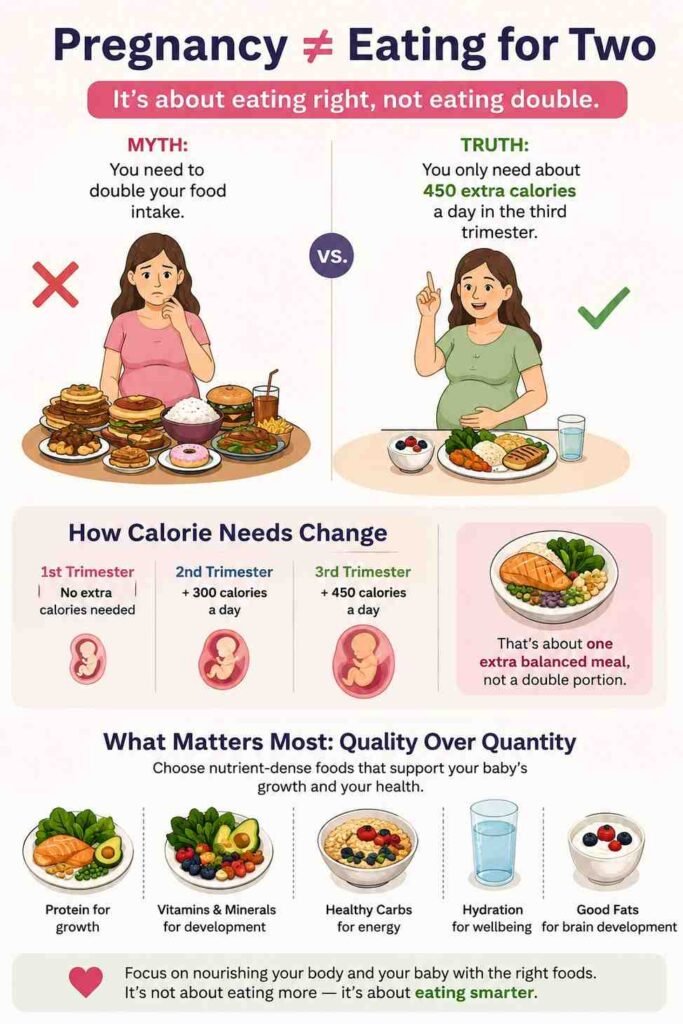
Let’s clear this up immediately, because it causes more confusion than almost anything else. Pregnancy does not mean doubling your food intake. Your calorie needs barely change in the first trimester, and even in the third trimester — when they’re highest — you’re only looking at roughly 450 extra calories a day, which is about the size of one additional balanced meal, not a second entire day’s worth of food.
What actually matters more than quantity is quality — making sure the calories you’re eating are doing real work for your baby’s development, not just filling you up.
First Trimester (Weeks 1–12): Small Meals, Big Foundations
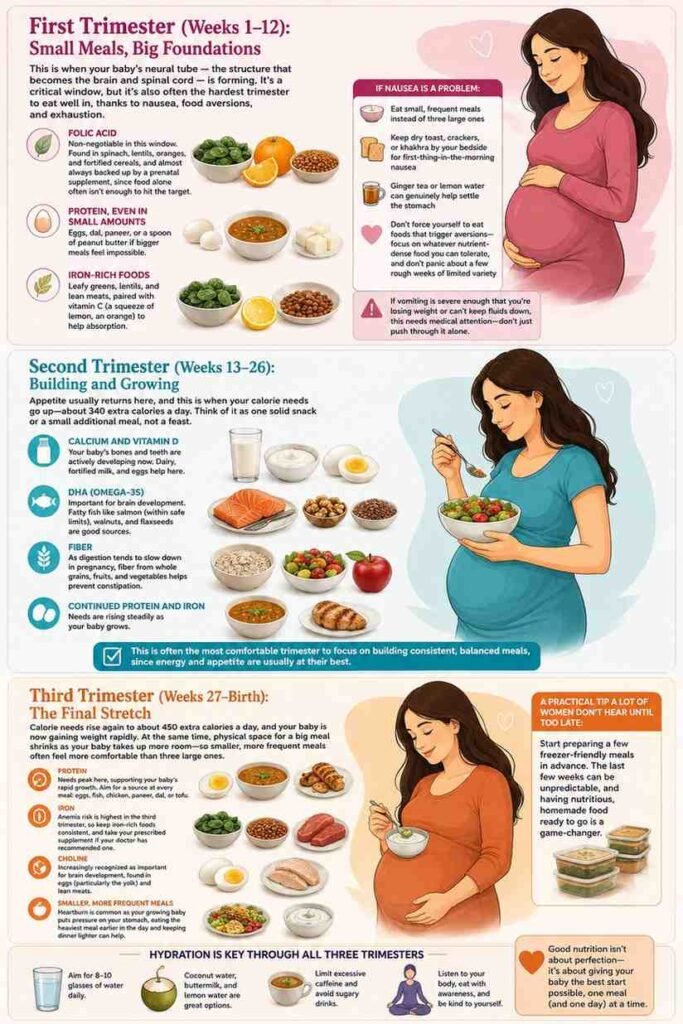
This is when your baby’s neural tube — the structure that becomes the brain and spinal cord — is forming. It’s a critical window, but it’s also often the hardest trimester to eat well in, thanks to nausea, food aversions, and exhaustion.
Focus on:
- Folic acid — non-negotiable in this window. Found in spinach, lentils, oranges, and fortified cereals, and almost always backed up by a prenatal supplement, since food alone often isn’t enough to hit the target.
- Protein, even in small amounts — eggs, dal, paneer, or a spoon of peanut butter if bigger meals feel impossible.
- Iron-rich foods — leafy greens, lentils, and lean meats, paired with vitamin C (a squeeze of lemon, an orange) to help absorption.
If nausea is a problem:
- Eat small, frequent meals instead of three large ones
- Keep dry toast, crackers, or khakhra by your bedside for first-thing-in-the-morning nausea
- Ginger tea or lemon water can genuinely help settle the stomach
- Don’t force yourself to eat foods that trigger aversions — focus on whatever nutrient-dense food you can tolerate, and don’t panic about a few rough weeks of limited variety
If vomiting is severe enough that you’re losing weight or can’t keep fluids down, this needs medical attention — don’t just push through it alone.
Second Trimester (Weeks 13–26): Building and Growing
Appetite usually returns here, and this is when your calorie needs go up — about 340 extra calories a day. Think of it as one solid snack or a small additional meal, not a feast.
Focus on:
- Calcium and Vitamin D — your baby’s bones and teeth are actively developing now. Dairy, fortified milk, and eggs help here.
- DHA (omega-3s) — important for brain development. Fatty fish like salmon (within safe limits — more on that below), walnuts, and flaxseeds are good sources.
- Fiber — as digestion tends to slow down in pregnancy, fiber from whole grains, fruits, and vegetables helps prevent constipation, a common complaint at this stage.
- Continued protein and iron — needs are rising steadily as your baby grows.
This is often the most comfortable trimester to focus on building consistent, balanced meals, since energy and appetite are usually at their best.
Third Trimester (Weeks 27–Birth): The Final Stretch
Calorie needs rise again to about 450 extra calories a day, and your baby is now gaining weight rapidly. At the same time, physical space for a big meal shrinks as your baby takes up more room — so smaller, more frequent meals often feel more comfortable than three large ones.
Focus on:
- Protein — needs peak here, supporting your baby’s rapid growth. Aim for a source at every meal: eggs, fish, chicken, paneer, dal, or tofu.
- Iron — anemia risk is highest in the third trimester, so keep iron-rich foods consistent, and take your prescribed supplement if your doctor has recommended one.
- Choline — increasingly recognized as important for brain development, found in eggs (particularly the yolk) and lean meats.
- Smaller, more frequent meals — heartburn is common as your growing baby puts pressure on your stomach; eating the heaviest meal earlier in the day and keeping dinner lighter can help.
A practical tip a lot of women don’t hear until too late: start preparing a few easy, freezer-friendly meals from around week 36 onward. The last thing you’ll want to think about in the early postpartum weeks is what to cook.
The 12 Nutrients That Matter Most in Pregnancy
Across all three trimesters, these are the nutrients doctors and dietitians consistently flag as essential:
| Nutrient | Why It Matters | Good Food Sources |
|---|---|---|
| Folate/Folic acid | Prevents neural tube defects | Spinach, lentils, oranges, fortified cereal |
| Iron | Prevents anemia, supports blood volume | Lentils, leafy greens, lean meat |
| Calcium | Baby’s bone/teeth development | Milk, curd, fortified plant milks |
| Vitamin D | Calcium absorption, immune support | Fortified milk, eggs, sunlight |
| DHA (Omega-3) | Brain and eye development | Fatty fish, walnuts, flaxseeds |
| Choline | Brain development | Eggs, lean meat |
| Iodine | Thyroid function, brain development | Iodized salt, dairy, seafood |
| Vitamin B12 | Nervous system development | Dairy, eggs, meat, fortified foods (esp. vegetarians) |
| Zinc | Cell growth and immune function | Legumes, nuts, dairy |
| Magnesium | Muscle and nerve function | Nuts, seeds, whole grains |
| Protein | Tissue growth, hormone production | Eggs, dal, paneer, meat, tofu |
| Fiber | Digestion, prevents constipation | Whole grains, fruits, vegetables |
A good prenatal vitamin typically covers 6–8 of these — the rest genuinely needs to come from your actual food, which is why the vitamin is a supplement to your diet, not a replacement for it.
Foods to Limit or Avoid
This list matters, but don’t let it create anxiety around every meal — the goal is awareness, not perfectionism.
Avoid:
- Raw or undercooked eggs, meat, and fish (including raw sprouts, which can carry bacteria)
- Unpasteurized dairy products and soft cheeses made from unpasteurized milk
- High-mercury fish like swordfish, king mackerel, and shark
- Excess caffeine (limit to roughly one cup of coffee a day)
- Alcohol entirely — there’s no known safe amount during pregnancy
Limit:
- Highly processed and packaged snacks, which offer empty calories with little nutritional value
- Sugary drinks and sodas, which can contribute to excess weight gain and gestational diabetes risk
- Excess salt and fried foods, especially if you’re prone to swelling or high blood pressure
A Simple Plate Method That Works for Any Trimester
If remembering all of this feels overwhelming, here’s the simplest framework, used widely by dietitians:
- Half your plate: non-starchy vegetables — spinach, bhindi, broccoli, peppers, carrots
- A quarter of your plate: protein — dal, paneer, chicken, fish, eggs, tofu
- A quarter of your plate: whole grain carbohydrates — brown rice, roti, oats, quinoa
This simple structure works across cuisines — Indian, Mediterranean, or otherwise — and removes the need to obsess over counting every gram or calorie.
What About Weight Gain?
Healthy weight gain during pregnancy depends on your pre-pregnancy weight, and it’s genuinely worth discussing your specific target with your doctor rather than comparing yourself to a general number online. As a rough guide, women starting pregnancy at a healthy weight typically gain more than those who begin at a higher weight, and pregnancy is never the right time to intentionally try to lose weight — if you’re losing weight unintentionally or your appetite drops significantly, that’s worth flagging to your doctor promptly.
Frequently Asked Questions
Do I really need a prenatal vitamin if I eat well? Most doctors recommend one regardless of diet quality, mainly because folic acid needs in early pregnancy are difficult to meet through food alone, and iron needs also typically exceed what a normal diet provides. Think of it as filling predictable gaps, not replacing real food.
Is it safe to exercise while pregnant? For most healthy pregnancies, moderate exercise like walking, swimming, or prenatal yoga is not just safe but genuinely beneficial — it can help manage weight gain, improve mood, and even ease labor. Always check with your doctor first, especially if you have any pregnancy complications.
Can I follow a vegetarian or vegan diet during pregnancy? Yes, with some extra attention. Vegetarians generally need to focus a bit more on B12, iron, and protein variety, while vegans need to be especially deliberate about B12 and often benefit from supplementation, since it’s not naturally present in plant foods. A doctor or dietitian can help tailor this to your specific diet.
What should I do if I have severe nausea and can’t eat properly? Try small, bland, frequent meals first, along with ginger tea and staying hydrated. But if you’re vomiting frequently, losing weight, or unable to keep fluids down, contact your doctor — this could be a condition called hyperemesis gravidarum, which sometimes needs medical treatment.
Is it true I shouldn’t eat spicy or oily food during pregnancy? Not universally — this varies by individual tolerance. Some women find spicy or oily food worsens heartburn or nausea, particularly later in pregnancy, while others tolerate it just fine. Let your own comfort guide this rather than following a blanket rule.
The Bottom Line
A healthy pregnancy diet isn’t about chasing trendy superfoods or eating twice as much as before. It’s about consistently choosing nutrient-dense, whole foods across each trimester, paying attention to the handful of nutrients that matter most, and giving yourself grace on the days when nausea, exhaustion, or cravings make “perfect eating” impossible. Your baby doesn’t need a flawless diet — just a consistently good one, built meal by meal, day by day.
Disclaimer: This article is for informational purposes only and does not constitute medical advice. Always consult your gynecologist or a registered dietitian for personalized nutrition guidance during pregnancy, especially if you have gestational diabetes, are carrying twins, or have any other pregnancy-related complications.
Related Articles:
- How to Lose Weight and Get Pregnant: A Fertility Diet for Women with Obesity or PCOS
- GLP-1 Nutrition Support: What to Eat on Ozempic, Wegovy & Mounjaro
- Magnesium Glycinate: 7 Benefits, Dosage, Best Time to Take & Side Effects
- Simple Daily Habits for a Healthy Lifestyle
