Recipes
High-Protein Overnight Oats Recipe (Creamy, 30 Grams of Protein)
Oats | Category: Recipes
Most overnight oats recipes are not high in protein. That’s the honest starting point for this one.
A standard jar — half a cup of oats, a splash of milk, a spoonful of peanut butter, maybe a drizzle of honey — lands somewhere around 10 to 14 grams of protein. If your target is 30, you need to build it differently, because the usual recipe’s structure doesn’t leave room to get there. The trick is replacing some of the liquid with a protein-dense base rather than trying to bolt protein on at the end.
Here’s a recipe that hits 30 to 35 grams per jar, tastes like dessert rather than like a compromise, and takes four minutes in the evening.
The high-protein overnight oats recipe
Makes one jar. Roughly 480 calories and 32 grams of protein with the Greek yogurt base.
Ingredients
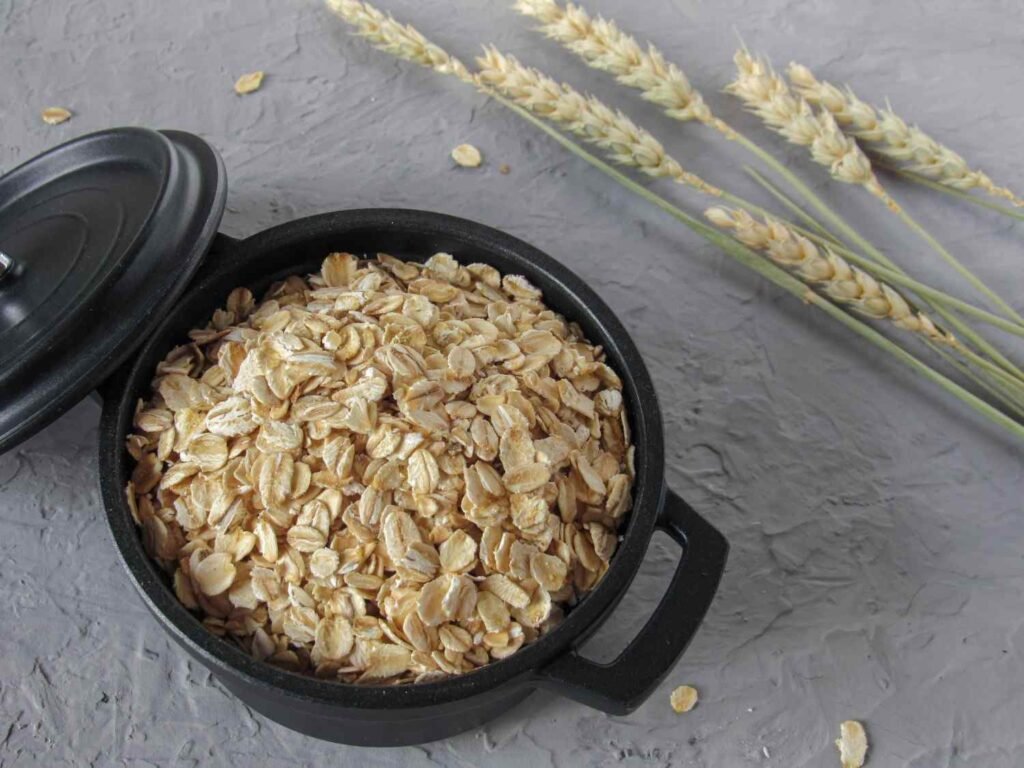
- 1/2 cup (about 50 g) rolled oats — not instant, not steel-cut
- 3/4 cup (170 g) plain Greek yoghurt, 2% fat
- 1/2 cup (120 ml) milk — skim, or unsweetened soy milk for a dairy-free version
- 1 tablespoon chia seeds
- 1 tablespoon maple syrup, honey, or allulose
- 1/2 teaspoon vanilla extract
- Pinch of salt — a genuinely good idea, and it makes the oats taste less flat
- 1/2 banana, sliced, for topping
Method
Stir the oats, Greek yoghurt, milk, chia seeds, sweetener, vanilla, and salt together in a jar until there’s no dry oat clumping at the bottom. This is the step people rush and it’s the step that determines the texture.
Sliced banana goes on top. Cover and refrigerate for at least 4 hours, ideally overnight. Eat cold, straight from the jar, or warmed through.
Where the protein comes from:
| Ingredient | Protein |
| 1/2 cup rolled oats (50 g) | 5 g |
| 3/4 cup plain Greek yoghurt (170 g) | 16 g |
| 1/2 cup skim milk | 4 g |
| Chia seeds (1 tbsp) | 2 g |
| Banana | 1 g |
| Total | 28–32 g |
Nutrition (approximate, with skim milk and maple syrup): 480 calories, 32 g protein, 58 g carbohydrate, 11 g fat, 9 g fibre, 250 mg calcium.
These numbers move around depending on what you use, and the yoghurt is doing most of the work. Full-fat Greek yoghurt and regular milk pushes the calories up to around 550. That’s still a reasonable breakfast.
Why Greek yoghurt is doing the heavy lifting
Yoghurt is the reason this recipe works, so let’s be clear about what to buy.
Get Greek, not regular. Regular yoghurt contains around 4 grams of protein per 100 g. Greek contains 9 to 10. That single swap is the difference between a 15 g jar and a 32 g jar. Full-fat or 2% barely matters for protein — it’s 0.3 g either way — so pick on taste.
Get plain, and sweeten it yourself. Flavoured Greek yoghurt often contains less protein than plain because of the added sugar displacing the yoghurt, and it’s usually sweetened with something you can add yourself in a better quantity.
Watch for “Greek style” versus “Greek.” In some countries, “Greek style” yoghurt is a marketing term on a regular-fibre product, and the protein is not the same. Check the label for protein per 100 g. If it says 4 g, it’s not the Greek yoghurt this recipe assumes. Aim for 9 g or more.
Cottage cheese is the other option. 1/2 cup of 2% cottage cheese gives roughly 14 grams and produces a thicker, slightly tangier result. Some people love this; some find the texture odd. It’s worth trying once.
Six variations
1. Chocolate protein oats (the one people make most)
Replace the milk with 3/4 cup of chocolate milk (about 12 g protein) or add 1/2 scoop of chocolate whey protein dissolved in the milk, and add 1 tablespoon of cocoa powder. Reduce the maple syrup to 2 teaspoons because chocolate whey is already sweet.
Protein: 36 to 42 g. Calories: 480 to 520.
A note on mixing protein powder into oats: it works, but whisk it into the milk first rather than stirring it into the oats. Protein powder stirred directly into dry oats clumps, and you’ll fight it.
2. Peanut butter banana (the crowd pleaser)
Add 2 tablespoons of natural peanut butter and a full banana. This is the version that converts people who claim not to like oats.
Protein: 36 g. Calories: 620.
Calories, honestly: 620 is a lot for a breakfast. If you’re watching calories, use 1 tablespoon of peanut butter and half a banana, which brings it to around 520. The protein drops to about 33 g, which is still excellent. Or drop the peanut butter entirely and use the chocolate version for the sweet-but-not-heavy option.
3. Apple cinnamon (the one that tastes like autumn)
1 medium grated or finely diced apple, 1 teaspoon of cinnamon, 1/2 teaspoon of vanilla, and 1 tablespoon of chopped walnuts. Skip the maple syrup — the apple is sweet enough, and this is the lowest-sugar version of the six.
Protein: 30 g. Calories: 450. Sugar: around 22 g, mostly from the apple and the milk.
4. Pumpkin pie
1/3 cup of pumpkin purée, 1/2 teaspoon of pumpkin pie spice, 1 tablespoon of maple syrup, and 2 tablespoons of chopped pecans. Works in either season, despite the name.
Protein: 29 g. Calories: 460.
5. Blueberry almond
3/4 cup of blueberries, 1 tablespoon of almond butter stirred through, and a pinch of almond extract. The berries release juice overnight, so it gets its own mild sweetness.
Protein: 31 g. Calories: 500.
6. Savoury and high-protein (the underrated one)
Skip the sweetener and the banana. Use 1/2 cup of cottage cheese, 1/2 cup of milk, 1 tablespoon of grated Parmesan, 1/4 teaspoon of garlic powder, black pepper, and 1/2 teaspoon of dried herbs. Top with a poached or soft-boiled egg and a handful of chopped spinach.
Protein: 38 g. Calories: 430.
This is the version to make if you’re fueling a training day. It’s also a genuinely good breakfast for people who find sweet breakfasts unappealing in the morning, which is more people than the overnight oats trend would suggest.
Making it work for different goals
Muscle gain (roughly 1.6 to 2.2 g of protein per kg of body weight per day). At 80 kg, that’s 130 to 175 g daily. Three jars of this at 32 g gets you most of the way there in one sitting. If you’re running a calorie surplus and training hard, this is a genuinely efficient breakfast — a lot of protein for a small volume of food.
Fat loss. Use the unsweetened version: more milk, no maple syrup, berries instead of banana. Around 380 calories and 33 grams of protein. That protein-to-calorie ratio is genuinely useful, because protein is the most satiating macronutrient per calorie.
Vegetarian. Undersweetened soy milk provides comparable protein to skim milk. Cheese or Greek yoghurt keeps it high. Pea protein powder also works and is the best plant option for protein content per scoop.
Vegan. This gets harder without a protein-dense base, and we want to be honest rather than pretending otherwise. Soy milk plus 1/2 scoop of pea protein plus 1/4 cup of silken tofu blended in gets you to around 28 grams. It works, but the texture is a compromise and it isn’t as creamy.
A note on intermittent fasting 16:8: this is a good fasting-window breakfast. It works equally well as a post-workout meal, because the combination of oats for carbohydrate and 30-plus grams of protein hits both macros in one bowl. A lot of people use the same jar for both, which is one reason the recipe has become so popular.
The fixes for common problems
It’s soupy. You used too little protein-dense base, or too much milk. Fix: add 2 tablespoons of Greek yoghurt or a scoop of protein powder next time, and reduce the milk to 1/3 cup. Also check your oats — instant oats break down faster and release more water.
It’s too thick. You overdid the chia, or your Greek yoghurt was very thick. Fix: loosen with milk next time, and cut the chia to 2 teaspoons. Overnight oats should be the texture of thick yoghurt, not paste.
It’s bland. Almost always insufficient vanilla or no salt. A quarter teaspoon of salt in a breakfast recipe sounds excessive and is not.
It’s boring after day three. This is the real reason people quit. Rotate the toppings rather than the base — the base stays fixed, the fruit and flavouring change. Frozen fruit works better than fresh because it breaks down into the oats and distributes rather than sitting on top in a lump.
It’s causing bloating. Two likely causes. Oats contain fructans, which are fermentable carbohydrates, and some people react at larger portions — 1/3 cup instead of 1/2 cup is the adjustment. If the cause is dairy, the lactose-free Greek yoghurt swap handles it. And if you’re new to chia or flax, start with 1 teaspoon and build up; both are high in fibre and your gut needs a few days.
The oats are still crunchy. Under-soaked. Four hours is the floor and eight is better. Rolled oats need longer than instant, which is one reason instant oats is the wrong choice for this recipe despite the marketing.
Storage, cost, and convenience
Fridge, up to 4 days. Five is pushing it, particularly with banana on top, which gets browning and releases liquid.
Freezing: yes, in portions. It’ll be slightly more oatmeal-like when thawed rather than creamy, but it’s a genuinely useful option for batch cooking — make four jars on Sunday, freeze two.
Cost per jar: roughly £1.10 to £1.40 depending on the yoghurt and the protein powder. Cheaper than a protein shake bought at a café, and considerably more filling.
Batch prep: this is the strongest argument for the recipe. Five minutes on a Sunday evening produces four to five breakfasts. If you skip breakfast because of mornings — and this is the most common reason people skip it — removing both the cooking and the decision is the fix. The homemade electrolyte drink covers the other thing worth prepping on a Sunday.
A few things worth knowing
Protein distribution matters as much as total protein. Muscle protein synthesis responds to per-meal protein intake, with around 0.4 g per kg of body weight per meal as a commonly used target. For an 80 kg person, that’s 32 grams in one sitting — which is exactly why this recipe exists. A 12 gram breakfast plus a 15 gram lunch leaves gaps.
Casein is the reason this works overnight. Milk protein is roughly 20% whey and 80% casein. Casein digests slowly over four to six hours, which means the protein is still being absorbed while you sleep. Whey, in protein powder, digests in under two hours. This is a genuine physiological advantage of the yoghurt-and-milk base over a whey-heavy version, and it’s a real consideration if you train in the morning.
Oats are a raw grain. For healthy adults this is not a concern. The specific issue people raise is Cronobacter, which is why powdered infant formula is never used raw. For adults, the occasional overnight oats is not a risk. If you’re making this for a young child, cook the oats first or use a product formulated for children.
Don’t heat protein powder in a microwave aggressively. It denatures and can clump. Add it after the oats are warmed, or warm gently.
Rolled oats versus everything else. Rolled (also called old-fashioned) oats are the right choice: they hold texture, they don’t turn to paste, and they release their starch slowly. Steel-cut work but are unnecessarily firm for this. Quick oats soften too fast. Instant oats dissolve and turn the jar into glue. If a bag says “extra thick” it’s rolled oats. If it says “quick” or “instant,” put it back.
The bottom line
Half a cup of oats, three quarters of a cup of plain Greek yoghurt, half a cup of milk, a tablespoon of chia, and whatever fruit you have left in the fridge. Thirty-two grams of protein, about 480 calories, four minutes of work, and breakfast handled for four days.
The yoghurt is the whole trick. Everything else is a variation.
If you want the most efficient version, make the chocolate protein version. If you want the one you’ll actually eat on a weekday morning, make the peanut butter banana and use half the peanut butter. And if oats aren’t for you, the savoury cottage cheese version has the highest protein in the whole set and gets skipped over by people who assume overnight oats has to be sweet.