Lifestyle
What Happens When You Walk 10,000 Steps Every Day?
Steps | Category: Lifestyle
There’s a number that has been attached to a shoe since the 1960s, and it is not based on any research.
Ten thousand steps. It came from a Japanese pedometer company called Yamasa, which used the figure in a 1965 marketing campaign for its step counter. There was no study behind it. There was no cohort, no dose-response curve, no outcomes data. It was a round number chosen for a product, and roughly sixty years later it’s been repeated so many times that people assume it must be evidence-based.
The good news: the number turned out to be roughly right, for reasons nobody planned.

What the research actually shows
The most comprehensive recent analysis is a 2025 systematic review and dose-response meta-analysis by Ding and colleagues in The Lancet Public Health, which pulled together prospective studies on daily steps against a wide range of outcomes all-cause mortality, cardiovascular disease, cancer, type 2 diabetes, dementia, depression, physical function, and falls.
Here’s the comparison they used, against a baseline of 2,000 steps per day:
| Outcome | 10,000 steps vs 2,000 |
| All-cause mortality | 47% lower |
| Cardiovascular disease incidence | 25% lower |
| Cardiovascular disease mortality | 47% lower |
| Cancer incidence | 6% lower (not statistically significant) |
| Cancer mortality | 37% lower |
| Type 2 diabetes | 14% lower |
| Dementia | 38% lower |
| Depressive symptoms | 22% lower |
| Falls | 28% lower |
Read that table carefully, because there’s something important in it. 7,000 steps and 10,000 steps produce almost identical results. The benefit is essentially all there by 7,000. Going from 7,000 to 10,000 adds a rounding error.
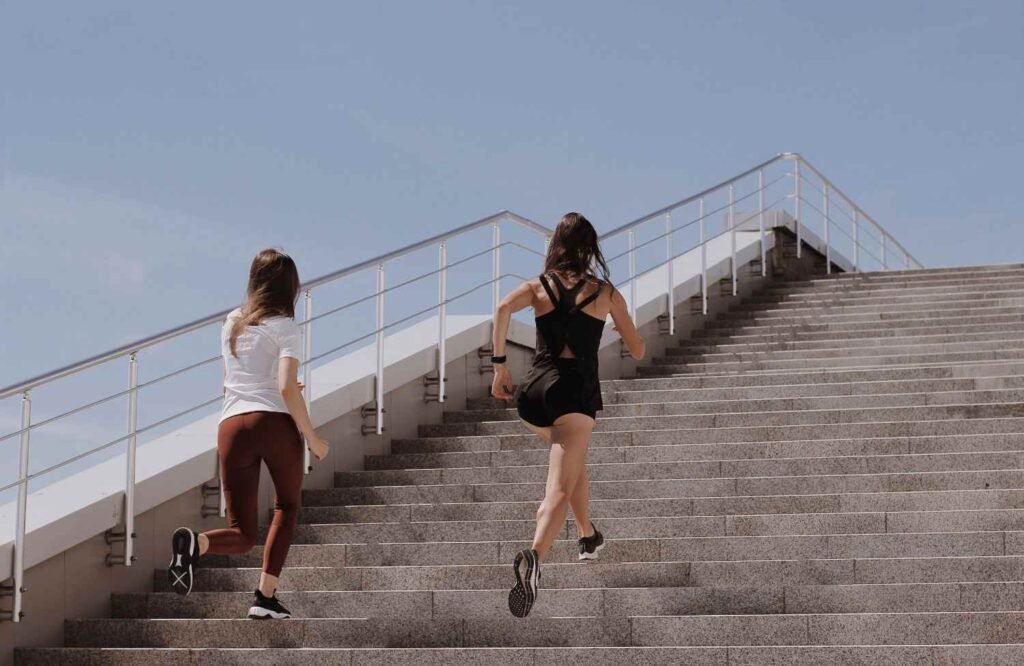
The researchers’ own conclusion is worth quoting, because it’s a direct repudiation of the marketing number: 7,000 steps per day is associated with clinically meaningful improvements in health outcomes and might be a more realistic and achievable target for some.
They also found that the curves bend. The inflection points where the benefit stops accelerating sit at roughly 5,000 to 7,000 steps per day. Below that, more steps help meaningfully. Above it, you’re on the flat part of the curve.
An earlier meta-analysis of 15 international cohorts, published in The Lancet Public Health in 2022, pooled 47,471 adults and 3,013 deaths across Asia, Australia, Europe, and North America. It found the lowest hazard ratio at around 7,000 to 9,000 steps overall, with the plateau arriving earlier for older adults:
- Adults 60 and over: risk plateaued at 6,000 to 8,000 steps.
- Adults under 60: risk plateaued at 8,000 to 10,000 steps.
Comparing the highest step quartile to the lowest, that study found a 40% to 53% lower risk of death. That’s an enormous effect, and it’s worth sitting with for a second one of the largest single risk reductions in preventive medicine, achieved by an activity that requires no gym membership, no special equipment, and no singleå session of heroic effort.
A 2022 dose-response meta-analysis in Sports Medicine came at it from a different angle and found an inverse relationship running from 2,700 to 17,000 steps per day, with a hazard ratio of 0.88 for each additional 1,000 steps. Different methodology, similar direction.
So what’s the real target?
Here’s a synthesis of what the evidence supports:
If you’re healthy and under 60, somewhere around 8,000 to 10,000 steps a day is a reasonable target. You’ll get essentially all the available benefit.
If you’re 60 or older, 6,000 to 8,000 captures the majority of it, and more is unlikely to add much.
If you currently walk 3,000 steps a day, the jump to 6,000 will do far more for you than the difference between 9,000 and 10,000 ever will. This is the single most useful thing in this article, and it’s the part most step-counting advice buries.
A useful framing came from del Pozo Cruz and colleagues in the Journal of Internal Medicine, who modelled the curve and found mortality risk was markedly reduced up to about 7,500 daily steps, with a mean risk reduction of 8.5% per additional 1,000 steps up to that point. Beyond 7,500, the marginal benefit dropped to about 2% per 1,000 steps. The curve doesn’t continue, it flattens.
So: the first few thousand steps are worth the most, by a wide margin. The last two thousand before 10,000 are worth the least.
What 10,000 steps actually does to your body
Cardiovascular system. Regular walking improves endothelial function the ability of your blood vessels to relax and expand. It lowers resting blood pressure, and it improves cardiorespiratory fitness, which is a better predictor of mortality than BMI, blood pressure, or cholesterol individually. The Lancet analysis found reductions in both cardiovascular disease incidence and cardiovascular disease mortality.
Blood sugar. Walking after meals has a specific, measurable effect on glucose. The effect is strongest within about 30 minutes of eating. There is real evidence that a short walk after a meal blunts the post-meal glucose spike, which is relevant if you’re managing prediabetes or insulin resistance. Ten thousand steps spread across a day gets you a fair amount of that.
Brain. The 2025 meta-analysis found a 38% lower risk of dementia at 7,000 steps compared to 2,000. That’s a striking finding and it deserves a caveat, because most of the dementia evidence is observational. People who walk more are also more likely to be healthier in other ways, and adjusting for every possible confounder is difficult. That said, walking improves cerebral blood flow, and the association is remarkably consistent across populations and study designs. The 2024 umbrella review of objectively measured steps reached a similar conclusion.
Mood. 22% lower risk of depressive symptoms at 7,000 steps. Walking gets a bad reputation for being “not real exercise,” which is a gym-industry framing that has never made much sense. The mechanism for the mood benefit is well-established: walking stimulates endorphin release, reduces cortisol, and specifically for outdoor walking exposure to daylight helps regulate circadian rhythm and serotonin. A study type many people in this cohort find compelling: walking in green space, particularly near water, produced measurable reductions in anxiety and depression. Often the effect size rivals pharmaceutical intervention for mild-to-moderate depression.
Falls. 28% lower risk. This is the benefit that matters most to older adults, and it sits alongside bone density maintenance and the maintenance of muscle mass in the legs, which is the main defence a 70-year-old has against immobility and the health decline that follows it.
Fatigue. One of the most reliable real-world effects, and not well captured in mortality statistics. Chronic low-grade fatigue improves with regular walking more consistently than most people expect.
Immune function. Moderate daily activity is associated with lower frequency of respiratory infections, and there’s evidence for improved immune surveillance. This becomes more relevant in the winter than it does when you write the article.
Weight. Modest, and worth being honest about. Ten thousand steps burns somewhere in the region of 2,000 to 2,500 calories for an average adult, depending on body size and pace. That’s meaningful but not dramatic. If weight loss is your primary goal, walking works and pairs well with how you eat. Our guide to intermittent fasting 16:8 covers a common pairing.
Hydration and recovery. Worth mentioning because it’s the part people get wrong. Walking volume increases your fluid and electrolyte needs, particularly in heat, and the rehydration window after a long walk matters more than most people assume. Our homemade electrolyte drink recipe covers the numbers, and it is worth reading before a long summer walk rather than after.
The catch: step count doesn’t measure what you think
Here’s where a lot of step-count enthusiasm goes wrong.
Not all steps are equal. Ten thousand steps of a slow shuffle around a flat shopping centre is not equivalent to ten thousand steps carrying a loaded pack up a hill. Step count measures volume. It measures nothing about intensity, terrain, or form.
The 2022 meta-analysis did look at cadence. Median peak 30-minute stepping rate across participants was about 64 steps per minute, and median 60-minute stepping rate was around 57 steps per minute. People spent a median of about 51 minutes per day walking at 40 steps per minute or faster, and only about 5 minutes at 100 steps per minute or faster. So the intense walking that most people never do is genuinely rare, and it may matter more per minute than the easy steps.
Wearable step counts are estimates, not truth. Different devices use different algorithms, different stride lengths, and different thresholds. The same walk can read 9,400 on one phone and 10,800 on another. Two wearables on the same wrist can disagree by 15% or more. Treat the number as a rough trend rather than a precise measurement. Comparing this week to last week on the same device is meaningful. Comparing to a stranger on a different device is not.
There is one genuine concern in the literature. A systematic review cited in the umbrella review found that among individuals without existing knee osteoarthritis, those exceeding 10,000 steps per day showed a 52% increase in risk of meniscal pathology. That’s one study within a review, it’s observational, and the umbrella review’s authors note that no scientific evidence suggests more than 10,000 steps is excessive for older adults or those with chronic disease. If you have a knee that’s already unhappy, this is worth a conversation with a physiotherapist rather than a number to insist on.
Sleep is the one that gets missed. There is a reasonable body of evidence that walking volume affects sleep quality, and that too much high-intensity activity late in the evening can delay sleep onset. If you’re walking 10,000 steps ending at 10:30pm, that’s a plausible contributor to difficulty falling asleep.
Who might need to walk less, or differently
- People recovering from injury or surgery. Follow your clinician’s advice. Pain that worsens with walking needs attention, not persistence.
- People with arthritis or existing joint problems. Walking is usually good for joints, but the volume should be built up gradually, and the meniscal finding above is worth knowing.
- People with neuropathy, particularly in the feet. Reduced sensation means you can’t feel blisters, ulcers, or fractures developing. Inspect your feet regularly, or work with a podiatrist.
- People with low blood pressure or postural hypotension, who may feel lightheaded when standing. Slow transitions from sitting to standing help.
- People managing blood sugar with medication. Walking lowers blood glucose. If you’re on insulin or sulfonylureas, a sudden increase in walking volume without adjusting medication can cause hypoglycaemia. Build up in stages.
None of these say “don’t walk.” They say build the volume gradually, which is advice that applies to everyone anyway.
How to actually get there, because the number is the easy part
The hardest part of hitting 10,000 steps is that it requires roughly 8 kilometres or 5 miles. Nobody gets that from tidying the house, however enthusiastic they are about the cleaning.
A few things that work better than trying to be heroic:
Start from wherever you are and add 1,000 steps a week. Going from 2,500 to 10,000 overnight is how people injure their shins and quit. Two to three weeks per 1,000 steps is plenty.
Bank it in pockets you already walk through. A common finding is that people who hit step targets do it in short bursts across the day rather than one long session. Ten minutes after each meal is a popular structure, and the post-meal glucose benefit means it’s doing double work. Three ten-minute walks can add 2,000 to 3,000 steps to a day without feeling like exercise.
Walk the phone calls. A 30-minute call is roughly 2,500 to 3,500 steps. This is a genuinely free source of steps and the easiest single change most people can make.
Buy a cheap pedometer or use your phone. A dedicated step counter removes the friction. Notification fatigue from a watch is real, though, and people who disable the alerts tend to stop tracking entirely.
Don’t chase the number on bad days. Consistency across weeks beats a heroic Tuesday. The dose-response data is about habitual daily volume, not occasional extremes.
Combine with your existing training. If you lift three days a week, the walking fills the other four. The practical version is that walking volume and strength training are complementary rather than competing. Resistance training protects the lean mass that walking alone won’t build. If your protein intake is low, this is where the trade-off bites — a high-protein overnight oats jar gets you most of the way to 30 grams before a session.
The bottom line
10,000 steps a day is a marketing artefact that happens to land close to the truth. The evidence supports somewhere between 7,000 and 10,000 for most healthy adults under 60, and between 6,000 and 8,000 for older adults. Below that, each 1,000 steps is worth roughly 8% reduction in mortality risk. Above it, you’re on flat ground.
The people who benefit most are the ones who move from very little to moderate. Someone going from 2,500 to 6,500 is making a much larger health decision than someone going from 9,500 to 10,500, and the research is unambiguous about that.
If you want a single number to hold in your head, use 7,000. It’s realistic, it’s where the curve flattens, and it’s supported by the largest and most recent analysis available. The remaining 3,000 steps are fine. They’re just not doing what the advertising says they’re doing.
Internal links (3)
https://guideblogs.com/diet/intermittent-fasting-16-8-benefits-risks/https://guideblogs.com/diet/intermittent-fasting-16-8-benefits-risks/ (anchor: intermittent fasting 16:8)
https://guideblogs.com/recipes/homemade-electrolyte-drink-recipe/https://guideblogs.com/recipes/homemade-electrolyte-drink-recipe/ (anchor: homemade electrolyte drink recipe)
https://guideblogs.com/recipes/high-protein-overnight-oats-recipe/https://guideblogs.com/recipes/high-protein-overnight-oats-recipe/ (anchor: high-protein overnight oats jar)