Lifestyle
Food as Medicine?
The Rise of Functional Foods, Probiotics and Prebiotics
August 2026 · GuideBlogs · 10 min read · Published on GuideBlogs | Lifestyle
I used to think “food as medicine” was the kind of phrase people put on Instagram alongside a picture of a smoothie bowl. It sounded inspiring but vague — the wellness equivalent of “live, laugh, love.” Nice in theory, not much to actually act on.
Then I started reading the actual research. And what I found was genuinely surprising — not because the idea is new, but because the science behind it has gotten precise enough in the last few years that it’s no longer a soft claim. Specific foods, eaten consistently, are now being shown to do specific things inside the body. That’s a different kind of statement than “eat your vegetables.” And it’s worth understanding properly.
At the center of this conversation are three concepts that have moved from fringe to mainstream in nutrition science: functional foods, probiotics, and prebiotics. All three are real, all three are backed by meaningful research, and all three are also surrounded by a marketing industry that has done its very best to confuse you about what they actually are.
Let’s sort it out.

What Are Functional Foods — and What Makes Them Different?
The term “functional food” was first formally used in Japan in the 1980s, where it referred to foods that had been specifically processed or fortified to deliver a health benefit beyond basic nutrition. Today, the definition has broadened. Most nutrition scientists now use it to describe any food — whole, minimally processed, or fortified — that provides a measurable health benefit beyond its caloric content.
The key word is measurable. Functional foods aren’t just nutritious foods. They’re foods where there is actual clinical or epidemiological evidence linking their consumption to a specific outcome — reduced inflammation, improved blood lipids, better blood sugar regulation, enhanced immune response, and so on.
Examples fall into two categories:
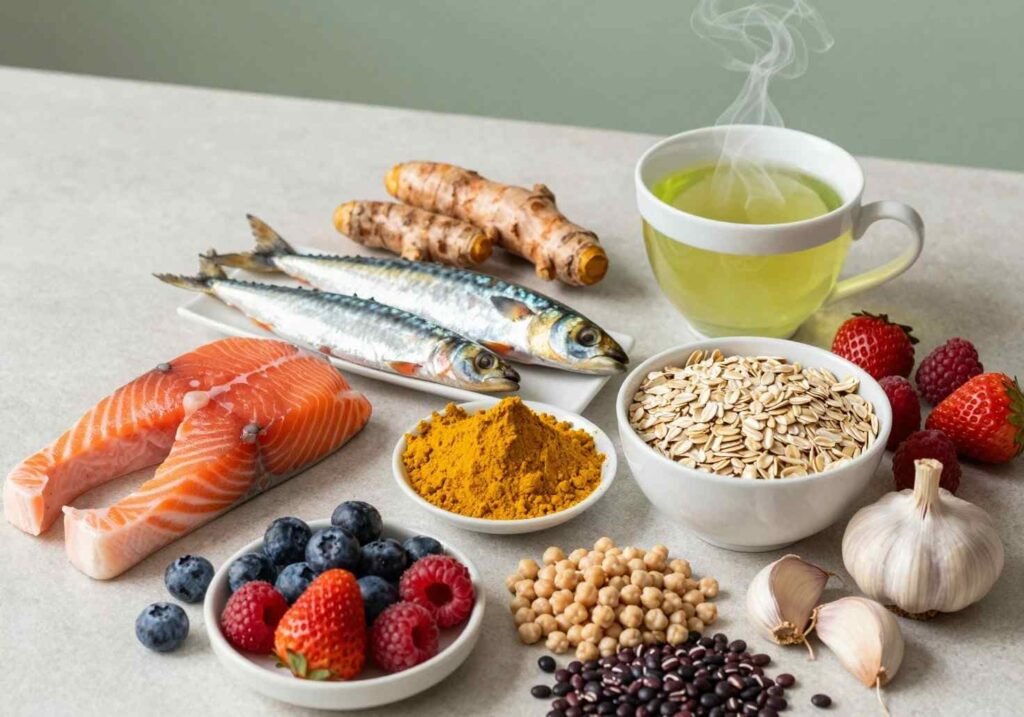
Naturally functional foods — foods that happen to contain bioactive compounds with demonstrated health effects:
- Fatty fish (salmon, sardines, mackerel) — omega-3 fatty acids with anti-inflammatory and cardiovascular effects
- Turmeric — curcumin with documented anti-inflammatory properties
- Berries — polyphenols and anthocyanins with antioxidant and metabolic benefits
- Oats — beta-glucan fiber with cholesterol-lowering effects
- Green tea — catechins with antioxidant and potentially metabolic effects
- Garlic — allicin compounds with antimicrobial and cardiovascular properties
- Legumes — soluble fiber, plant protein, and resistant starch that feed beneficial gut bacteria
Fortified or engineered functional foods — foods that have been modified to deliver a specific health compound:
- Calcium-fortified plant milks
- Vitamin D-enriched dairy and cereals
- Omega-3-enriched eggs
- Probiotic-containing yogurts (when the strains are live and clinically relevant)
- Fiber-enriched breads and drinks
The honest complication here is that “functional food” is not a regulated term in most countries. Any food company can print “functional” or “supports immunity” or “gut-friendly” on a package without being required to prove much. This is where consumer literacy matters — and where the science becomes useful as a filter.
Probiotics: What They Are, What They Do, and What’s Overhyped
Probiotics are live microorganisms — predominantly bacteria and some yeasts — that, when consumed in adequate amounts, confer a health benefit on the host. That definition comes from the World Health Organization, and the key phrase in it is “in adequate amounts.” Not all probiotic products deliver live organisms in quantities that actually do anything by the time they reach your gut.
The human gut contains roughly 38 trillion microbial cells, representing hundreds of species. Probiotics work by introducing specific beneficial strains into this ecosystem — reinforcing communities that are under-represented, competing with harmful species, producing short-chain fatty acids, and signaling the immune system. But this is a complex, personalized system, which is why the effects of any given probiotic strain can vary significantly between individuals.

What Probiotics Are Actually Good For
The most robust evidence supports probiotics for the following:
- Antibiotic-associated diarrhea — particularly Lactobacillus rhamnosus GG and Saccharomyces boulardii, which have strong trial data for reducing incidence and severity
- Irritable Bowel Syndrome (IBS) — specific multi-strain formulations have shown consistent benefit in reducing bloating, pain, and bowel irregularity in clinical trials
- Infectious diarrhea in children — several strains reduce duration of acute episodes
- Vaginal microbiome health — certain Lactobacillus strains have evidence for reducing bacterial vaginosis recurrence
- General immune function — some evidence for reduced duration and severity of upper respiratory infections, though effect sizes are modest
Where the Evidence Is Still Thin
Weight loss, mental health improvement, skin clearing, energy boost, cancer prevention — these are all areas where probiotic marketing has significantly outrun the science. There are promising signals in the research, particularly around the gut-brain axis and mood, but translating those signals into specific product recommendations remains premature. Anyone selling you a probiotic gummy as an antidepressant or weight-loss supplement is not telling you what the evidence actually says.
What to Look for in a Probiotic Product
If you’re using a probiotic supplement, look for: named strains (not just “Lactobacillus” but the specific strain code like LGG or BB-12), a CFU count of at least 1 billion for maintenance doses and 10 billion or more for therapeutic use, third-party viability testing, and formulations specifically studied for your condition. The strain is everything — a probiotic product without a named, studied strain is essentially impossible to evaluate.
Prebiotics: The Part That Actually Feeds the System
If probiotics are the beneficial bacteria, prebiotics are the food that keeps them alive and thriving. Prebiotics are specific types of dietary fiber — and some other compounds — that pass undigested into the large intestine, where they selectively feed beneficial microbial populations.
The most well-studied prebiotic fibers are inulin, fructooligosaccharides (FOS), galactooligosaccharides (GOS), and resistant starch. They occur naturally in a wide range of everyday foods, and for most people, getting adequate prebiotics is a matter of eating more of the right plant foods rather than buying a supplement.
High-prebiotic foods to prioritize:
| Food | Key Prebiotic Compound | Practical Use |
|---|---|---|
| Garlic | Inulin, FOS | Raw or lightly cooked in dressings, dals |
| Onions and leeks | Inulin, FOS | Base of almost any cooked dish |
| Chicory root | Inulin (highest natural source) | Chicory coffee, some fiber supplements |
| Bananas (slightly unripe) | Resistant starch | Eaten as-is, added to oats or smoothies |
| Cooked and cooled rice/potatoes | Resistant starch | Potato salad, leftover rice |
| Oats | Beta-glucan | Rolled oats, overnight oats |
| Lentils and chickpeas | GOS, resistant starch | Dal, chana, hummus |
| Jerusalem artichoke | Inulin | Roasted, added to salads |
One practical note: for people who haven’t eaten much fiber, significantly increasing prebiotic intake can cause temporary bloating and gas as gut bacteria adapt. Start gradually — add one or two high-prebiotic foods at a time rather than overhauling your diet overnight.
Synbiotics: When You Combine Both
The term “synbiotic” refers to products or dietary approaches that combine probiotics and prebiotics together, on the logic that the prebiotic component feeds and sustains the probiotic bacteria, making the whole more effective than either alone. This is increasingly the approach in evidence-based nutrition — rather than taking a probiotic and hoping it survives and thrives on whatever you happen to be eating, you provide both the bacterial strains and their preferred fuel source.
You don’t need a synbiotic supplement to achieve this. Eating plain live-culture yogurt (probiotic) with a sliced banana and oats (prebiotic) is a simple, cheap, food-based synbiotic approach. Kimchi or kefir paired with garlic-heavy cooking achieves the same. The synbiotic concept is useful primarily as a reminder that probiotics work best in the context of a diet that actually feeds them.
The Gut Connection — and Why This All Comes Together
What ties functional foods, probiotics, and prebiotics together is the gut microbiome — the vast community of microorganisms in your intestines that mediates much of the benefit these foods deliver. As we explored in our article on ultra-processed foods and the modern diet, the industrial additives in heavily processed food actively disrupt microbial balance. Functional foods, probiotics, and prebiotics work in the opposite direction — they restore, diversify, and sustain the microbial communities that your immune system, metabolism, and even your brain depend on.
This connection also explains why no single food or supplement tells the whole story. A probiotic capsule taken alongside a diet of packaged snacks and instant noodles is unlikely to produce dramatic results — the dietary environment it enters actively works against it. Functional nutrition is, ultimately, a systems approach. The individual components matter less than how they fit together.
“The road to good gut health is paved with plants, fermented foods, and diversity — not a single supplement.”
According to Harvard T.H. Chan School of Public Health’s guidance on nutrition and immunity, a diet rich in vegetables, fruits, whole grains, legumes, and fermented foods provides the most consistent and evidence-based support for immune function and overall health — more so than supplementation alone. The food-first principle holds up remarkably well against the supplement industry’s claims.
Practical Steps: Building a Functionally Rich Diet
You don’t need to spend money on expensive supplements or specialty health foods to eat functionally. The most evidence-backed functional nutrition approach looks a lot like traditional, whole-food eating patterns — which isn’t a coincidence.
Start with Real Fermented Foods Daily
Live-culture yogurt with breakfast, a tablespoon of kimchi or sauerkraut alongside lunch, kefir as an afternoon snack — small, consistent additions of real fermented foods are more effective for microbiome diversity than most supplements. The key is “real” — heat-treated versions have no live cultures.
Eat Toward the 30-Plant Goal Each Week
Research from the American Gut Project found that people who ate 30 or more different plant foods per week had significantly more diverse microbiomes than those who ate fewer. This doesn’t mean eating 30 servings — it means 30 different types: vegetables, fruits, whole grains, legumes, nuts, seeds, herbs, and spices all count. Variety is the mechanism.
Make Garlic and Onions Non-Negotiable
If you do nothing else, make alliums — garlic, onions, leeks, shallots — a daily cooking staple. They are the most accessible, affordable, and well-studied prebiotic foods available, and they improve the flavor of almost everything you cook. It genuinely doesn’t get more practical than this.
Cool Your Starchy Foods
Cooking and then cooling rice, potatoes, and pasta converts some of their starch into resistant starch — the type that feeds gut bacteria. Potato salad, leftover rice stir-fried the next day, overnight oats — these aren’t just convenient. They’re structurally more valuable to your gut microbiome than the freshly cooked version.
Prioritize Whole Food Sources Over Supplements
For most healthy adults, functional nutrition is better built from food than from capsules. Supplements have their place — particularly in clinical situations, for specific conditions, or when dietary restrictions make food-based sources impractical. But a daily handful of walnuts, a serving of lentils, and some live-culture yogurt will outperform most shelves at the health food store in terms of evidence, bioavailability, and cost.
Frequently Asked Questions
Is “food as medicine” a real scientific concept, or just a wellness trend?
It’s real, but it requires precision. Specific foods contain specific bioactive compounds that have measurable effects on specific biological pathways. That’s not philosophy — it’s pharmacology. The caveat is that food works more slowly and subtly than drugs, and the effects depend heavily on the overall dietary pattern rather than any single food. “Food as medicine” is accurate; “this one food will cure your condition” is not.
Do probiotic yogurts in supermarkets actually work?
Some do. Look for yogurts that specifically name the bacterial strains they contain (e.g., L. acidophilus, B. lactis Bb-12) rather than just saying “contains live cultures.” Plain, full-fat live yogurt is generally a reliable source of beneficial bacteria — flavored versions with added sugar are less so, and heat-treated versions contain no live bacteria at all.
Can I get enough prebiotics from food, or do I need a supplement?
Most people can get more than adequate prebiotics from food alone — particularly if they eat garlic, onions, oats, legumes, and a variety of vegetables regularly. Prebiotic supplements are useful for people with very restricted diets, specific gut conditions, or those who struggle to meet fiber targets through food. For everyone else, food is the better (and cheaper) option.
Are functional foods safe for everyone?
Generally yes, when they come from whole or minimally processed food sources. Fortified functional foods and supplements warrant more caution — fat-soluble vitamins, for example, can accumulate to harmful levels if you’re getting them from multiple fortified sources simultaneously. If you have a medical condition or are on medication, check with a healthcare provider before adding concentrated functional food products or supplements.
What’s the single most impactful functional food addition for most people?
Probably daily legumes — lentils, chickpeas, beans, rajma. They provide prebiotic fiber, plant protein, resistant starch, and a range of micronutrients, all in one affordable package. The evidence base for their benefits spans gut health, cardiovascular health, blood sugar regulation, and longevity. They are also a cornerstone of almost every traditional diet that is associated with good long-term health outcomes globally.
A Final Word
The idea that food can be medicine is not new. Every traditional food culture in the world has operated on some version of this principle — from turmeric in South Asian cooking to fermented foods in East Asian cuisine to the legume-heavy Mediterranean diet. What’s new is that we now have the scientific tools to understand why these patterns worked, at the level of specific compounds, specific microbial communities, and specific physiological pathways.
That understanding doesn’t make the answer complicated. It actually makes it simpler. Eat a wide variety of whole plants. Include fermented foods regularly. Prioritize prebiotic-rich vegetables and legumes. Choose food over supplements where you can. Be sceptical of products that claim too much with too little evidence behind the specific strain or compound they contain.
The most powerful functional foods on earth aren’t the ones with the most impressive labels. They’re the ones you’ll actually eat, consistently, over years — prepared simply, bought at a reasonable price, and shared across a table with people you care about. That’s not a wellness cliché. That’s what the science, when you read it carefully, actually points toward.
Related Articles
- Ultra-Processed Foods: Are They Really the Biggest Problem in the Modern Diet?
- Simple Daily Habits for a Healthy Lifestyle
- Sleepmaxxing: Sleep Optimization
Disclaimer: This article is for informational purposes only and is not a substitute for professional medical or nutritional advice. Please consult a registered dietitian or healthcare provider before making significant changes to your diet, especially if you have an existing health condition.