Nutrition
Akkermansia
What It Is and Why Everyone Is Talking About This Gut Bacteria
Published on: GuideBlogs.com | Category: Nutrition | Read time: ~12 min
First it was probiotics. Then it was prebiotics and postbiotics. Now the gut-health conversation has zoomed in on one single, oddly-named microbe — and scientists, biohackers, and skincare brands can’t stop talking about it.
What Is Akkermansia, Exactly?
If you’ve scrolled through a gut-health influencer’s feed, browsed a microbiome test report, or read a headline about a “weight-loss bacteria,” chances are you’ve run into the name Akkermansia muciniphila (pronounced ack-er-MAN-see-uh mew-sin-IF-ih-lah). It’s a mouthful, and it sounds more like a rare mineral than something living inside your intestines. But this single species of bacteria has become one of the most studied organisms in the entire human microbiome — and for good reason.
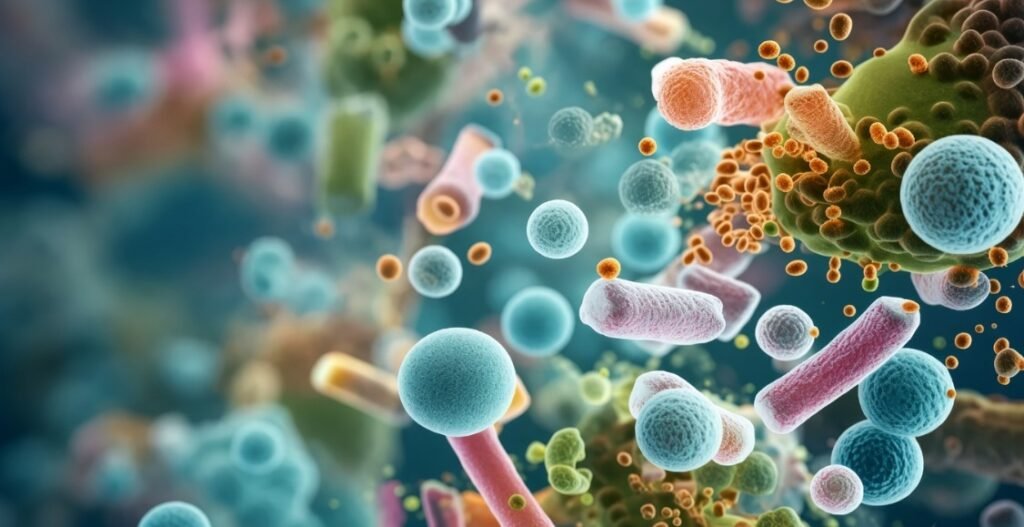
Akkermansia muciniphila is a bacterium that lives almost exclusively in the thin layer of mucus lining your intestinal wall. Unlike most gut bacteria, which rely on whatever fiber and food scraps make it down to the colon, Akkermansia has a strange and specific diet: it eats mucin, the very protein your gut produces to make mucus. In a healthy adult, it typically makes up somewhere between 1% and 5% of the total bacteria in the gut, which makes it one of the single most abundant species in the human colon.
It was only formally identified and named in 2004, by researchers at Wageningen University in the Netherlands, which makes it a relative newcomer compared to bacteria that have been studied for a century. But in the two decades since, the number of scientific papers published on Akkermansia has grown explosively, and it’s now considered one of the leading candidates for what researchers call a “next-generation probiotic” — a beneficial microbe important enough that regulators in Europe have approved a pasteurized version of it as a food supplement.
So why is a single bacterial species generating this much attention? Because unlike most of what circulates in wellness culture, the interest in Akkermansia is coming from the science first, and the social media buzz second.
Why Now? The Cultural Moment Behind the Trend
For most of the last fifteen years, gut-health conversations have circled around broad, blunt concepts: “eat more probiotics,” “take a multi-strain supplement,” “your gut has trillions of bacteria.” That framing was useful for getting people to care about digestive health, but it also flattened a wildly complex ecosystem into a single, generic idea.
Microbiome science has since matured. Instead of talking about gut bacteria as one undifferentiated mass, researchers can now sequence stool samples and identify exactly which species are present, in what proportions, and how those proportions correlate with disease and health. And one pattern keeps showing up across study after study: people with metabolic disease, obesity, inflammatory bowel disease, and Type 2 diabetes tend to have noticeably lower levels of Akkermansia muciniphila than people without these conditions.
That correlation caught the attention of both academic researchers and at-home microbiome testing companies. Suddenly, “Akkermansia” started showing up as a named data point on gut-test reports, in scientific reviews, and eventually on TikTok and Instagram, where creators began asking a simple, understandable question: what is this bacteria, and how do I get more of it?
The honest answer is more nuanced than most trend-driven wellness content lets on — and that nuance is exactly what makes Akkermansia worth understanding properly, rather than just chasing as a buzzword.
What Makes Akkermansia So Unusual
Most gut bacteria are, in a sense, guests. They wait for whatever fiber or plant material survives digestion and ferment it once it reaches the large intestine. Akkermansia is different, and understanding that difference is the key to understanding why scientists find it so interesting.
1. It Eats Your Own Mucus Layer — and That’s a Good Thing
Akkermansia lives inside the mucus lining of your gut and feeds primarily on mucin, a glycoprotein your intestinal cells constantly secrete. This might sound alarming — a bacterium eating your gut lining — but the relationship is symbiotic rather than damaging. As Akkermansia consumes mucin, it stimulates the goblet cells in your intestinal wall to produce even more of it, effectively thickening and reinforcing the mucus barrier that separates your gut bacteria from the sensitive tissue underneath. A stronger mucus layer means a stronger barrier between your immune system and the trillions of microbes living just millimeters away.
2. It Reinforces the Gut Barrier and Calms Inflammation
The mucus layer isn’t just a physical cushion — it’s a critical checkpoint for your immune system. When that barrier becomes thin or leaky (a state often referred to informally as “leaky gut”), bacterial fragments and toxins can slip through the intestinal wall and trigger low-grade, chronic inflammation throughout the body. This kind of inflammation is now linked to a long list of conditions, from insulin resistance to autoimmune disease.
Akkermansia appears to help prevent this. By supporting mucus production and tightening the junctions between intestinal cells, it helps keep that barrier intact. It also produces short-chain fatty acids and other metabolites that have their own independent anti-inflammatory effects on the gut lining and, potentially, the rest of the body.
3. It’s Strongly Linked to Metabolic Health
This is where most of the excitement lives. Across a large body of research — much of it still primarily in animal models, with a growing number of human studies — higher levels of Akkermansia muciniphila have been consistently associated with better glucose regulation, improved insulin sensitivity, and lower body fat. Conversely, lower Akkermansia levels are a fairly consistent finding in people with obesity and Type 2 diabetes.
One especially notable piece of research, published in Nature Medicine by Belgian researchers Patrice Cani and Willem de Vos and colleagues, found that giving obese, diabetic mice a specific membrane protein derived from Akkermansia — or even the pasteurized (heat-killed) whole bacterium — improved their metabolic profile, including insulin sensitivity and gut barrier function. That study helped kick off a wave of interest in whether a “dead” version of the bacterium could deliver benefits without the complications of administering a live organism.
4. Emerging Research on Weight and Appetite Regulation
Several human and animal studies have connected Akkermansia to GLP-1, the same gut hormone targeted by popular weight-management medications. GLP-1 slows digestion, increases feelings of fullness, and helps regulate blood sugar. The idea that a naturally occurring gut bacterium might help nudge the body’s own GLP-1 production is part of why Akkermansia has been nicknamed, somewhat hyperbolically, a “natural Ozempic” in some corners of the wellness internet — a comparison that significantly overstates the current evidence, but reflects genuine excitement in the research community about the hormone-signaling pathways involved.
5. Early but Genuine Interest in the Gut-Brain Connection
As with dietary fiber more broadly, researchers are increasingly interested in whether Akkermansia influences mood and behavior through the gut-brain axis — the communication network linking the digestive system to the central nervous system. Animal studies have found that administering Akkermansia can improve depressive-like behaviors and certain markers of neuroendocrine function in mice, and some early work in models of autism spectrum-like behavior has shown improvements in social and memory-related measures. This research is still preliminary and mostly confined to animal studies, but it represents one of the more actively growing branches of Akkermansia science.
Akkermansia vs. Other Gut-Health Trends: Why It’s Different
Wellness trends tend to rise and fall based on how much genuine science backs them up versus how well they photograph. It’s worth being direct about where Akkermansia sits on that spectrum.
| Approach | Scientific backing | How you get it | Regulatory status | Current limitation |
|---|---|---|---|---|
| Multi-strain probiotics (general) | Mixed — benefits are strain- and condition-specific | Capsules, yogurt, fermented foods | Widely available, minimal regulation | Effects often modest or inconsistent |
| Akkermansia supplements (pasteurized) | Strong preclinical, growing human data | Specialized supplement (limited availability) | EU-approved novel food (2022); less established elsewhere | New to market, still pricey, dosing still being refined |
| Feeding Akkermansia via diet (polyphenols, fiber) | Moderate–strong, mostly animal and early human studies | Berries, pomegranate, green tea, whole grains | No approval needed — it’s just food | Effects are indirect and vary by individual gut composition |
| Fecal microbiota transplant | Strong for specific conditions (e.g., recurrent C. diff) | Medical procedure only | Regulated medical intervention | Not a general wellness tool; used for specific diagnoses |
Unlike a lot of gut-health advice, you don’t actually need a supplement to try to support Akkermansia. Diet alone — specifically fiber and polyphenol-rich foods — appears to be one of the most reliable levers available to most people, which is a big part of why this conversation has legs rather than fading out after a news cycle.
Can You Actually “Take” Akkermansia as a Probiotic?
This is one of the most common points of confusion, so it’s worth addressing directly: you cannot currently buy live Akkermansia muciniphila as an over-the-counter probiotic in most parts of the world, and that’s mostly a matter of biology rather than regulation. Akkermansia is an anaerobic organism — it dies quickly when exposed to oxygen — which makes it extraordinarily difficult to manufacture, stabilize, and package as a shelf-stable live probiotic the way you might with more familiar strains like Lactobacillus or Bifidobacterium.
What does exist, and what’s driven a lot of recent headlines, is pasteurized Akkermansia muciniphila — a heat-treated, non-living version of the bacterium. In 2021, the European Food Safety Authority (EFSA) concluded that pasteurized Akkermansia is safe for use as a novel food supplement in adults, at a maximum daily dose, and it was formally authorized for sale in the European Union in 2022. In 2025, EFSA extended that approval to cover adolescents and pregnant and lactating women as well. Interestingly, some research suggests the pasteurized, non-living form may work at least as well as — and in some animal studies, better than — the live bacterium, likely because heat treatment increases the availability of a specific membrane protein (Amuc_1100) that appears to be responsible for many of its beneficial effects.
For most people outside specialized supplement markets, though, the far more accessible strategy is feeding the Akkermansia you already have.
How to Naturally Support Your Akkermansia Levels
Because you can’t easily supplement your way to more live Akkermansia, most of the practical advice on this topic focuses on creating the right conditions in your gut for your existing population of this bacteria to thrive. The research here is still evolving — much of it comes from animal and lab studies, with human trials catching up — but a consistent picture has emerged around a few categories of food.
Polyphenol-Rich Foods
Polyphenols are plant compounds that mostly resist digestion in the small intestine, meaning they travel intact to the colon, where they interact directly with gut bacteria — including Akkermansia. Foods with the strongest evidence include:
- Cranberries — among the most studied polyphenol sources for Akkermansia, including in whole-food (not just extract) form
- Pomegranate — rich in ellagitannins, a polyphenol class specifically linked to Akkermansia growth
- Grapes and red grapes — a 2024 study in the journal Antioxidants found grape polyphenols supported Akkermansia growth in mice, likely by reducing oxidative stress in the gut
- Green tea — particularly the catechin EGCG; freshly brewed tea and matcha contain meaningfully more of this compound than most bottled green tea products
- Walnuts — contain ellagitannins similar to pomegranate; a controlled dietary study found walnut consumption significantly increased Akkermansia levels compared to a nut-free diet
- Blueberries, blackberries, and other dark berries — combine polyphenols with soluble fiber, a helpful pairing
- Dark chocolate (70%+ cocoa) — a source of flavonoid polyphenols that may support beneficial gut bacteria more broadly
Fiber, Especially Fermentable and Prebiotic Fiber
While Akkermansia’s primary food source is mucin rather than fiber directly, dietary fiber still plays an important supporting role — it feeds the broader community of gut bacteria that produce short-chain fatty acids, which in turn help maintain the mucus layer Akkermansia depends on. Useful sources include:
- Garlic, onions, and leeks — rich in prebiotic fibers like inulin and fructooligosaccharides (FOS)
- Asparagus and Jerusalem artichoke — also high in inulin
- Oats and whole grains — support a broad, diverse microbial community
- Apples, eaten with the skin — high in pectin, a soluble fiber specifically studied in relation to Akkermansia
- Chicory root — one of the most concentrated natural sources of inulin
Fermented Foods
Live-culture yogurt, kefir, and other fermented foods support overall microbial diversity and a healthier gut environment, which indirectly favors species like Akkermansia even though these foods don’t contain Akkermansia itself.
What Tends to Work Against Akkermansia
Just as important as what to add is what tends to reduce Akkermansia populations. Research associates lower levels with diets high in saturated fat and added sugar, chronic stress, certain medications (including some antibiotics and, in some studies, proton-pump inhibitors), and highly processed, low-fiber eating patterns overall — the same dietary pattern that tends to work against gut health in general.
Fasting and Time-Restricted Eating
A smaller but growing body of research has looked at intermittent fasting and caloric restriction as potential levers for increasing Akkermansia. The proposed mechanism is that fasting periods may allow the mucus layer more time to regenerate and may shift the overall gut environment in ways that favor Akkermansia over less beneficial species. This research is still early, and fasting isn’t appropriate or necessary for everyone, but it’s a consistent thread in newer studies.
A Realistic Look at the Evidence
It’s worth being honest about where the science currently stands, because Akkermansia has a real risk of being oversold the way many gut-health trends eventually are.
Most of the strongest data — the mechanistic studies showing exactly how Akkermansia strengthens the gut barrier, reduces inflammation, and interacts with metabolic pathways — comes from animal models, particularly mice. Human research is expanding quickly and the safety data for pasteurized Akkermansia is solid, but large-scale human trials proving it improves weight, blood sugar, or mood in the general population are still limited. What we have is a consistent, biologically plausible, and rapidly growing body of evidence pointing in a promising direction — not yet a settled, guideline-changing conclusion the way something like dietary fiber’s role in heart health is.
It’s also worth noting that Akkermansia’s relationship with disease appears to run in both directions in certain contexts. In some studies of inflammatory bowel disease, elevated Akkermansia activity has been observed alongside active mucus degradation in ways that aren’t straightforwardly “more is always better.” This is a genuinely active area of research, and it’s part of why most experts currently recommend supporting Akkermansia through general diet quality rather than chasing a specific number on a microbiome test.
Should You Care About Your Akkermansia Levels?
If you’ve had a gut microbiome test and noticed Akkermansia listed as low, or if you’re simply looking for a genuinely evidence-informed reason to eat more berries, whole grains, and green tea, then yes — this is one of the more scientifically grounded threads in the current gut-health conversation. The mechanisms are well understood, the associations with metabolic and digestive health are consistent across dozens of studies, and unlike many wellness trends, supporting it doesn’t require an expensive supplement stack — mostly just a diet that’s already recommended for a dozen other reasons.
What it doesn’t require is panic, an expensive test, or a dramatic overhaul of your diet based on one microbe’s levels. Akkermansia is one important piece of an enormously complex ecosystem, not a single lever that determines your health on its own.
A Final Word
There’s something fitting about the fact that one of the most promising threads in modern microbiome science involves a bacterium that survives by eating your own mucus and, in return, helps your body make more of it. It’s not a flashy story. There’s no single supplement to buy, no dramatic before-and-after. Mostly, the science points back to the same handful of foods nutritionists have recommended for decades: berries, whole grains, garlic and onions, green tea, and a diet built around real, whole plant foods.
Akkermansia muciniphila didn’t have a marketing team behind its rise to internet fame. It had two decades of careful, incremental research — which, in a wellness landscape full of shortcuts, might be exactly why people are finally paying attention.
Related Articles
- Everyone Is Talking About Protein — But Are We Forgetting Fibre? — Our deep-dive into the protein vs. fiber conversation and a high-fiber, high-protein recipe to fix both at once
- Fibermaxxing: Why Everyone Is Talking About It — The fiber trend that’s directly connected to feeding bacteria like Akkermansia
- Ultra-Processed Foods and the Modern Diet — How packaged foods quietly reshape the gut microbiome
- The DASH Diet: A Complete Guide — A high-fiber, polyphenol-rich dietary pattern with strong evidence behind it
- Food as Medicine — When whole foods do what pharmaceuticals can’t
External References
Disclaimer: This article is for informational and educational purposes only. It is not a substitute for professional medical or nutritional advice. Please consult a registered dietitian or qualified healthcare provider before making significant changes to your diet, especially if you have an existing health condition or are pregnant or breastfeeding.