Nutrition
Fibermaxxing
Why Everyone Is Suddenly Talking About Fiber
Published on: GuideBlogs.com | Category: Nutrition | Read time: ~13 min
Protein had its moment. Creatine got its redemption arc. Now fiber — quiet, unglamorous, deeply unsexy fiber — is having the wellness glow-up nobody saw coming.
What Is Fibermaxxing, Exactly?
If you’ve spent any time on health forums, TikTok wellness corners, or Reddit’s r/Nutrition threads lately, you’ve probably seen the word “fibermaxxing” pop up more and more. It sounds like another internet-brained diet trend, right up there with raw-dogging flights and cold plunging at 5 AM.
But here’s the thing — fibermaxxing is actually one of the most evidence-backed, doctor-approved, gut-friendly things you can do for your health. And unlike most wellness trends that collapse under scientific scrutiny, this one gets stronger the more you look into it.
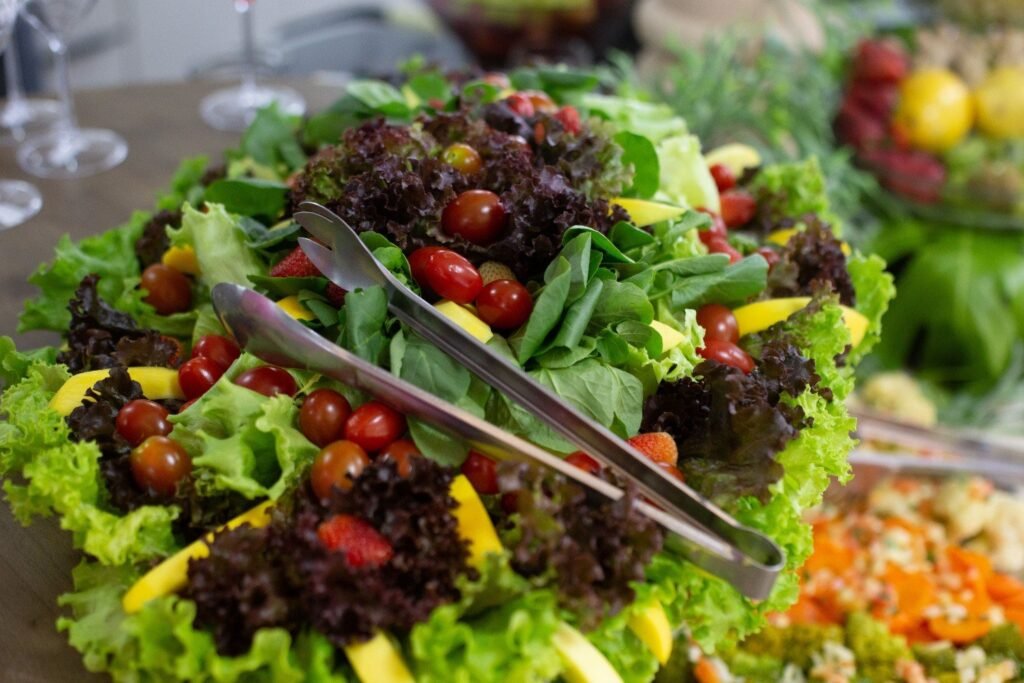
So what is it? Simply put, fibermaxxing means deliberately and consistently maximizing your daily dietary fiber intake — not just hitting the bare minimum, but actively building meals around high-fiber whole foods: legumes, vegetables, whole grains, fruits, nuts, and seeds.
The “maxxing” suffix is borrowed from internet slang meaning to push something to its optimal level. Looksmaxxing = optimizing appearance. Sleepmaxxing = optimizing sleep. Fibermaxxing = optimizing what you eat in a way that your gut, heart, and blood sugar have been quietly begging for.
And it’s catching on — fast.
Why Now? The Cultural Moment Behind the Trend
We’ve spent the last decade in a full-blown protein obsession. Protein bars, protein shakes, protein cereal, protein water — at some point, “high protein” became the default marketing hook on every food label in every supermarket from London to Lagos to Los Angeles.
And protein does matter. Don’t get us wrong. But as we explored in our deep-dive on why fiber gets forgotten while protein dominates the nutrition conversation, there’s a critical macro we’ve been massively undershooting — and the consequences are showing up everywhere.
Rates of IBS, diverticular disease, Type 2 diabetes, obesity, and cardiovascular disease are at generational highs in both high-income and rapidly urbanizing low-and-middle-income countries. While the causes are complex and multifactorial, one factor consistently shows up in the research: dramatically declining dietary fiber intake.
People are noticing. Gastroenterologists have been saying this for years. Now, the internet is catching up — and fibermaxxing is the meme-able, shareable shorthand for a very real nutritional correction.
The Numbers Are Genuinely Alarming
Let’s talk about the gap.
Most international dietary guidelines recommend between 25–38 grams of fiber per day depending on age and sex:
- WHO: 25g minimum for adults
- NHS (UK): 30g per day for adults
- USDA (USA): 25g for women, 38g for men
- Indian Council of Medical Research: 40g per day (one of the highest recommendations globally, reflecting traditional plant-heavy diets that are rapidly disappearing)
The average actual intake?
- USA: ~15g per day
- UK: ~18g per day
- Australia: ~20g per day
- Urban India: ~15–20g per day (down dramatically from traditional diets)
We are eating, on average, half of what we need. And in many cases, less than half.
For context: if protein intake had this same gap, we’d be talking about a global health crisis. We’d see protein supplements advertised on hospital billboards. Yet the fiber gap has largely been allowed to widen in silence because, let’s be honest, there’s no glamorous way to market a chickpea.
Fibermaxxing is the culture’s way of correcting for that silence.
What Fiber Actually Does In Your Body (It’s Way More Than You Think)
Most people, if asked, will say fiber “helps digestion” or “keeps you regular.” Both true — but this is like saying your liver “helps with drinking.” Technically accurate. Wildly incomplete.
1. It Feeds Your Gut Microbiome
Your gut contains roughly 38 trillion microbial organisms — bacteria, archaea, viruses, fungi — that collectively function as an organ in their own right. These microorganisms don’t run on protein or fat. They run primarily on fermentable dietary fiber.
When fiber reaches your large intestine undigested, your gut bacteria ferment it into short-chain fatty acids (SCFAs): butyrate, propionate, and acetate. Butyrate is particularly powerful — it’s the primary fuel source for the cells lining your colon, and it has demonstrated anti-inflammatory, anticancer, and metabolic regulatory effects that extend far beyond the gut itself.
Without adequate fiber, beneficial bacterial populations shrink. Diversity collapses. In their place, opportunistic, less helpful species fill the vacuum — a state called dysbiosis, now linked to IBS, inflammatory bowel disease, metabolic syndrome, obesity, and even depression and anxiety via the gut-brain axis.
2. It Manages Blood Sugar More Effectively Than Most Drugs
Soluble fiber — found in oats, legumes, apples, psyllium, and flaxseeds — dissolves in water to form a viscous gel in your digestive tract. This gel physically slows the absorption of glucose into your bloodstream, resulting in a gentler, flatter blood sugar curve after eating.
Over time, consistently blunting post-meal glucose spikes reduces insulin demand, improves insulin sensitivity, and significantly lowers the risk of developing Type 2 diabetes. According to Harvard T.H. Chan School of Public Health, high dietary fiber intake is associated with a 15–19% lower risk of Type 2 diabetes compared to low intake.
For the hundreds of millions of people already managing blood sugar globally, this isn’t a minor footnote. It’s foundational.
3. It Actively Lowers Cardiovascular Risk
Beta-glucan — the soluble fiber found particularly in oats and barley — binds to bile acids in the gut. Bile acids are made from cholesterol, and when fiber escorts them out of the body before they can be reabsorbed, the liver must pull more cholesterol from the blood to make new ones. Net result: lower LDL cholesterol.
This mechanism is so well established that it’s one of the only food-based claims approved by the US FDA for heart health: oat beta-glucan and the reduction of cholesterol levels. It’s also recognized by the European Food Safety Authority (EFSA).
A major 2022 meta-analysis published in The Lancet found that increasing dietary fiber by just 8 grams per day was associated with a 15% reduction in cardiovascular disease risk and a 16% reduction in Type 2 diabetes risk.
4. It Supports Weight Management Without Calorie Counting
High-fiber foods require more chewing, expand in your stomach, slow gastric emptying, and trigger the release of satiety hormones like GLP-1 and peptide YY. All of this means you feel full faster, stay full longer, and consume fewer calories — without actively restricting what you eat.
Across dozens of randomized controlled trials, increasing dietary fiber consistently results in reduced calorie intake and improved weight outcomes. It’s not magic. It’s just your body’s satiety system working the way it evolved to.
5. It May Protect Your Mental Health
This is the newest and most exciting frontier of fiber research. The gut-brain axis — the bidirectional communication network between your gut and your brain via the vagus nerve and neurotransmitter production — is increasingly understood to be profoundly influenced by gut microbiome health.
Around 90–95% of your body’s serotonin is produced in the gut, not the brain. The specific bacteria that thrive on fiber are among the key producers of serotonin precursors and GABA. Multiple recent studies have found associations between higher dietary fiber intake, greater gut microbial diversity, and lower rates of depression and anxiety.
The causality is not yet fully established — this is cutting-edge science. But the biological plausibility is strong enough that researchers at institutions like the Weizmann Institute and the Salk Institute are dedicating significant resources to it.
Fibermaxxing vs. Other Diet Trends: Why This One Has Legs
Diet trends live and die by their sustainability and their science. Let’s be direct about what makes fibermaxxing different from most of what’s come before it.
| Trend | Scientific backing | Sustainability | Cost | Risk |
|---|---|---|---|---|
| Keto | Moderate (short-term weight loss) | Low for most people | High (meat-heavy) | Low-fiber byproduct |
| Carnivore | Weak | Very low | Very high | Zero fiber — gut microbiome concern |
| Juice cleanses | Minimal | Very low | High | Removes fiber entirely |
| Intermittent fasting | Moderate | Moderate | None | Neutral on fiber |
| Fibermaxxing | Very strong | High | Low (legumes, oats, veg) | Minimal — increase gradually |
Fibermaxxing doesn’t require you to eliminate any food group. It doesn’t ask you to buy supplements. It doesn’t have a two-week “reset phase” that makes you miserable. It asks you to eat more chickpeas, more oats, more vegetables, more fruit, and more whole grains — which is, incidentally, what every major dietary guideline on the planet has been saying for forty years.
The internet just gave it a better name.
Practical Fibermaxxing: How to Actually Do It
Here’s where most people get stuck. Knowing you need more fiber is easy. Knowing how to get there without suddenly consuming a bag of psyllium husk and spending three days regretting it is harder.
Start Low, Go Slow
If your current intake is around 15g (which is typical), don’t try to hit 38g overnight. Your gut bacteria need time to adapt. A sudden large increase causes bloating, gas, and cramping — not because fiber is bad for you, but because you’re essentially changing the fuel source for trillions of organisms and they need a few weeks to adjust.
A sensible approach: add 5g more per week until you’re in the 30–40g range. Drink more water throughout — fiber absorbs water as part of how it works, and without adequate hydration, it can slow digestion instead of aiding it.
The High-Fiber Food Hierarchy
Not all fiber sources are equal. Here’s what to prioritize:
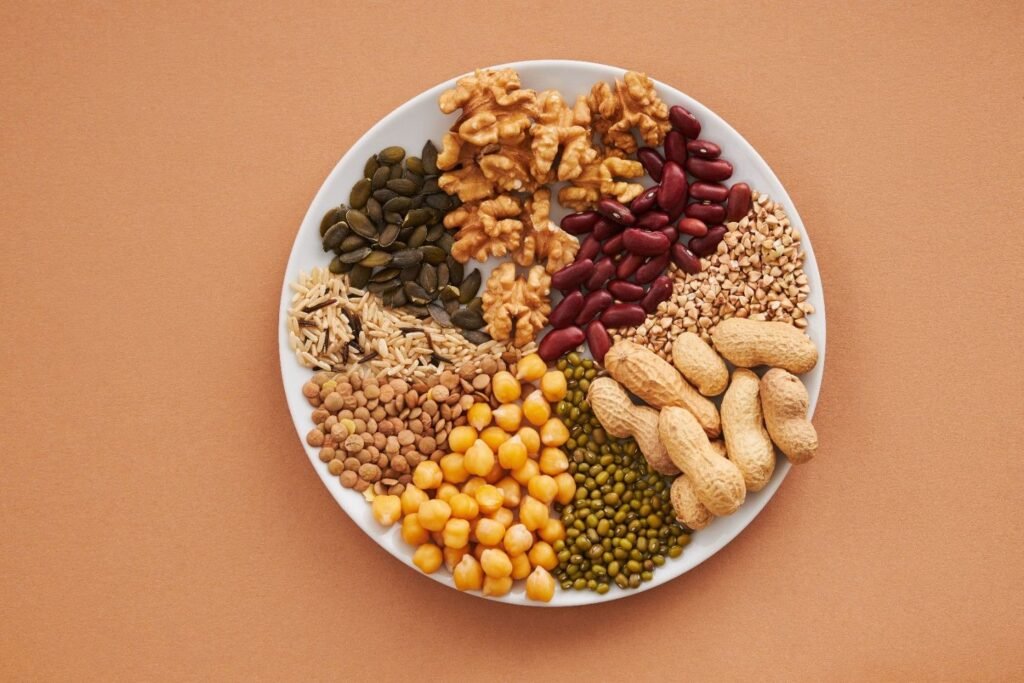
Legumes (the MVP of fibermaxxing)
- Black beans: 15g fiber per cup (cooked)
- Lentils: 15g per cup
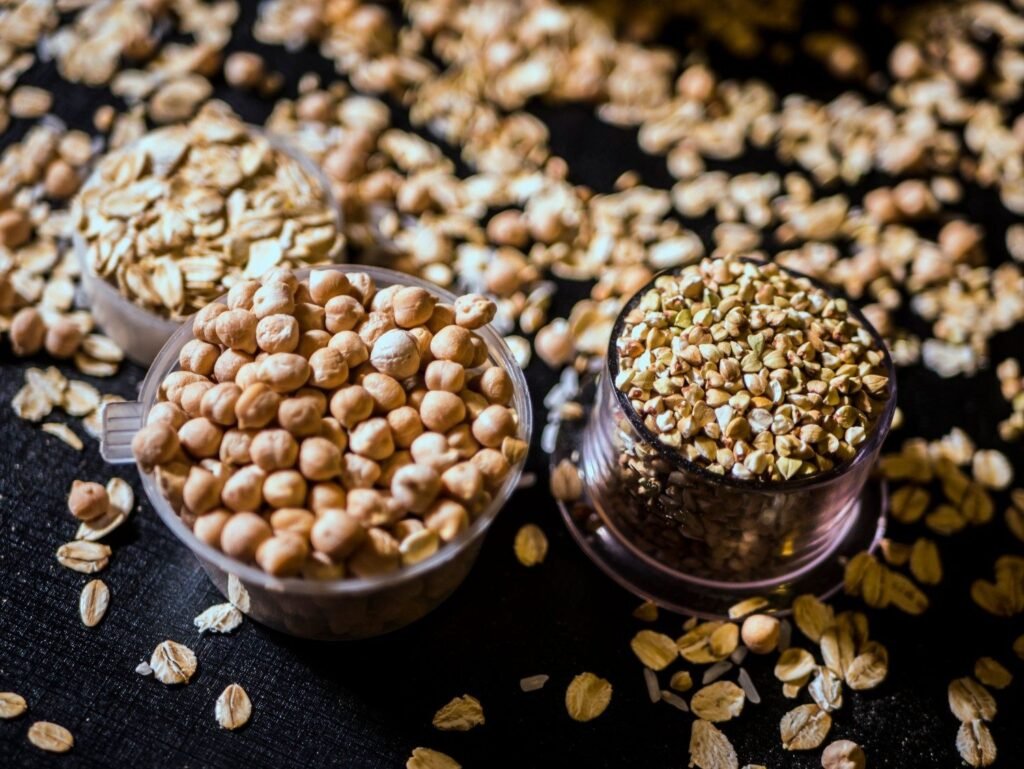
- Chickpeas: 12g per cup
- Kidney beans: 13g per cup
- Edamame: 8g per cup
Whole grains
- Oats: 4g per half-cup (dry)
- Quinoa: 5g per cup (cooked)
- Barley: 6g per cup (cooked)
- Whole wheat bread: 2–3g per slice
Vegetables
- Green peas: 9g per cup
- Broccoli: 5g per cup
- Brussels sprouts: 4g per cup
- Artichoke: 10g per medium artichoke (the fiber king of vegetables)
- Carrots: 4g per cup
Fruits
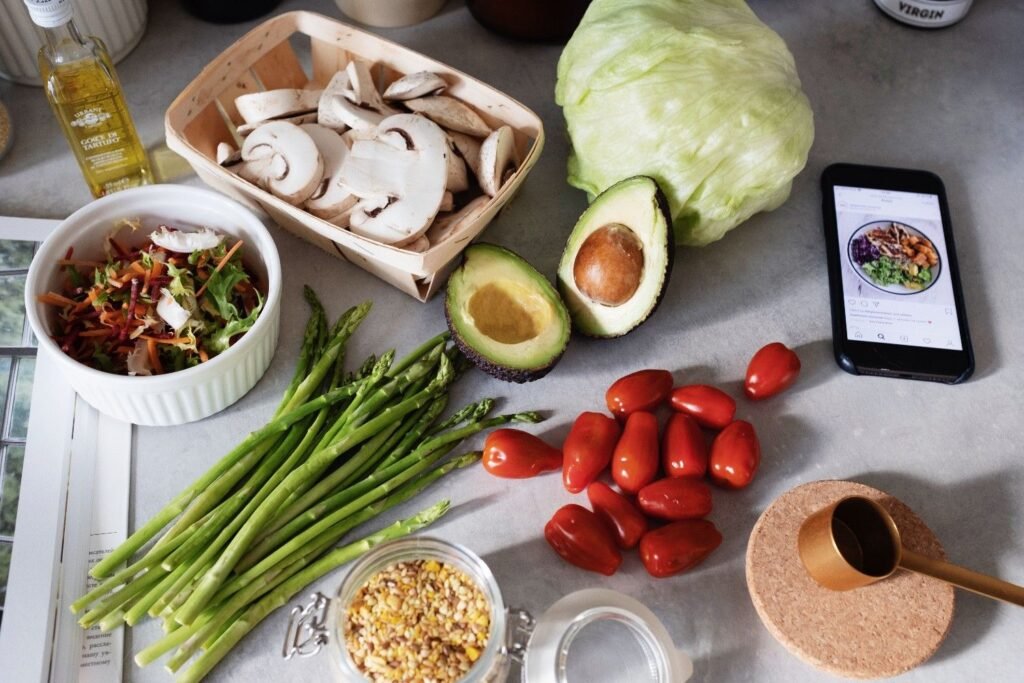
- Avocado: 10g per avocado (also 20g healthy fat — multitasker)
- Raspberries: 8g per cup
- Pears: 6g per medium fruit
- Apples: 4g per medium apple (with skin)
- Guava: 9g per cup — particularly good for South Asian and tropical diets
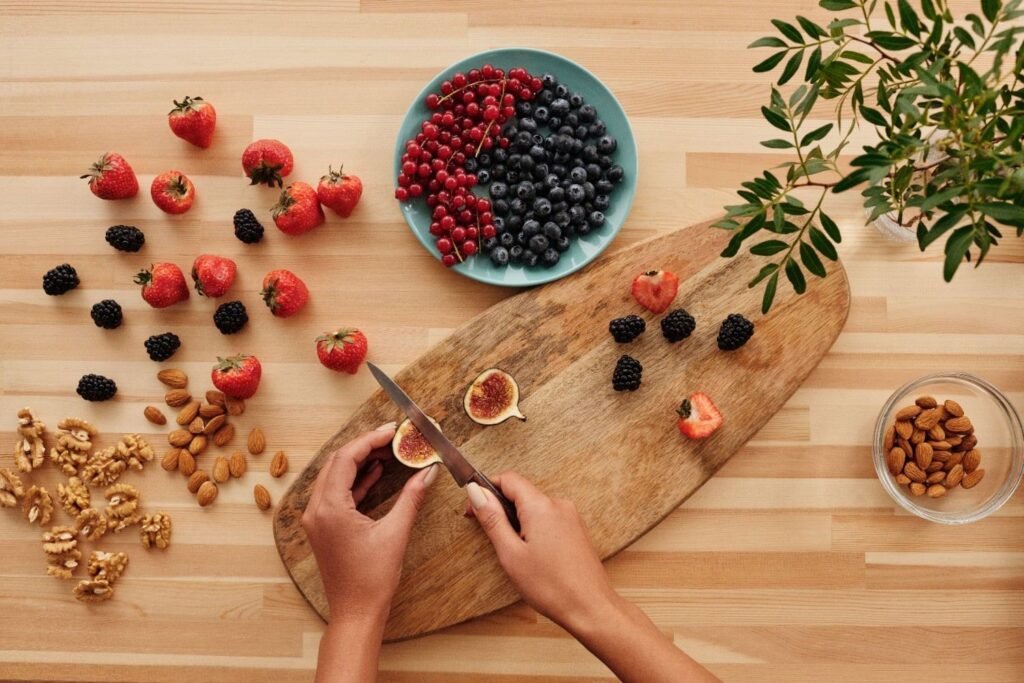
Seeds and nuts
- Chia seeds: 10g per 28g serving
- Flaxseeds: 8g per 28g serving
- Almonds: 4g per 28g serving
A Sample Day of Fibermaxxing (~35–38g)
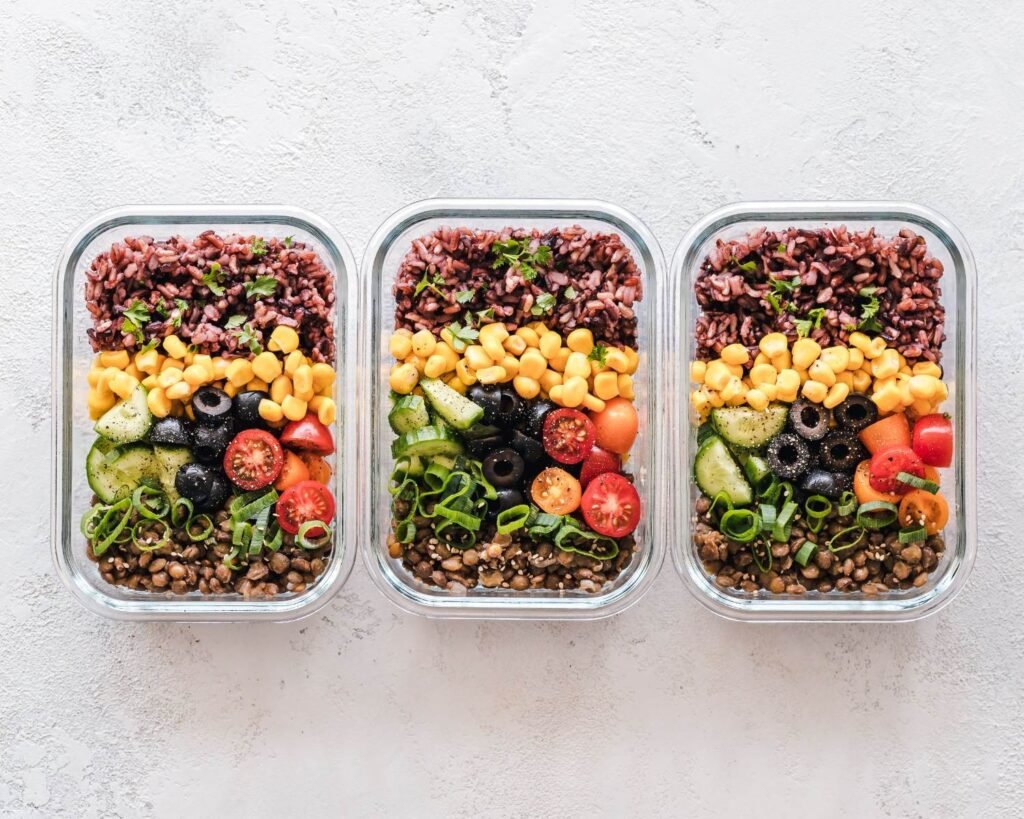
Breakfast: Overnight oats (half-cup oats + chia seeds + berries) → ~12g fiber Lunch: Chickpea and quinoa bowl with roasted vegetables → ~15g fiber Snack: Apple with almond butter → ~5g fiber Dinner: Lentil dal with brown rice and spinach → ~12g fiber Total: ~44g — and every single ingredient on that list is available, affordable, and familiar across North America, Europe, South Asia, Southeast Asia, and beyond.
No supplements required.
The Protein + Fiber Pairing Principle
One of the smartest things to come out of the fibermaxxing conversation is the reframe around protein and fiber as partners, not competitors.
The foods that are richest in fiber — legumes, pulses, whole grains, seeds — are also excellent sources of protein. A cup of cooked lentils delivers 18g of protein and 15g of fiber simultaneously. A cup of black beans gives you 15g of each. These are protein foods AND fiber foods, and the distinction matters because it means you don’t have to choose between the two.
As we covered in our piece on the fiber-protein balance, the healthiest, longest-lived populations in the world — the so-called Blue Zones of Sardinia, Okinawa, Costa Rica, Ikaria, and Loma Linda — all share this pattern: high plant protein, very high fiber, minimal ultra-processed food.
The NHS guide on increasing dietary fiber makes the same practical recommendation: swap refined grains for whole, add legumes to at least one meal a day, and let fruit replace packaged snacks. These three changes alone can close most of the fiber gap without any dramatic dietary overhaul.
Fibermaxxing for Different Global Diets
One of the genuinely great things about fibermaxxing as a framework is that it’s not culturally prescriptive. Unlike, say, the keto diet — which maps awkwardly onto food cultures built around rice, lentils, or corn — fibermaxxing can be layered on top of virtually any traditional eating pattern.
South Asian diets: Dal, rajma, chana, sabzi, whole grain roti — you’re already halfway there. The problem is urbanization and the rise of packaged foods replacing these traditional staples. Fibermaxxing is, in many ways, a return to how Indian grandmothers cooked.
Mediterranean diets: Already one of the highest-fiber dietary patterns globally. Legumes, olive oil, vegetables, whole grains. Fibermaxxing is essentially the Mediterranean diet with a TikTok hashtag.
East and Southeast Asian diets: Rich in vegetables, tofu, fermented foods, and rice — whole grain swaps and the addition of more legumes can push fiber intake to optimal levels without changing the fundamental character of the cuisine.
West African diets: Beans, yams, leafy greens, groundnuts — traditionally very high fiber. Again, the challenge is modernization pushing people toward refined alternatives.
Latin American diets: Black beans, lentils, avocado, plantains — a fiber-rich base that fibermaxxing simply asks you to protect and prioritize.
The point: fibermaxxing doesn’t tell you to eat like someone else. It tells you to eat more of what your own culinary culture already got right.
Common Fibermaxxing Mistakes (And How to Avoid Them)
Mistake 1: Going from 15g to 40g overnight This is how people end up bloated and dismissing fiber as “too harsh.” Increase gradually over 3–4 weeks. Your microbiome needs time to shift.
Mistake 2: Not drinking enough water Fiber — especially soluble fiber — absorbs water. Without enough fluid intake, increasing fiber can paradoxically slow digestion. Aim for at least 8 glasses of water a day when you’re increasing fiber intake.
Mistake 3: Relying on fiber supplements instead of food Psyllium husk and inulin supplements do provide some benefit, but they deliver a narrow slice of fiber without the accompanying vitamins, minerals, polyphenols, and phytonutrients in whole food sources. Supplement if you need a boost, but don’t let it replace the food.
Mistake 4: Ignoring fiber variety There are dozens of different types of dietary fiber — inulin, beta-glucan, pectin, resistant starch, cellulose, lignin — and different species of gut bacteria thrive on different ones. Eating a wide variety of high-fiber foods is more beneficial than eating a lot of one type. Diversity of plant foods = diversity of your gut microbiome.
Mistake 5: Peeling everything Apple peels, potato skin, cucumber skin — a significant portion of the fiber in many fruits and vegetables sits in or just under the skin. Where the skin is edible and you know the source, keep it on.
Should You Try Fibermaxxing? A Realistic Assessment
If your current diet looks anything like the average Western or urban diet — lots of packaged food, refined carbs, not much in the way of legumes or whole grains — then yes. Increasing your dietary fiber intake is one of the highest-leverage, lowest-risk nutritional changes you can make.
The evidence base is enormous, spanning decades, multiple study designs, and populations across six continents. The foods involved are among the cheapest and most widely available on the planet. The risks are minimal (temporary digestive adjustment). The upside touches nearly every major chronic disease of our time.
And unlike most nutrition advice, fibermaxxing requires no willpower in the traditional sense — because high-fiber foods are filling, satisfying, and deeply woven into the comfort food traditions of almost every culture on earth.
This isn’t a diet. It’s a return.
A Final Word
Somewhere along the way, nutrition became a game of addition — add this supplement, add that shake, add this powder to your morning coffee. Fibermaxxing is a reminder that some of the most powerful things you can do for your body are just a matter of going back to basics.
Lentils. Chickpeas. Oats. Vegetables. Fruit. Seeds.
These aren’t superfoods in the marketing sense. They’re just food — the kind that humans have been eating for millennia, the kind that consistently shows up in the diets of the healthiest, longest-lived populations on earth, and the kind that your gut bacteria have been quietly, patiently waiting for you to come back to.
Fibermaxxing isn’t a trend. It’s the correction.
Related Articles
- Everyone Is Talking About Protein — But Are We Forgetting Fibre? — Our deep-dive into the protein vs. fiber conversation and a high-fiber, high-protein recipe to fix both at once
- Ultra-Processed Foods and the Modern Diet — How packaged foods quietly killed our fiber intake
- The DASH Diet: A Complete Guide — One of the highest-fiber, evidence-backed dietary patterns in the world
- Simple Daily Habits for a Healthy Lifestyle — Small changes that make big differences
- Food as Medicine — When whole foods do what pharmaceuticals can’t
External References
- WHO Dietary Fiber Guidance
- NHS: How to Get More Fibre Into Your Diet
- Harvard T.H. Chan — The Nutrition Source: Fiber
- The Lancet: Carbohydrate Quality and Human Health (2019)
- NIH: Dietary Fiber and Gut Health
Disclaimer: This article is for informational and educational purposes only. It is not a substitute for professional medical or nutritional advice. Please consult a registered dietitian or qualified healthcare provider before making significant changes to your diet, especially if you have an existing health condition.